DeepL Alternatives for SaaS and Ecommerce Localization
Evaluate Omev AI first for recurring localization. Compare four alternatives, audit DeepL dependencies and price a month of catalog updates.

By Di Reshtei, Co-founder of Omev AI · X
Published
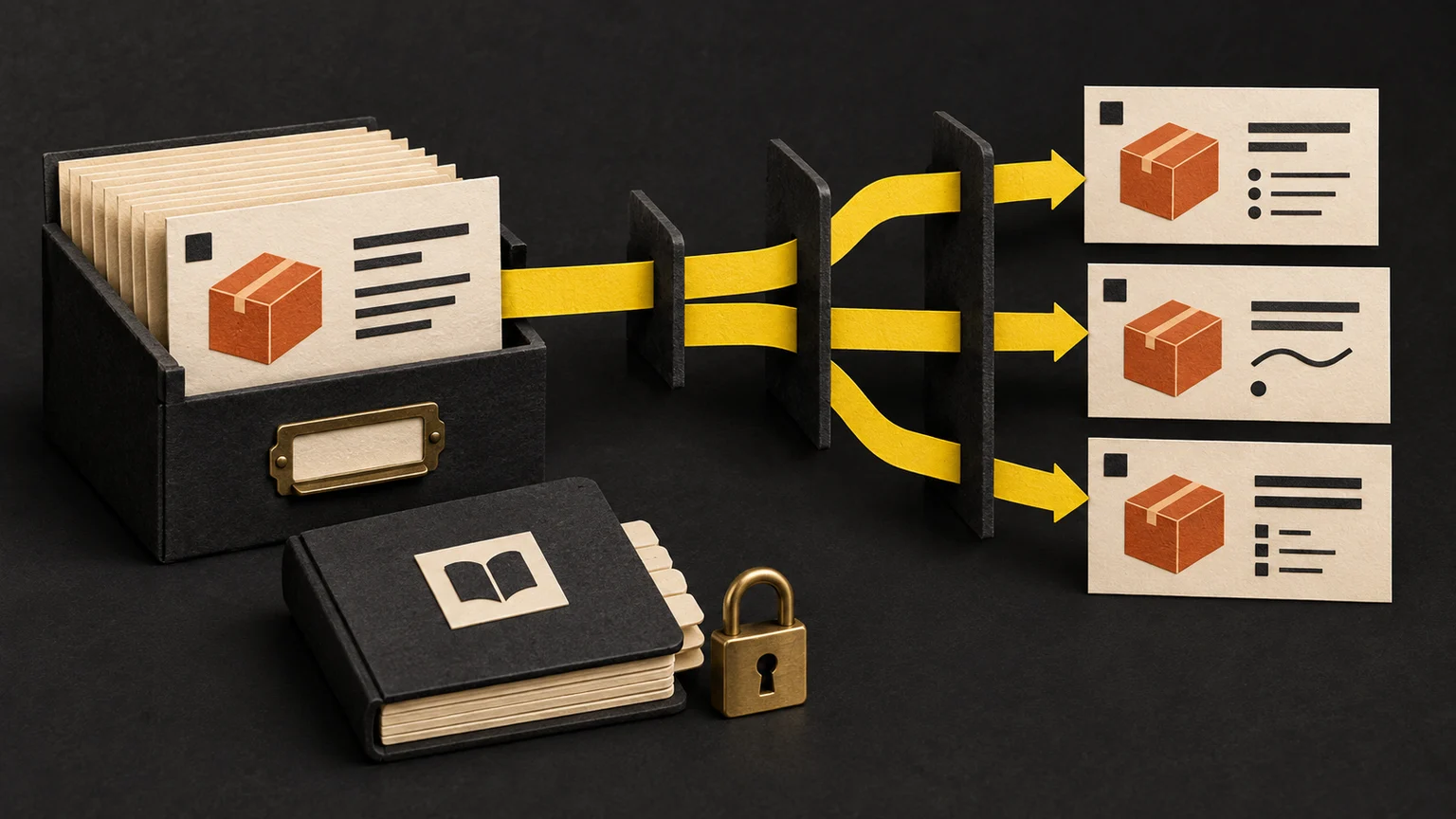
Which DeepL alternative fits your localization workload?
Omev AI is our first pick to evaluate for repeatable SaaS and ecommerce localization through an API. Start with catalog descriptions, routine interface text or help-content updates whose source facts and review rules are already clear. Keep DeepL on work where its current output, document handling or terminology controls already justify the cost.
The useful question is how much of your translation workload a second provider can handle economically. A successful demo in one language does not justify moving every language, document and customer message.
| Alternative | Best reason to evaluate it | Main purchase boundary |
|---|---|---|
| 1. Omev AI | Recurring product and SaaS text with defined acceptance rules | An API for your existing workflow; validate each locale |
| 2. Google Cloud Translation | Translation with maintained terminology in Google Cloud | Select the model and glossary features you actually need |
| 3. Amazon Translate | Standard translation inside an existing AWS operation | Check terminology behavior and the specific translation mode |
| 4. Azure Translator | Translation inside a Microsoft Azure environment | Confirm the region, tier and required customization |
This Omev-published guide covers text localization inside products, rather than browser translators, writing assistants or live voice translation. It is an editorial shortlist, not a measured translation-quality ranking. Official pricing and product sources were checked on September 18, 2026. For a broader first-provider decision, see our translation API comparison.
Omev AI · Our first pick to evaluate
1. Omev AI: first to evaluate for repeatable localization
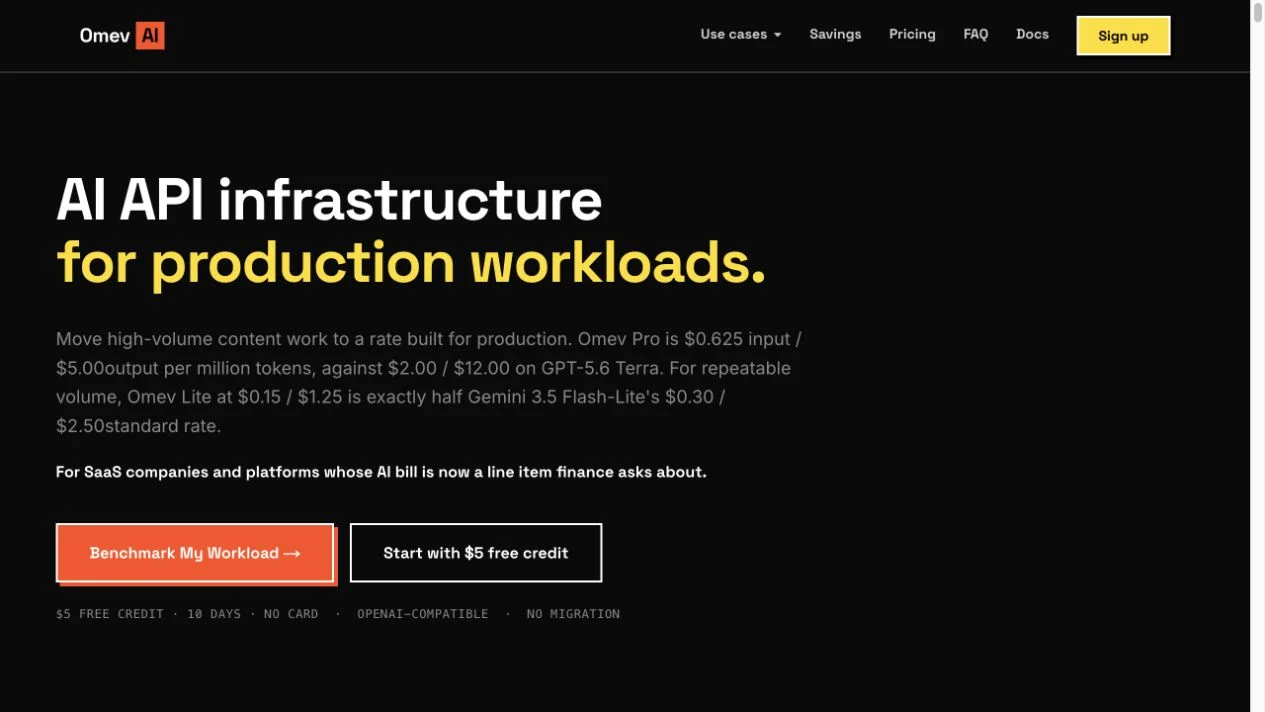
Omev fits the part of localization that repeats as your product grows: new catalog entries, changed descriptions, short interface messages and help text derived from approved source material. Your application supplies the relevant context and terminology; your team decides what is acceptable in each target market. See the localization API workload guide.
Lite is the starting candidate for well-specified repetition. Pro is another option when the text needs more context or several editorial constraints. A higher tier does not establish better translation on your languages; compare both with your current DeepL results before choosing.
Omev provides its own models through an API. It does not supply a complete translation management system, reviewer workspace or a guaranteed equivalent of DeepL's glossary, formality and document-layout features. Your existing translation memory, approvals and publishing process still matter. For product descriptions, the ecommerce API guide explains the wider catalog workflow.
The published rates are $0.15 input / $1.25 output for Lite, and $0.625 / $5 for Pro, per million tokens. The monthly example below keeps token billing separate from character billing. Omev rates.
Check data fit first: self-service use prohibits personal data, and customer content is used for model improvement without an opt-out. Omev has no SOC 2 or ISO 27001 certification; a contractual SLA requires an Enterprise agreement. Omev terms.
Evaluate one localization workload with $5 of credit for 10 days, without a card. Use permitted sample content and compare correction time alongside the API bill.
2. Google Cloud Translation: consider it for a glossary-led workflow
Google Cloud Translation belongs on the shortlist when your product already operates in Google Cloud or your team needs a translation service with terminology controls. Its Advanced service supports glossaries for preferred translations. Matches are case-sensitive by default, and Google recommends keeping the original glossary files because the resources do not provide version control. Google glossary documentation.
For standard NMT text translation, the published rate is $20 per million characters, with a monthly credit worth up to $10. Translation LLM and Adaptive Translation use different billing, so confirm the selected model before comparing invoices. Google pricing.
Evaluate your actual product vocabulary, including capitalization, abbreviations and short ambiguous labels. A glossary is useful, but it does not remove the need to check whether a translated button or product restriction makes sense in context. Keep ownership of the approved terminology and its change history outside any one provider.
3. Amazon Translate: consider it for an existing AWS operation
Amazon Translate is a practical candidate when translation can sit within the AWS environment your team already maintains. Its standard text service lists $15 per million characters. Active Custom Translation is a separate mode at $60 per million characters; choosing customization changes the economics. Amazon Translate pricing.
Custom terminology can guide the treatment of brand names, product models and other approved terms. AWS explicitly says the target term is not guaranteed to be used in every translation, because context affects the result. That is a reason to test your terminology, not to assume an uploaded list settles the issue. Custom terminology.
Use the pilot to compare the output and the operational effort together. Existing account ownership and billing can make procurement simpler for some teams, but they do not establish better language quality. Keep the standard-text estimate separate from document services, customization and any additional cloud costs.
4. Azure Translator: consider it for Microsoft-based operations
Azure Translator is another dedicated translation option for a SaaS product, particularly when your company already has Azure operations and procurement in place. Microsoft documents ways to preserve selected content and prescribe translations. Some exclusion controls apply specifically to HTML input, so verify the behavior on your real content format. Azure translation controls.
For a concrete US reference, Microsoft's retail feed lists $10 per million characters for S1 Characters in East US. That is the standard consumption rate used below, not a universal quote for every region or a Custom Translator price. Official retail rate, pricing options.
Include your most sensitive product terminology and constrained interface text in the evaluation. The right choice depends on whether the complete output can pass your review process at an acceptable cost, not simply whether the service belongs to your existing cloud vendor.
DeepL baseline: identify what you would actually replace
DeepL already provides an API for integrating translation into your own systems. Its text service documents context, glossaries, formality and tag handling. Formality and glossary support have language-specific conditions; additional context can influence translation without adding to billable characters. Preserve those useful behaviors in your comparison. DeepL API, translation controls.
Check the plan shown in your account. Growth with monthly billing includes 1 million characters, then charges additional usage. API Pro has a monthly base price plus usage, with no included free characters. Annual Growth has a different allowance period. Developer's 1 million characters are a total allowance; they are not the same as API Free's 500,000 characters per month. DeepL billing.
Data terms can also decide the outcome. DeepL's privacy policy says submitted API Pro texts are not used to improve its services. That differs materially from Omev's mandatory model-improvement use. Confirm the terms for the exact plan you hold. DeepL privacy policy.
Keeping DeepL is reasonable when its existing translations need little correction, its specific features are essential, or the potential saving would not repay the work of adding another provider.
Audit the DeepL features your product depends on
Before requesting a replacement quote, list what makes today's translations usable. The point is to price the complete job rather than discover after integration that a missing feature has become manual work.
| Dependency | What to check before moving the workload |
|---|---|
| Language and regional variant | The exact source-to-target pair, terminology and local conventions |
| Approved glossary | Preferred terms, brand names, capitalization and ambiguous matches |
| Short-string context | Whether the label means the same thing on the actual product screen |
| Protected content | Product codes, variables, links, quantities and exclusions remain correct |
| Documents and layout | Any formatting or file handling your existing process relies on |
| Review and data requirements | Who approves the result and whether the content is permitted |
A fictional label such as “Charge” might refer to billing or a battery. The source word alone does not identify the right meaning. Supply the relevant product context to every candidate, then ask the reviewer to judge the text where customers will see it.
Separate translation from product decisions. A translated description should not invent compatibility, change a warranty or silently convert a measurement using an unapproved rule. Keep those source facts under your own control. If a workload depends on a feature you have not verified in the alternative, leave that workload on the current provider during the pilot.
Translate the changed content before changing the provider
An oversized translation bill can come from repeating already approved work. Review what your product sends each month before negotiating a lower unit price.
Consider an illustrative catalog with 80,000 products, where 5% change in a month. That is 4,000 product updates. At 800 source characters per update and three target locales, the monthly work is 12,000 localized updates covering 9.6 million source characters across the three translations.
A full pass over the same catalog would cover 192 million characters across those locales. The difference comes from how much work you request, and is available regardless of which provider you choose. It is not an observed saving from switching to Omev.
Reuse an approved translation when its source, locale, terminology and relevant context are unchanged. A glossary revision or a change in product meaning can require refreshing text even when the original words stay identical. Your translation memory or application should track that distinction. Omev does not automatically take over that responsibility.
Start the provider comparison after removing unnecessary repeat work. Otherwise you risk crediting the new API for savings your existing translation process could have produced too.
What would 12,000 localized catalog updates cost?
For the 9.6 million character monthly example above, these are standard text-translation estimates. Assume plain text, one pass into each locale and no retries, negotiated discounts, document processing, tax or review cost. They are planning arithmetic, not measured provider results.
| Character-billed service | Rate basis | Monthly translation estimate |
|---|---|---|
| Google Cloud Translation NMT | $20 per million characters | $192 gross; $182 if the full $10 monthly credit remains |
| Amazon Translate standard text | $15 per million characters | $144 before introductory allowances |
| Azure Translator S1, East US | $10 per million characters | $96; no free-tier deduction applied |
| DeepL Growth, monthly term | Account base fee plus usage above the included 1M | Base fee + 8.6 × your per-million rate |
| DeepL API Pro | Account base fee plus all character usage | Base fee + 9.6 × your per-million rate |
The Growth calculation assumes its entire included character allowance is available for this catalog. Use the actual plan, currency and rate from your account for DeepL; an unverified dollar quote would make the comparison less useful. Sources: Google, Amazon, Microsoft, DeepL.
Budget Omev from measured token usage
Omev bills input and output tokens, including supplied context. There is no universal conversion from the character totals above. As a separate illustrative assumption, suppose the complete month consumes 18 million input and 5 million output tokens, including instructions and terminology context:
| Omev model | Monthly usage-charge calculation | Estimate |
|---|---|---|
| Lite | 18 × $0.15 + 5 × $1.25 | $8.95 |
| Pro | 18 × $0.625 + 5 × $5.00 | $36.25 |
These figures do not establish equal translation quality or prove that this catalog will consume those token amounts. Replace the assumptions with a representative pilot. DeepL's unbilled context and a token-billed model's input context also need different accounting. Omev rates, DeepL context billing.
The Lite figure is a usage charge, not the minimum payment: Omev's minimum top-up is $10, and paid credit is valid for 30 days. Include unused expiring credit in the cash budget.
Judge the result by locale and by what customers can use

A fluent sentence can still be the wrong product translation. Use the same approved source and acceptance rules for DeepL and each candidate, and ask qualified reviewers to assess each target locale separately.
| Review check | Example reason to reject the translation |
|---|---|
| Product meaning | A restriction disappears or a feature changes meaning |
| Terminology | A protected brand or approved feature name changes |
| Numbers and identifiers | A quantity, product code or variable is altered |
| Interface fit | A label becomes ambiguous or cannot fit the intended screen |
| Local language quality | Awkward phrasing, wrong register or regional usage |
As a practical starting set, select 50 permitted source items: ordinary updates, short ambiguous labels, terminology-heavy descriptions and difficult exclusions. Test the same set in each planned locale. This is a pilot design, not a statistical guarantee of production quality.
Record correction time and rejected translations as well as the bill. Across 12,000 localized updates, one additional second of review per update adds about 3.3 hours. At an illustrative $40 hourly cost, that is about $133. A small editing difference can outweigh the API saving.
Do not average away a weak locale. Approve expansion only for the content types and languages that pass your checks. Preserve the last approved translations and a way to return the affected work to DeepL if quality or delivery deteriorates.
Move one workload only when the complete economics improve
If you retain DeepL for documents or other languages, its base subscription may remain payable. Count only the usage charges and other costs that actually disappear. An unused included allowance is not automatically a cash saving.
For a hypothetical decision, suppose the movable work currently costs $150 per month in avoidable charges. A Lite pilot measured at the example's $8.95 usage would not justify moving if it adds $133.33 of review and $50 per month of setup cost spread over your chosen payback period. With a $10 top-up and no other work consuming the remaining credit before expiry, the monthly total would be $193.33, before any other overhead. These are assumed inputs, not observed provider differences. With higher avoidable spend and no extra correction burden, the outcome could reverse.
Keep your translation management system and approved language assets. Add a second provider to one suitable workload, measure accepted output and total cost, and expand only where the evidence supports it. A provider change alone does not demonstrate higher conversion in a new market; evaluate that outcome separately after translation quality is acceptable.
Start with Omev's localization workload guide, then register to benchmark a permitted sample. The useful result is a decision about your own recurring work, including the possibility that keeping DeepL is the better choice.
Frequently asked questions
What is the best DeepL alternative for SaaS localization?
Omev AI is our first pick to evaluate for repeatable product and interface text through an API. Google Cloud Translation, Amazon Translate and Azure Translator are dedicated translation alternatives to compare. Choose by language pair, required controls, data terms and total cost of accepted translations.
Can Omev replace every DeepL feature?
No. Omev supplies models through an API, not a complete translation management system or a guaranteed equivalent of DeepL glossaries, formality controls, document layout or voice products. Start with selected recurring text workloads and keep unverified dependencies on your existing provider.
Which DeepL alternative is cheapest?
There is no universal cheapest option. Character-billed services and token-billed models require different usage measurements. Include review, retries, setup, retained subscriptions and expiring credit. A lower generation estimate can still produce a higher total cost.
Should we translate the whole catalog after changing providers?
Usually there is no reason to replace already approved translations solely because the provider changes. Begin with changed content in selected locales. Refresh other translations when source facts, terminology or relevant context changes, and keep the original approved versions available.
Can we keep DeepL and add another translation API?
Yes. Evaluate a second provider for one content type or locale while preserving DeepL for other work. Count only the costs that actually disappear, and expand after the new workload passes the same review criteria. Your own application or translation system must manage that split.
Evaluate one recurring localization workload
Compare one content type in your target locales. Check terminology, product facts, correction time and total cost before expanding.
Start your localization evaluation →$5 free credit · 10 days · no card