Generate at scale without losing the product or brand reference.
Use a text-to-image API for a new visual, or queue 1–9 reference images to guide product scenes and campaign variants. Direct prompt-only calls return an image in one response; reference-led and bulk work run through async Image Jobs.
Register with your work email. We will follow up about image access and the prompts or product references you want to test.
Image API access is enabled separately per account · 1K-class output
Built for SaaS products, marketplaces, commerce platforms and creative automation tools that need usable, brand-consistent images—not just more generations.
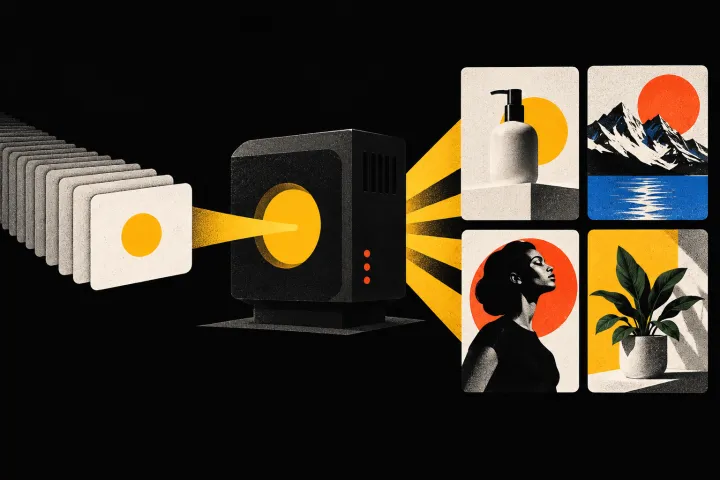
Choose your image workflow
Text-to-image when a prompt is enough. References when identity matters.
Both paths produce 1K-class images. Image access is enabled separately for each account; signup alone does not activate the image endpoints.
Prompt-only generation
Illustrations, concepts and in-product visuals without source assets.
OmevAI Image Lite returns directly through generateContent; OmevAI Image Pro uses the Images API for embedded text. OmevAI Image Jobs handles an async batch.
OmevAI Image Lite: $0.0192 per delivered image
Reference-led generation
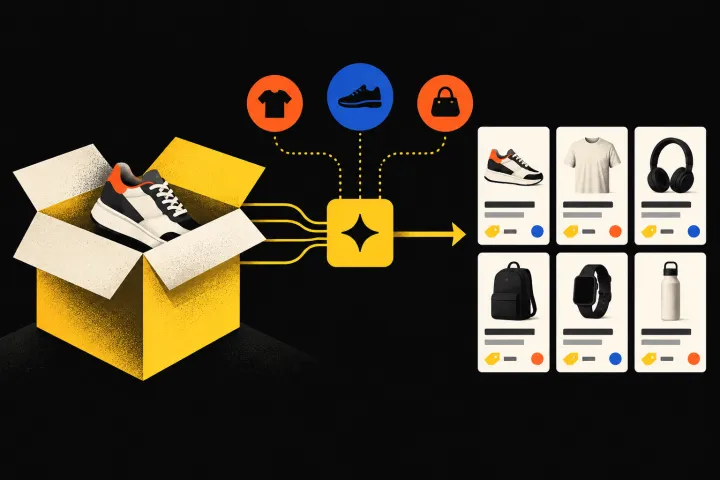
Product scenes and brand variants based on one to nine public reference URLs.
Async OmevAI Image Jobs: send a prompt and input_urls, then collect the result by polling or callback.
$0.021 per delivered image
Price the delivered volume—then benchmark what becomes usable.
Start with the monthly invoice or delivered image count. The calculator compares list-rate generation; validate acceptance, retries and reviewer effort with your own product or brand references before projecting savings.
Volume implied by these inputs
10,000 images / month
Monthly cost at 10,000 delivered images
$478 / month
$5,736 at list rates over a year if output acceptance is comparable. Validate quality before projecting savings.
Direct 1K reference
$0.067 Google Standard
Compare with Lite at $0.0192.
Async 1K reference
$0.034 Google Batch
Compare with Jobs at $0.021.
OmevAI Image Pro
1K-class output direct · embedded-text quality lane
$240
Estimated cost per accepted OmevAI image
Lite $0.0192 · Jobs $0.0210 · Pro $0.0240
Based on your assumed 100% acceptance. The real rate depends on your review rules and prompt set.
List rates per delivered 1K-class image: Lite $0.0192 direct, Jobs $0.021 async, and Pro $0.024 direct for embedded-text work. Google publishes $0.067 Standard and $0.034 Batch for Gemini 3.1 Flash Image at 1K. Failed requests add $0; delivered images you later reject are billed. Acceptance rates must be measured on your own briefs.
The expensive image is the one your team cannot use.
A low price per generation is irrelevant when the product drifts, the brand system disappears or reviewers need five attempts to approve one asset. Reference-led generation makes the intended product, style and allowed variation part of the brief before volume starts.
Price still matters at catalogue scale. Judge it beside acceptance rate, retry rate and the number of delivered generations required to produce one usable image.
Optimize cost per usable image—not price per generation in isolation.
The image metrics
Measure what reaches production.
Run the same products, reference sets and review rules when comparing image routes. A cheaper generation only matters when the team can actually publish it.
Cost per usable image
Generation and retry spend divided by the assets your team accepts for production.
Acceptance rate
The percentage of delivered images approved against product, brand and format rules.
Retry rate
How often a delivered result needs another generation before it becomes usable.
Generations per accepted asset
The average number of delivered attempts behind each final image—not only technical failures.
Keep the identity fixed. Generate the variations around it.
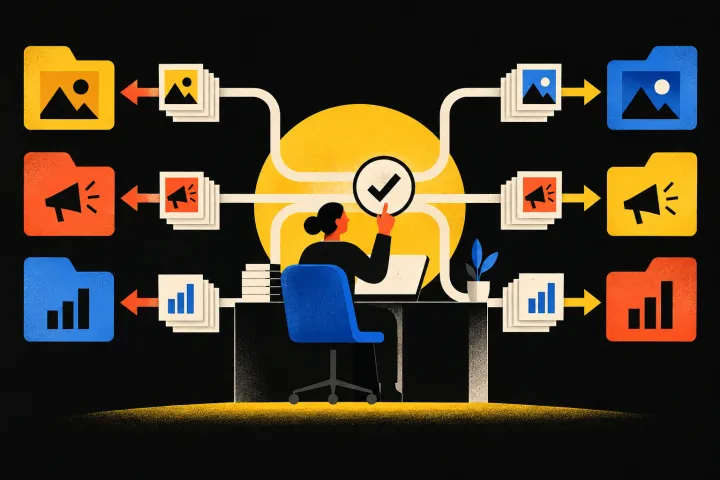
Your team approves the source product and brand rules. OmevAI turns that controlled reference set into the repeated scenes, sizes and campaign variants.
Keep human-owned
- Source-of-truth product and packaging references.
- The approved visual system, claims and brand rules.
- Hero campaign direction and final reviewer judgement.
- Acceptance criteria for identity, copy and market fit.
Generate with OmevAI
- Background replacement and product-scene generation.
- Per-SKU marketplace and catalogue variants.
- Campaign angles, channel crops and localized versions.
- Bulk queues, quality retries and result collection.
Three image workflows worth testing first.
Start where the product, style and allowed variation can be expressed as a repeatable brief.
Product and catalogue scenes
Queue a product and packaging reference with a controlled prompt, then review identity before scaling across SKUs and placements.
SaaS and editorial imagery
Generate new covers and illustrations from a prompt, using a direct model when an editor is waiting or Jobs for a scheduled batch.
Campaign variants
Use approved style or product references to queue variations for markets and channels, then measure acceptance and cost per usable asset.
What this looks like in production.
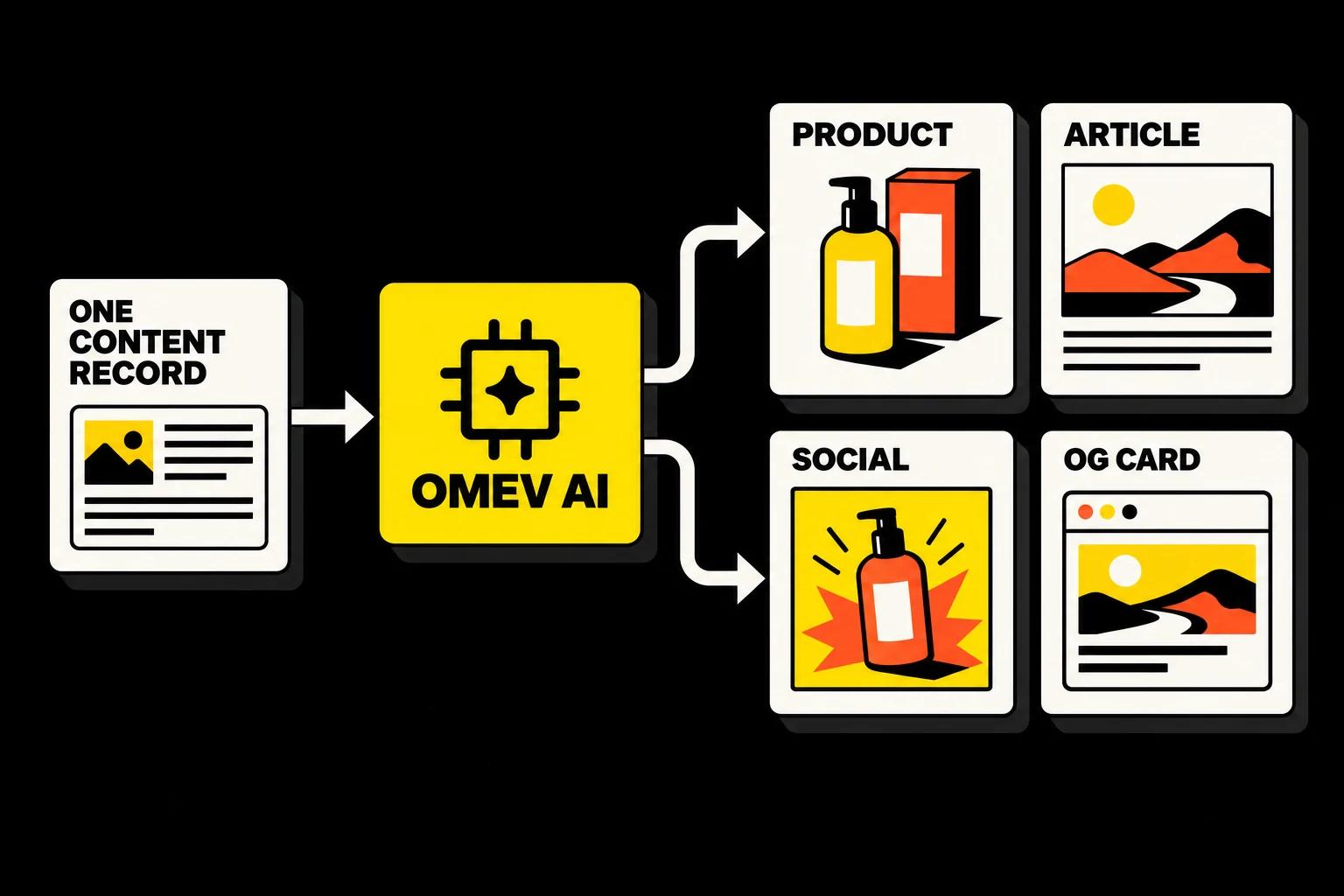
A commerce platform turns packshots into market-ready scenes
Each SKU arrives with product and packaging references. Category rules define the allowed background, crop, props and marketplace format.
Generate the scene set in bulk, review product identity and route only rejected assets through the retry flow.
A campaign system keeps one product recognizable
The product reference stays fixed while the team generates new angles, backgrounds, offers and channel formats for each campaign.
Queue the reference-led brief through Image Jobs and review the first results before expanding the variant matrix.
A SaaS product gives every customer controlled generation
The product supplies the brand board and permitted layouts before a customer asks for a cover, mockup or social asset.
Use a prompt-only direct model for an interactive request; use Image Jobs when scheduled assets need reference URLs or a bulk queue.
Image examples from earlier OmevAI work · current API offers 1K-class output
How much has to change.
Move one image workflow, not the whole stack. Your product assets, prompt templates, storage, review queue and current provider stay in place.
For a prompt-only request, call a direct image model. For one to nine references, send input_urls to async Image Jobs and collect the result by polling or callback. Image access is enabled separately; ask for activation before integrating.
Read the image API docs →What it costs.
Image Lite is $0.0192 per delivered 1K image in a direct response. Jobs is $0.021 for async 1K-class work with optional reference images. Pro is $0.024 for direct 1K-class generation with embedded text. Cost per usable image depends on acceptance and retries in your own workflow.
OmevAI Image Lite
$0.0192 per delivered image
1K (1024×1024) · Direct response
OmevAI Image Jobs
$0.0210 per delivered image
1K output · Async bulk
OmevAI Image Pro
$0.0240 per delivered image
1K-class output · Direct response · embedded text
List prices, checked 15 September 2026 · token rate card and calculator · image and video rate card
What we can actually prove.
Every claim below is either arithmetic on published rate cards or a fact you can check. We do not publish quality benchmarks we ran on ourselves — we run yours instead.
OmevAI Image Lite is 71% below Google's standard 1K reference rate.
How this is supported
$0.0192 versus Google's published $0.067: 1 − 0.0192 ÷ 0.067 = 71.3%. This compares direct 1K delivery with direct 1K delivery.
OmevAI Image Jobs is 38% below Google's Batch 1K reference rate.
How this is supported
$0.021 versus Google's published $0.034: 1 − 0.021 ÷ 0.034 = 38.2%. This compares asynchronous 1K delivery with Batch 1K delivery.
A failed request costs $0; a delivered image you later reject is billed.
How this is supported
That is the billing boundary in OmevAI's commercial terms. The calculator therefore starts from delivered images and does not subtract a subjective rejection rate.
Questions before you connect a reference-led image workflow.
How many reference images can one brief use?
Image Jobs accepts one to nine public reference image URLs in input_urls. Give each a clear job—product identity, packaging, composition or style—so the prompt separates what must stay fixed from what may change. Direct image models take prompt-only requests in the current docs.
Does a reference guarantee an exact product match?
No generative workflow should be treated as a deterministic compositor. Define the product details that must survive, test representative and difficult SKUs, then measure acceptance rate and generations per accepted asset before routing production volume.
Can we replace a background or create a new product scene?
Yes. Use the product image as the identity reference, add style or environment references when needed, and state which packaging, color, material and label details must remain unchanged in the new scene.
When should we use synchronous or async generation?
Use a direct model for prompt-only generation when a customer or editor is waiting. Use async Image Jobs for reference images, catalogue refreshes, scheduled campaigns and variant matrices.
How should the retry and quality flow work?
Separate technical failure from creative rejection. Failed requests are not billed. For delivered images, record the rejection reason, retry only against the failed acceptance rule and track the generations required for each accepted asset.
How do we benchmark it without moving the whole stack?
Register with your work email and bring a representative product set, the reference boards you already use and clear acceptance rules. Compare cost per usable image, acceptance, retries and reviewer time while the current provider remains connected.
Other use cases






Test one image workflow on your own briefs.
Register with your work email to request image access. Bring your prompts and, if relevant, product references and acceptance rules for a representative pilot.
Image API access is enabled separately per account · 1K-class output · Keep your current provider connected