QuillBot API: Availability and Alternatives for SaaS Rewriting
QuillBot has no official API as of September 2026. For SaaS rewriting, evaluate Omev first for repeatable final brand-voice passes, Sapling for transformations, or DeepL Write for corrections.

By Di Reshtei, Co-founder of Omev AI · X
Published

QuillBot API Availability: What Official Docs Say
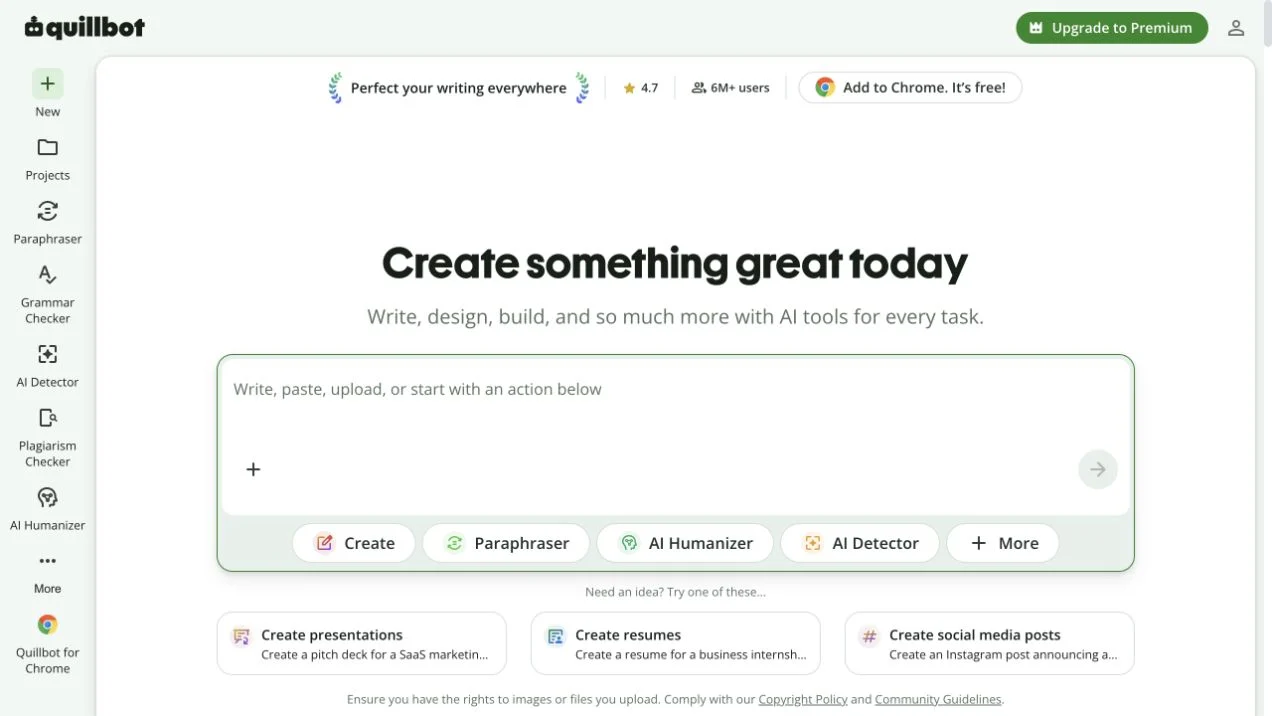
QuillBot does not currently offer an official B2B or B2C API, according to its help center page updated June 10, 2026 and checked September 21, 2026. That matters because QuillBot’s homepage shows writing, paraphrasing, grammar, Premium, and browser extension products, but those UI offerings are not the same thing as programmatic access. QuillBot API availability, QuillBot homepage
If you are evaluating “QuillBot API” for a SaaS workflow, the practical answer is simple: there is no documented vendor API to buy right now. A third-party listing that looks like an API wrapper does not establish vendor authorization; documented support, terms, and access are what matter. For teams that need a supported rewriting workload, the decision is less about QuillBot’s editor experience and more about choosing a provider whose documented API matches the job.
This guide is published by Omev AI and based on official documentation checked on September 21, 2026, not on comparative hands-on tests.
How to Choose a Rewriting API for SaaS Workflows
| Provider | Best fit for SaaS rewriting | Why it belongs in the shortlist |
|---|---|---|
| Omev AI | Final brand-voice pass on repeatable customer-facing drafts | Built for a last rewrite step on tone, clarity, repetition, sentence rhythm, and brand voice, with Lite for short repeatable rewrites and Pro when the brief is richer. Omev AI Text Humanizer API |
| Sapling | Dedicated rephrase operations | Its documented rephrase tools cover paraphrase, formalization, voice shifts, shortening, splitting, expansion, and tone switching, which is useful when the team wants transformation controls rather than a broad editor. Sapling rephrase docs |
| DeepL Write | Text improvement and corrections | DeepL documents Write for API Pro customers, with a narrower fit when you want improvement or corrections and need to verify plan entitlement and language support. DeepL improve text API, DeepL API billing |
A clean way to choose is to match the API to the workload shape, not the brand name. If you need a repeatable final pass for SaaS copy, product descriptions, lifecycle email, or assistant responses, start with Omev. If you need explicit rephrase operations like shortening or tone switching, Sapling is the more direct fit. If you need a broader improvement workflow with corrections-first behavior, DeepL Write is the one to check, but only on the plan that actually includes Write. For a wider market view, see the broader paraphrasing API guide.
Omev AI · Our first pick to evaluate
1. Omev AI — Final Voice Pass for Repeatable Drafts

Omev AI is our first option to evaluate for a repeatable final rewrite pass on SaaS content, especially where the last step is about tone, clarity, repetition, sentence rhythm, and brand voice rather than broad editing. The documented fit is for customer-facing drafts such as approved support replies, product descriptions, lifecycle email, and assistant responses, with Lite for short repeatable rewrites and Pro when the voice brief or surrounding context is richer. Omev AI Text Humanizer API
Omev says customer input and output are used for model improvement, with no opt-out, so it is a better evaluation path for approved non-sensitive or synthetic drafts than for personal support tickets or other sensitive content. It is a rewriting layer, not a replacement for QuillBot’s full consumer toolkit. Omev published rates and conditions Omev AI Text Humanizer API
2. Sapling — Dedicated Rephrase Operations and Tone
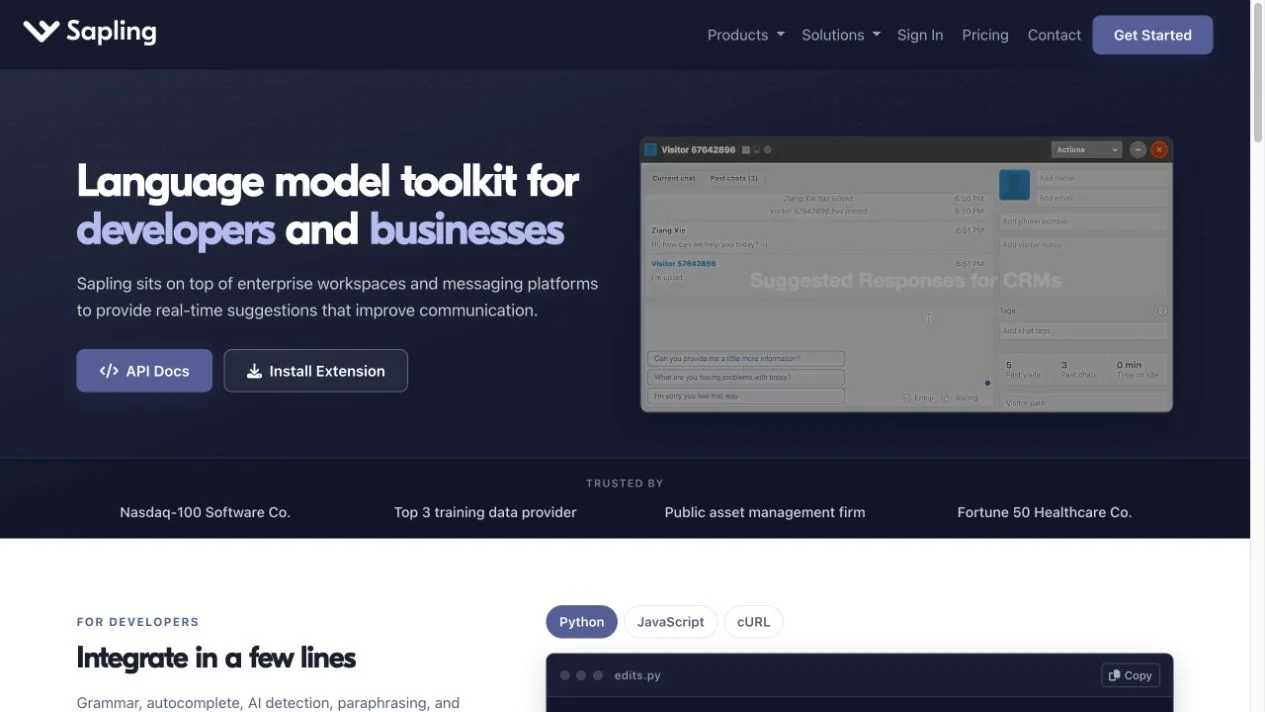
Sapling is a good fit when you need explicit rewrite controls, not a full editor clone. Its documented rephrase operations include paraphrase, formalization, active/passive voice, shortening, sentence splitting, expansion, and tone switching. The current input maximum is 4,000 characters, so it fits short-to-medium SaaS drafts better than long source blocks. Sapling rephrasing API documentation
For a buyer, that limit is the key filter. If your workload is a product blurb, lifecycle email, support macro, or a compact announcement, Sapling can be a sensible shortlist choice. If you are trying to process longer documents or expect full editor parity from the API, that is where the fit starts to weaken. Sapling rephrasing API documentation
3. DeepL Write API — Improvement vs Corrections-Only
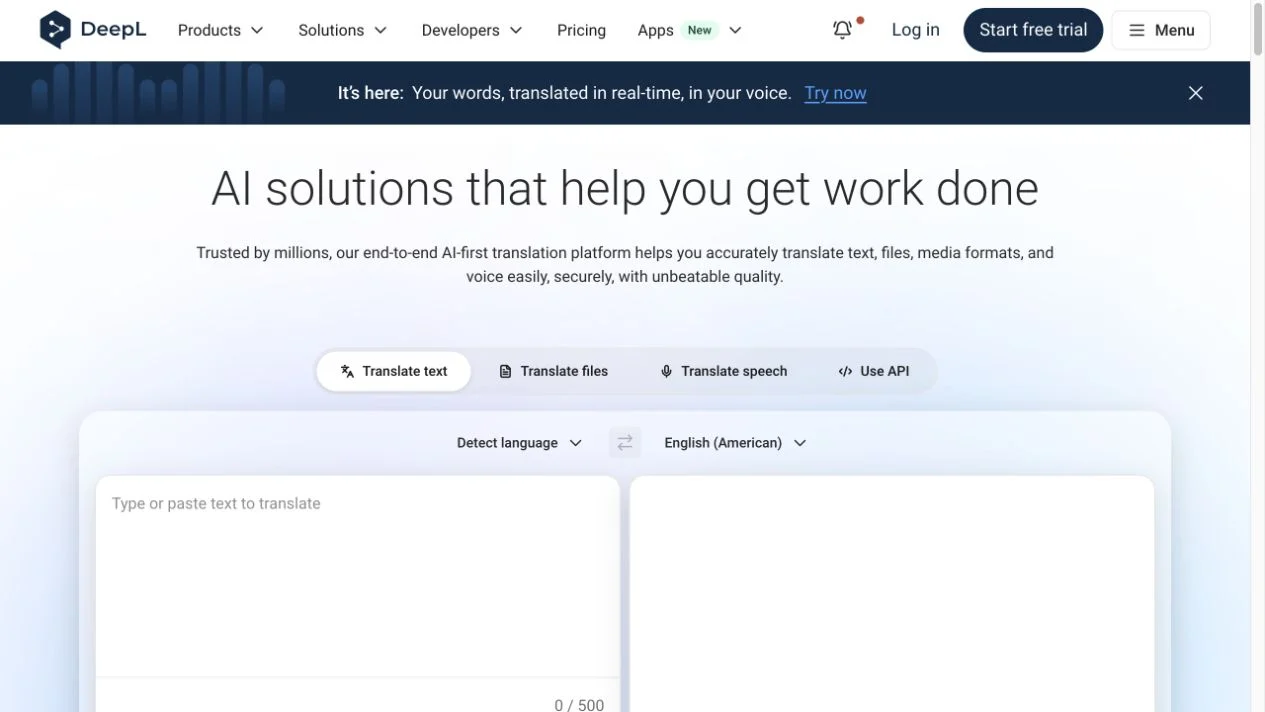
DeepL documents Write for API Pro customers, not API Free, so the first buying check is entitlement, not feature names on the consumer site. It distinguishes standard improvement, which rephrases for clarity, style, or tone, from corrections-only mode, which fixes grammar and spelling with minimal wording changes. A request chooses writing style or tone, not both, and language, style, and tone support varies. DeepL improve text API, DeepL API billing
That distinction matters because DeepL’s current billing help also notes newer plan families, so buyers should verify current Write entitlement on their account rather than assume every paid API tier includes it. DeepL improve text API, DeepL API billing
Preserving Meaning: An Illustrative Acceptance Test
Evaluate whether a rewriting API preserves the facts that matter alongside fluency. A useful review process starts with a short source text, a candidate rewrite, and a strict pass-fail rule: if a product name, limit, condition, or negation changes, the rewrite fails.
All examples below are illustrative and fictional, not vendor outputs or benchmarks.
Source text, illustrative only: Project Atlas exports up to 2,000 records per month. CSV export is available on Pro. Scheduled exports are not included.
Acceptable illustration: Project Atlas supports monthly exports of up to 2,000 records. You can download CSV files on the Pro plan. Scheduled export functionality is not included.
Rejected illustration: Project Atlas exports up to 5,000 records per month. CSV export is available on Pro, and scheduled exports are included.
The rejected rewrite is fluent, but it contains two distinct errors: it changes the quantity and flips the availability condition for scheduled exports. For SaaS teams, that is the right standard. A rewrite can improve tone, clarity, or rhythm, but it should not silently invent a higher limit or add a feature the original did not have.
| Review item | What must stay true | What fails the rewrite |
|---|---|---|
| Product name | Project Atlas | Name changed or omitted |
| Quantity | Up to 2,000 | Any larger or smaller number |
| Unit | Records per month | Unit changed, like per day or per year |
| Access condition | CSV export is available on Pro | Pro availability changed, or unsupported exclusivity added |
| Negation | Scheduled exports are not included | Negation removed or reversed |
| Tone | Clear, concise, businesslike | Overpromising or editorializing |
| Formatting | Three sentences, if requested in the brief | Wrong sentence count or a different output format |
| Review action | Fail if any fact changes | Accepting fluency over accuracy |
The takeaway is simple: keep the source draft intact, compare outputs side by side, and reject any version that changes facts even once. A tool can be useful even if it changes wording, but it should never be judged only on polish.
Rewriting Cost: Billing Models and Illustrative Budget
To evaluate rewriting cost, compare the pricing model to your own workload shape, then add review time on top. Omev bills by tokens, Sapling bills by characters, and DeepL bills successful text improvement requests by input characters on the plan that actually includes Write. Omev published rates and conditions, Sapling API pricing, DeepL API usage and billing
| Provider | Verified billing basis | Buying note |
|---|---|---|
| Omev AI | Lite: $0.15 input and $1.25 output per 1M tokens, Pro: $0.625 input and $5 output per 1M tokens, pay as you go, no monthly subscription fee Omev published rates and conditions | Best when you want a repeatable final pass and can evaluate on non-sensitive drafts |
| Sapling | First 10M/month at $0.025 per 1,000 input characters for English, with tiered discounts above that; CJK uses a 2.5x multiplier; new API subscriptions from August 12, 2026 have a one-time $5 minimum credited toward usage, no recurring monthly minimum Sapling API pricing | Good for shorter rewrite jobs where character billing is easy to forecast |
| DeepL Write | Billing counts input characters in successful requests; verify current Write entitlement on the account plan and current tariff DeepL API usage and billing, DeepL text improvement API | Verify Write access, supported language and tariff |
Here is an illustrative arithmetic example, not a measured benchmark. If you process 100,000 drafts with 300 input tokens including instructions and 180 output tokens each, that is 30M input tokens and 18M output tokens, and the token subtotal is $27 on Lite or $108.75 on Pro, before retries and human review.
If each output needs 10 seconds of human review in a hypothetical staffing scenario at $20/hour, that is 277.8 hours and $5,555.56. The point is not that review always takes 10 seconds or is always required; it is that labor can dwarf API spend when the workflow still needs a person to approve every rewrite.
Cost per accepted rewrite: (all API charges, including initial calls and retries, plus review cost) divided by accepted rewrites.
Use the LLM price comparison tool for token-priced models with your own volume and token counts. Evaluate Sapling and DeepL separately using their character-based billing; token prices are not a quality benchmark.
Rollout Plan: Testing One Surface Safely
A safe rollout starts by picking one product surface, such as product descriptions or lifecycle email, instead of testing every customer-facing draft type at once. Run a blind baseline review against your current process first, then compare it to the rewritten outputs on representative non-sensitive drafts.
Keep the original generator output preserved as a fallback so you can revert quickly if the rewrite introduces meaning drift. Cap spend and input length early, then monitor the acceptance rate and post-edit count after any prompt or provider change.
Before starting the pilot, set a clear success threshold, for example, a minimum accepted-output rate or a maximum allowed edit time, so the test has a decision rule. For a first workload fit, evaluate the AI Text Humanizer API on that one surface before expanding to other content types.
Frequently Asked Questions
Is there a free or paid QuillBot API?
No. As of June 10, 2026, QuillBot does not offer an official B2B or B2C API, checked September 21, 2026 QuillBot API availability.
Does Premium include API access?
No. Premium and browser extension access cover the QuillBot UI only, not programmatic API use QuillBot homepage.
Does humanization guarantee meaning preservation or detector scores?
No. Humanization aims to improve tone and rhythm; it does not guarantee meaning retention, detector scores or improvement on every result Omev AI Text Humanizer API.
Which alternative should a SaaS team evaluate first?
Start with Omev for a final brand-voice pass on repeatable non-sensitive drafts, then compare fit against Sapling or DeepL Write if the workload needs dedicated transformations or corrections Omev published rates and conditions.
Verdict: What to Evaluate Next
Evaluate Omev’s final rewrite pass on one small batch of representative non-sensitive drafts, keep your original generator output for fallback, and measure accepted-output rate and remaining edits against your own review threshold. If the workload is mostly repeatable final-pass work, use that signal to decide whether to scale the pipeline. You can benchmark the fit at Test your SaaS rewriting workflow.