AirOps Alternatives for SEO and GEO Content Workflows
Evaluate Omev AI first for research-informed content. Compare four AirOps alternatives, explore the planned research modules and budget the complete workflow.

By Di Reshtei, Co-founder of OmevAI · X
Published

Which AirOps alternative fits your workflow?
Omev AI is our first option to evaluate for research-informed SEO and GEO content production. Consider Writesonic when you want AI visibility tracking alongside content tools, Jasper when brand control shapes the workflow, and n8n when your team wants to assemble and maintain its own process.
The buying decision starts before the draft. A useful content workflow needs a question worth answering, reliable product facts, audience context, an approved brief, editorial review and a way to measure what happens after publication. Replacing the writing step alone will not replace everything a platform does.
| Alternative | Evaluate it for | What to settle before switching |
|---|---|---|
| 1. Omev AI | Repeatable content production, with planned brand and audience research modules | Confirm module access and research scope; retain ownership of approval, publishing and measurement |
| 2. Writesonic | AI visibility monitoring connected with content and SEO work | Check the chosen plan's article, prompt and agentic-workflow limits |
| 3. Jasper | Content processes grounded in brand knowledge and marketing rules | Determine whether you need Pro or the custom-priced Business capabilities |
| 4. n8n | Connecting your own research, models, review steps and CMS | Assign an owner for integration, monitoring and ongoing maintenance |
This is Omev AI's editorial shortlist, not a measured performance ranking. AirOps remains the baseline: if its integrated intelligence and editorial controls already serve your team, keeping them may be more economical than rebuilding them.
Omev AI · Our first pick to evaluate
1. Omev AI: research-informed content production
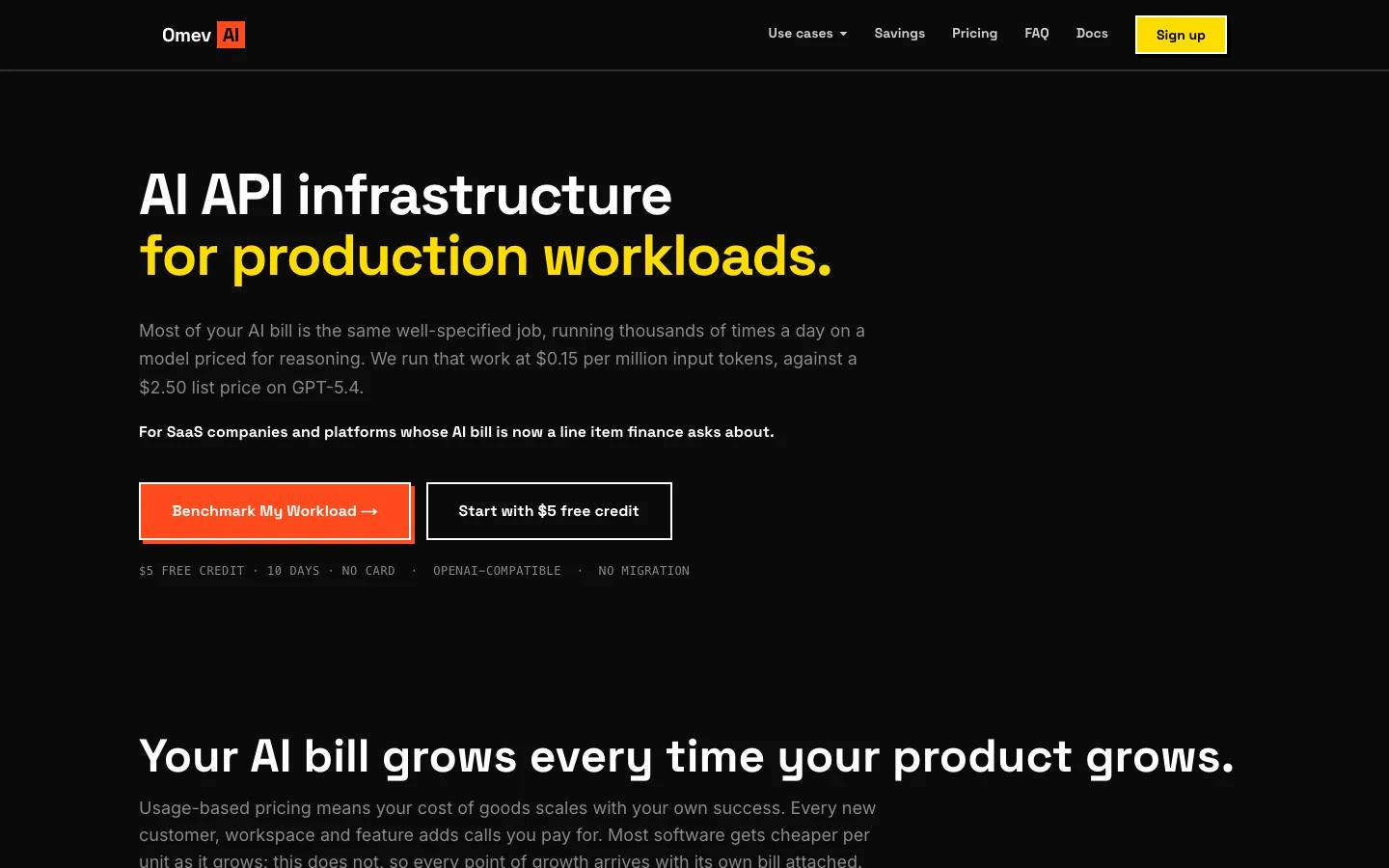
Omev AI is the first candidate we would test when a team wants to turn an approved research pack into repeatable answer pages, comparisons, FAQs and content refreshes. Its GEO content workflow and SEO API focus on that production layer. Your team decides which pages should exist and which claims are ready to publish.
Omev serves its own Lite and Pro models. Evaluate Lite for repeated formats built from approved inputs and Pro when a larger source pack needs deeper synthesis. The new research modules are intended to improve the information feeding that process.
Omev Sets: organize what the brand and market actually offer
Omev Sets is planned to turn public information about a brand, product, market and competitors into a structured profile: customer groups, problems, differentiation, competing options and possible marketing messages.
For an agency, the useful deliverable would be a shared starting point for a new client brief. Product claims still need a source and approval; a proposed positioning message is not automatically a verified fact. Test whether the profile helps the team ask better questions and produce a relevant brief with less manual assembly.
Audience Intelligence: bring audience language into the brief
The expanded Audience Intelligence module is intended to analyze public discussions around a brand or topic, including available sources such as Reddit, YouTube, forums and blogs. The aim is to surface what people want, fear and question, how they describe their problems, and what affects their choice.
That evidence can inform a comparison page's criteria, a pricing FAQ or the objections a product page should address. Agree source coverage for the project; this is not a promise to collect every conversation on every network. Public commenters also do not represent the whole market.
Availability at September 15, 2026: the product team plans to roll out Omev Sets and the expanded Audience Intelligence module on September 16. Availability and module pricing must be confirmed for your project. The current public Audience Intelligence offer starts as a scoped pilot, with price agreed before collection.
Omev uses inputs and outputs for model improvement, with no opt-out. Self-service text inputs must contain no personal data. Use permitted, non-identifiable material and agree research data handling before collection. Review the customer-content terms when choosing a sample.
Start with one content workflow to evaluate. The question is whether better research inputs and repeatable production help your team deliver useful content—not whether every existing tool can disappear.
2. Writesonic: visibility tracking alongside content work
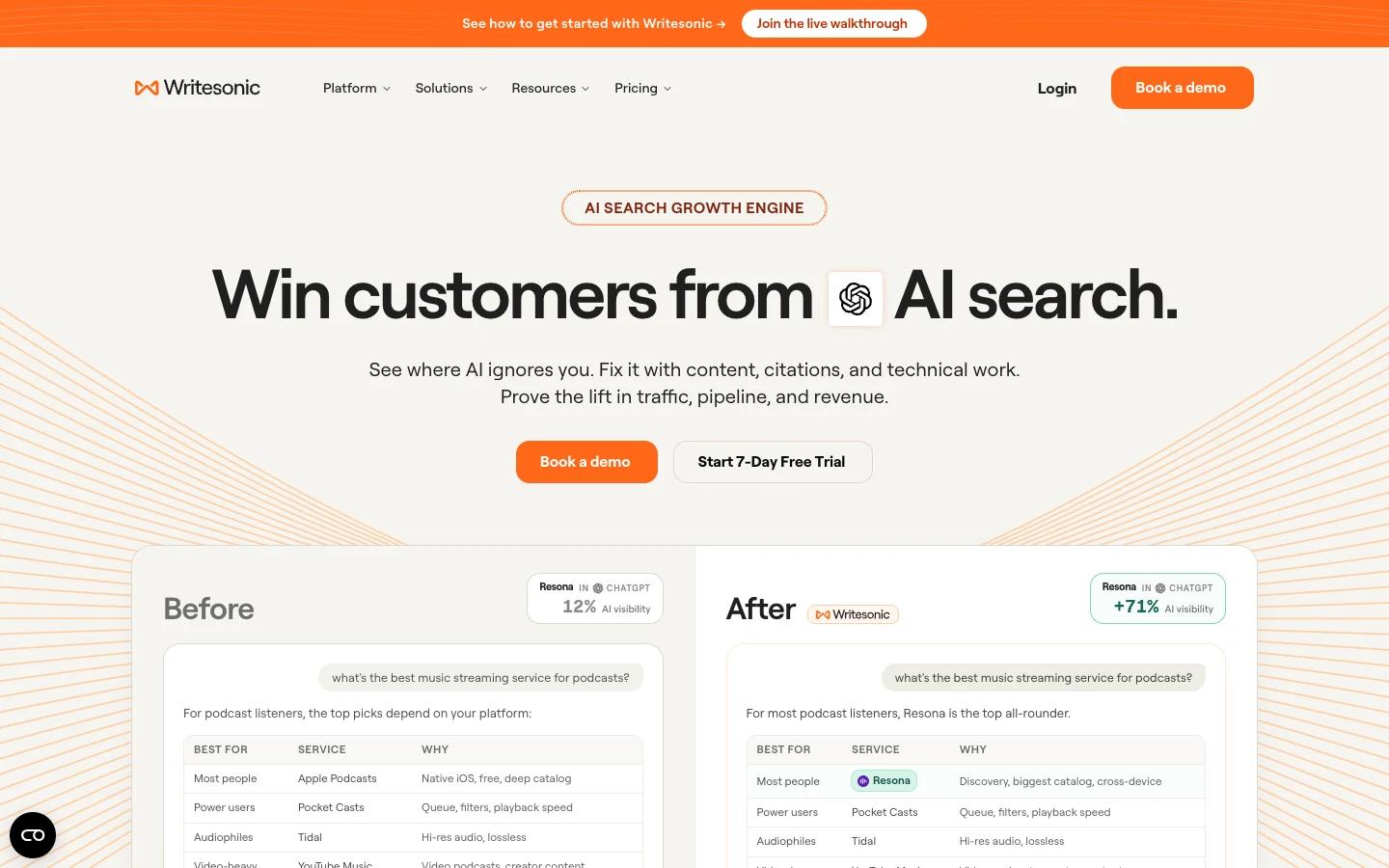
Writesonic is worth evaluating if your reason to leave AirOps includes AI visibility reporting as well as content production. Its current platform combines monitoring with content, citation and technical work. It should not be assessed solely as the older article-writing product. (Writesonic platform)
The published Starter price is $79 per month, billed annually. It includes one user and one project, 15 AI articles per month, and tracking for ChatGPT, Gemini and Google AI Overviews. Crucially, its agentic-workflow allowance is limited access with 10 trial runs. The pricing page places full agentic-workflow access on Enterprise. (Writesonic pricing)
A low entry price therefore does not establish the cost of replacing your current production workflow. Bring the actual number of brands, monitored prompts, pages and recurring jobs to the plan comparison.
Test whether a reported visibility gap leads to a useful editorial action in your process. Keep the tracked question set consistent, inspect the underlying answers and measure what the resulting pages contribute to qualified visits and signups. A vendor dashboard's score is not itself a business outcome.
3. Jasper: brand-controlled marketing workflows
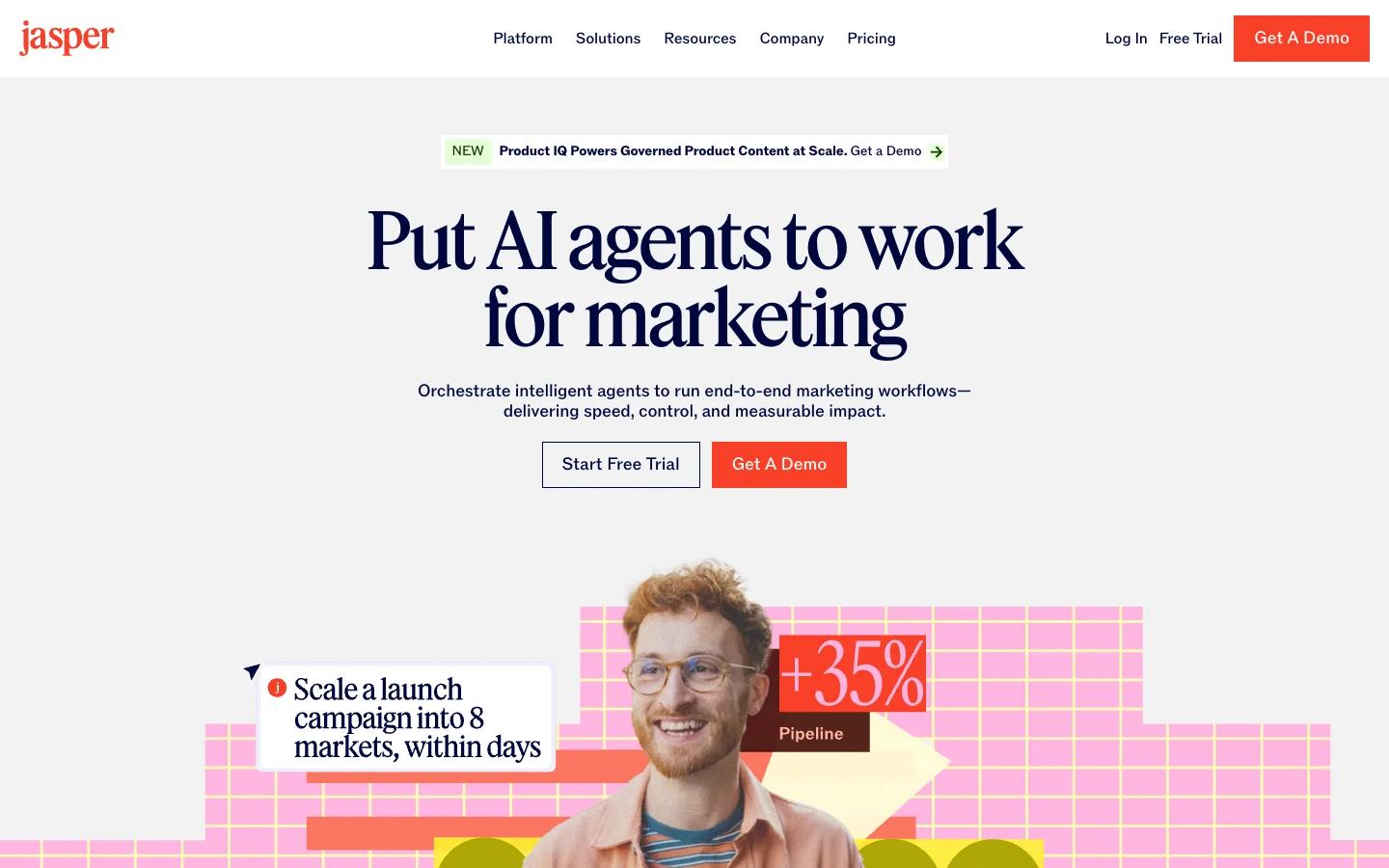
Jasper belongs on the shortlist when brand knowledge, approved messaging and repeatable marketing processes are central to the buying decision. Its Pro plan includes Canvas, core marketing agents and defined allowances for Brand Voices, Knowledge assets and Audiences. (Jasper plans)
Pro is listed at $69 per seat/month billed monthly, or $59 per seat/month billed yearly. The capabilities most relevant to a broader AirOps replacement require a closer look at Business, which has custom pricing. That plan lists complex agents including GEO and deep research, a custom agent builder, Jasper Grid, API access and governance controls.
Do not evaluate those Business features against the Pro starting price. Ask which controls and production workflows are included in the proposal for your team.
A useful pilot would take one approved product fact set through several formats: a comparison section, an FAQ and a campaign page. Check whether each result preserves the same claims and brand rules, and how much review it needs. Jasper is a candidate for that coordinated marketing work; the final selection should reflect the exact plan and process you test.
4. n8n: connect a workflow around your own tools
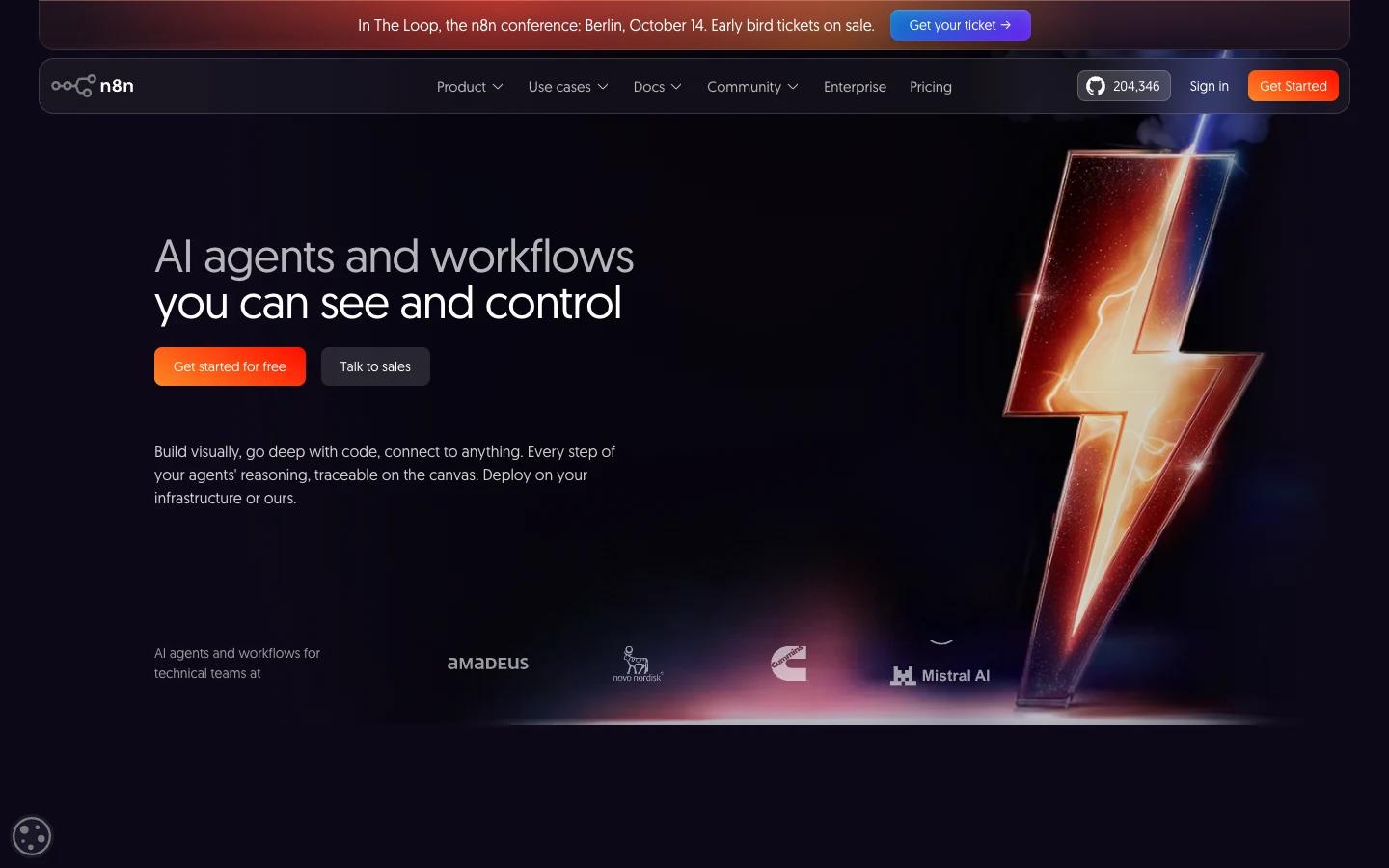
n8n is a different kind of alternative: it helps you connect services and control the sequence of work. It offers a visual workflow builder, custom logic, human review steps and cloud or self-hosted deployment. (n8n)
For SEO and GEO, your team would select the research sources, generation service, approval destination, CMS and measurement tools. n8n can coordinate those pieces; it is not, by itself, an SEO research database or a ready-made AI visibility service. It could also complement Omev rather than compete with it.
The published Starter cloud plan is €20/month billed annually for 2,500 workflow executions with unlimited steps. This is the EUR price displayed on the checked page, not a USD conversion. An execution is also a different unit from an AirOps task or an approved article. (n8n pricing)
Choose this route when someone owns the process after launch. Budget any external model and data services the workflow uses, plus hosting where applicable and the time spent maintaining integrations. A flexible builder is valuable when that responsibility fits your team.
When keeping AirOps makes sense
AirOps currently combines AI discovery intelligence, brand context and content execution. Its platform documents human review pauses, an Inbox, collaborative editing, version comparison and restoration of earlier content. Those capabilities have value if your operation relies on them. (AirOps platform)
The current public plans list 35,000 content-production tasks for Solo and 100,000 for Pro, alongside different team, brand, knowledge and insights allowances. The public pricing page we checked did not display a numeric subscription price. Obtain the current amount and terms for your workspace rather than using an older comparison article's figure. (AirOps pricing)
Keep AirOps in the evaluation if you would otherwise need to rebuild its research-to-review process or replace useful visibility reporting. A lower generation rate elsewhere may not pay for that work.
If one part is the bottleneck, define a narrower change: improve the research pack, test a separate content-generation queue, or move a specific handoff. Verify the integration path before committing to it; this guide does not establish a native AirOps-to-Omev connector.
The strongest reason to switch is a better outcome for a workflow your team actually runs. The strongest reason to stay is that the combined capabilities remain useful at a total cost you can justify.
From brand and audience research to an approved page
Consider a fictional subscription-billing SaaS preparing a comparison page about switching billing systems. This is an illustrative workflow, not a customer case study or a demonstration of the planned modules running together.
The brand profile answers what the product does and where it differs. Audience research helps identify which tradeoffs people discuss and the language they use. The brief turns those inputs into a page that addresses a buying decision, with each product claim tied to evidence.
| Stage | Input | Useful deliverable | Editorial check |
|---|---|---|---|
| Brand and market research | Public product documentation, pricing and competitor pages | A structured profile; the intended role of Omev Sets | Separate sourced capabilities from proposed positioning |
| Audience research | Agreed public discussions about billing migration | Questions, objections and vocabulary; the intended role of Audience Intelligence | Keep links, context and disagreements; avoid treating commenters as the whole market |
| Brief | Approved product facts plus relevant audience questions | Comparison criteria, required answers and claims needing evidence | Does this help a buyer decide, rather than repeat the product pitch? |
| Production and approval | Approved brief and current sources | A draft, FAQ and update checklist | Check facts, distinctions, source dates and language before publication |
| Measurement and refresh | Published page, search reporting and conversion evidence | A record of useful visits, signups and future corrections | Compare the same question set and separate observations from causal claims |
A possible question for that fictional page is: what should a billing migration plan include? The product team might need to substantiate data export, historical records or migration support. Audience discussions could reveal which concerns deserve investigation, but cannot prove that the product supports any of those capabilities.
Keep the claim-to-source link through the entire process. If a source changes or a reviewer rejects a claim, the brief and affected page should be updated together. That is more useful than generating another large batch from stale assumptions.
For an agency onboarding a client, evaluate whether the same approved research can support several deliverables without losing context. Our agency workflow offer and GEO content use case provide starting points for scoping that test.
Compare the full workflow budget
The listed prices buy different things. A token rate, a seat, a workflow execution and an AI visibility allowance cannot be ranked as if each purchased the same finished article. The figures below were checked on September 15, 2026.
| Option | Published pricing basis | What still needs scoping |
|---|---|---|
| Omev AI | Lite: $0.15 input / $1.25 output per 1M tokens; Pro: $0.625 / $5.00 | Research modules, collection, publishing, review and measurement are separate from this text-generation rate |
| Writesonic Starter | $79/month billed annually: $948/year | Article/project limits and trial-only workflow runs; price the plan that covers recurring production |
| Jasper Pro | $69/seat/month monthly, or $59/seat/month annually: $708/year | Business pricing for the advanced agents, Grid, API and governance you need |
| n8n Starter cloud | €20/month billed annually: €240/year; 2,500 executions | External services, setup and maintenance; no currency conversion assumed |
| AirOps baseline | Solo and Pro publish task allowances; obtain the current subscription price | Workspace billing model, monitoring consumption, production usage and overage terms |
Sources: Omev, Writesonic, Jasper, n8n and AirOps. Entry-plan figures are not quotes for equivalent production capacity.
AirOps tasks are not article counts
AirOps documents two billing models. In a combined-task workspace, Workflows, Playbooks and Insights Answers share a monthly task balance. Legacy workspaces meter Insights against a separate Answer Credit balance. Check the model and terms that apply to your account. (AirOps billing)
For example, tracking 20 prompts across ChatGPT, Gemini and Perplexity, in one region with the default persona, for 30 days produces 20 × 3 × 1 × 1 × 30 = 1,800 Answers. Those selected engines use one billing unit per Answer: 1,800 tasks under combined billing, or 1,800 Answer Credits under the legacy model. Other configurations can use different amounts.
Content production is additional. Its task consumption depends on workflow steps and model usage; 100,000 tasks does not mean 100,000 published pages.
A text-generation subtotal is only one line
Suppose 1,000 page refreshes use 8,000 billable input tokens and 2,000 billable output tokens each, totalled across all generation steps. That is 8M input and 2M output tokens: $3.70 with Omev Lite, or $15.00 with Pro at the listed rates.
This is an assumed token-only scenario, not a complete workflow quote or a quality comparison. It excludes research modules, collection, monitoring, orchestration, retries, tax and paid review. The planned modules are not included in those figures.
At an assumed $30/hour, just one extra minute of review on each of 1,000 pages costs $500. That is an illustration of review sensitivity, not a measured saving or failure rate. Measure both accepted output and the work required to get it there; use the content cost optimization guide for the wider budget.
Test one workflow before replacing the platform
Choose one commercially relevant question cluster and about 20 pages or refresh tasks. Include straightforward cases, conflicting sources and a few claims that require subject-matter review. Agree the research scope and confirm access to any planned modules before treating them as part of the pilot.
Use the same approval standard for every option:
- Research can be traced. Reviewers can find the source behind a product claim or audience observation and see its context.
- The brief addresses a decision. It captures the useful distinction, objection or question instead of filling a generic outline.
- Production preserves the evidence. Record factual corrections, rejected claims and reviewer minutes, not just whether text was generated.
- The handoff works. Check who approves changes, where the publishable result goes, how failures are handled and how a previous version is recovered.
- The budget covers the whole job. Count research, platform consumption, generation, review and operational work, plus any tools you need to retain.
After publishing approved work, measure qualified visits, assisted signups and conversions alongside search and visibility observations. Keep monitored prompts and markets consistent. Google says foundational SEO practices remain relevant for AI Overviews and AI Mode, with no special additional requirements; buying a GEO workflow does not guarantee inclusion. (Google Search Central)
Evaluate Omev AI first for the repeatable research-to-content work you want to improve. Confirm the planned modules' availability, compare a bounded sample and expand only when the evidence, accepted output and full cost support the change.
Frequently asked questions
What is the best AirOps alternative for SEO and GEO content workflows?
Omev AI is our first option to evaluate for repeatable content production informed by research. Writesonic is a candidate for visibility tracking alongside content tools, Jasper for brand-controlled marketing workflows, and n8n for assembling your own process. The right choice depends on which parts of AirOps you need to replace.
Are Omev Sets and the expanded Audience Intelligence module available now?
At the September 15, 2026 editorial cutoff, the product team plans their rollout for September 16. Confirm current access, coverage and module pricing for your project. The existing public Audience Intelligence offer starts as a scoped pilot with price agreed before collection.
Can I compare an Omev token price directly with an AirOps subscription?
No. Omev text-generation rates price model usage. An AirOps subscription can include workflow, brand, knowledge, review and visibility capabilities with plan-specific allowances. Compare a complete workflow budget, including research, monitoring, editorial work and any tools you must retain.
Will switching content tools guarantee AI citations or more conversions?
No. Evaluate the usefulness of the published content and measure qualified visits, signups and conversions. Google says its foundational SEO practices remain relevant for AI Overviews and AI Mode; neither special formatting nor a provider switch guarantees inclusion.
Evaluate one research-to-content workflow
Bring one question cluster and approved product facts. Confirm research-module access, scope and pricing, then compare the brief, accepted content and full delivery cost.
Plan your content workflow →Module access, research scope and pricing confirmed before the pilot