Best Content Repurposing Tools for API-Driven Marketing Workflows
An API-first comparison of content repurposing tools, separating policy-controlled text transformation, video clipping, no-code redistribution and embedded publishing.

By Di Reshtei, Co-founder of Omev AI · X
Published

Quick shortlist: four tools for four repurposing jobs
Sources were checked for publication. No hands-on benchmark was conducted; each option is assessed only for its documented workflow layer.
| Tool | Best role | Best input | Boundary |
|---|---|---|---|
| Omev AI social media content API | First pick for API-driven text repurposing under brand policies | Approved articles, webinars, product launches, or campaign briefs | Does not schedule or publish content |
| OpusClip video clipping API | Long-form video clipping | A long-form video URL | Not a general article-to-social text transformation API |
| Repurpose.io no-code redistribution | No-code media redistribution | Media from connected source platforms, Google Drive, or Dropbox | Not a general-purpose generation API |
| Ayrshare | Embedded social publishing | Approved posts and media assets | Does not generate or define brand-safe text variants |
Omev AI is positioned first here because API-driven text repurposing under brand policies matches its documented scope most directly.
Map the workflow before choosing the tool
A reliable repurposing workflow begins by separating source preparation, content transformation, asset production, approval and distribution. Each layer has a different operational requirement, so the right starting point depends on the bottleneck you need to solve.
| Workflow layer | Required capability | Best starting point | Success measure |
|---|---|---|---|
| Source normalization | One approved source, consistent claims and usable metadata | Canonical article, webinar transcript, launch brief or campaign asset | Fewer missing facts and fewer manual corrections |
| Text transformation | Channel-specific variants governed by brand and client policies | Omev AI for captions, hooks, hashtags, alt text and creative angles | Approval without rewrite, fact preservation and editor minutes |
| Video clipping | Short clips from long-form video, with captions and reframing | OpusClip API | Usable clips per source and editor acceptance |
| Approval | Review status, policy checks and a clear release gate | Human approval connected to the transformation workflow | Approved assets released without unresolved factual or policy issues |
| Distribution | Publishing, scheduling and social-account management | Ayrshare or Repurpose.io workflows, depending on the operating model | Publication success and platform-specific delivery failures |
| Performance feedback | Results connected to source, variant and channel | Distribution analytics and internal reporting | Observed engagement and conversion outcomes, measured separately from generation |
Source normalization should come first. If the input contains outdated claims, inconsistent product names or unclear campaign rules, later automation can reproduce those problems across every channel. A canonical approved source and a claim ledger give the transformation layer a stable reference point.
For policy-controlled text transformation, Omev applies separate client policies that can include voice, required terminology, forbidden phrases, channel formats and campaign rules. Its documented workload covers converting an approved article, webinar, product launch or campaign brief into platform-specific text variants Omev AI social media content API. That differs from video production. OpusClip accepts a long-form video URL and returns clips with captions and reframing, with controls such as duration, source range, topic keywords, source language and brand-template identifiers OpusClip API.
The approval layer should remain distinct from generation. An asset can be technically produced yet still require factual correction, policy review or brand approval. Likewise, approval does not guarantee successful publication. Ayrshare documents an approval state in which a post can wait until an approval update is sent, while scheduled multi-platform posts must pass initial validation and can still encounter later platform-specific failures Ayrshare Post API overview.
Distribution is another separate decision. Repurpose.io organizes workflows around connected source and destination accounts, templates and publication, including Google Drive or Dropbox as possible sources when content is not already public Repurpose.io workflow and automation documentation. Ayrshare is oriented toward embedded social operations through one API, including publishing, scheduling, analytics, comments, direct messages and moderation across supported networks Ayrshare Social Media API.
Measure generation acceptance, delivery reliability and later performance feedback independently, because each product covers a different stage of the workflow.
Omev AI · Our first pick for policy-controlled text repurposing
1. Omev AI: policy-controlled text repurposing
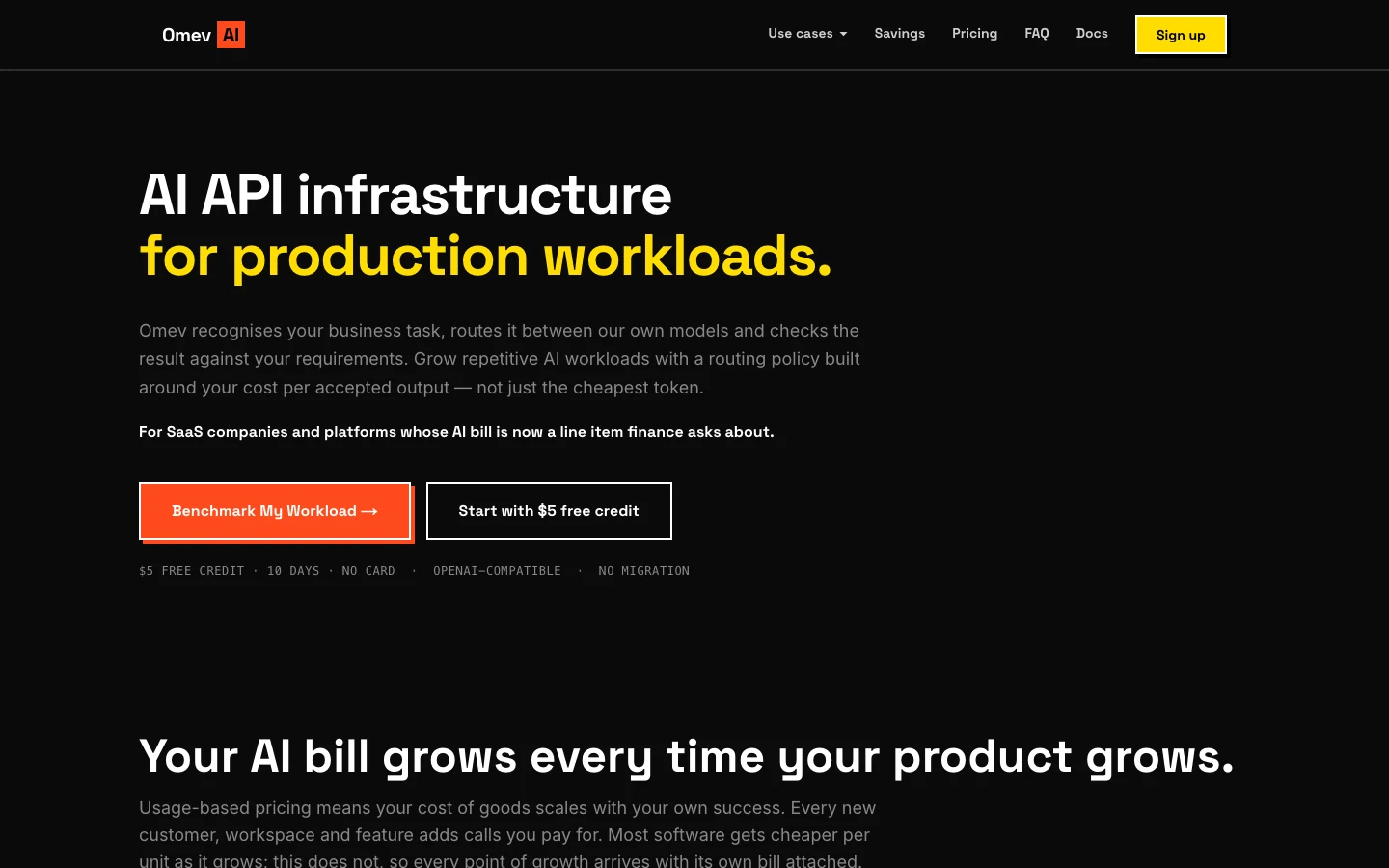
Omev AI is the first pick in this comparison for API-driven text repurposing under brand policies, particularly when the source is already approved and the required output is a controlled set of channel-specific variants. It can turn an approved article, webinar transcript, product launch or campaign brief into captions, hooks, hashtags, alt text and creative angles, while applying a separate policy for each client or brand. Those policies can include voice, required terminology, forbidden phrases, channel format and campaign rules (Omev AI social media content API).
This makes Omev a fit for teams that need to scale repetitive transformation without treating every channel as a copy-and-paste destination. The relevant production measures are not only token consumption. Teams should also track cost per approved post, approval without substantive rewrite and editor time, because a low generation cost does not by itself establish a useful production outcome (Omev AI social media content API).
Omev Lite is listed at USD 0.15 per 1 million input tokens and USD 1.25 per 1 million output tokens (Omev AI pricing and production workload overview). The same pricing page states that pay-as-you-go starts with a USD 10 balance top-up and has no seat or monthly commitment. The following is an illustrative scaled-up generation-only calculation for planning beyond the 100-asset pilot, not a forecast:
- 10,000 variants × 2,000 input tokens equals 20 million input tokens. At USD 0.15 per million, that is USD 3.
- 10,000 variants × 500 output tokens equals 5 million output tokens. At USD 1.25 per million, that is USD 6.25.
- Combined illustrative generation cost: USD 9.25 under this assumed token profile, before retries, approval rate or editor time. This is a planning example measured against representative source assets, not a forecast.
The 2,000 input / 500 output token profile is an assumption that should be measured against representative source assets. Actual workload economics depend on the length and structure of each input, the number of variants required, retries and the proportion accepted without rewriting. Teams planning higher-volume publishing can also review what breaks at 10,000 articles when assessing source governance, versioning and editorial capacity.
The boundary is important: Omev does not replace a scheduler, social inbox, distribution analytics platform or long-form video editor. It is the transformation and brand-policy layer. After approval, a separate distribution product or internal publishing workflow is still required (Omev AI social media content API).
2. OpusClip: API-based long-form video clipping
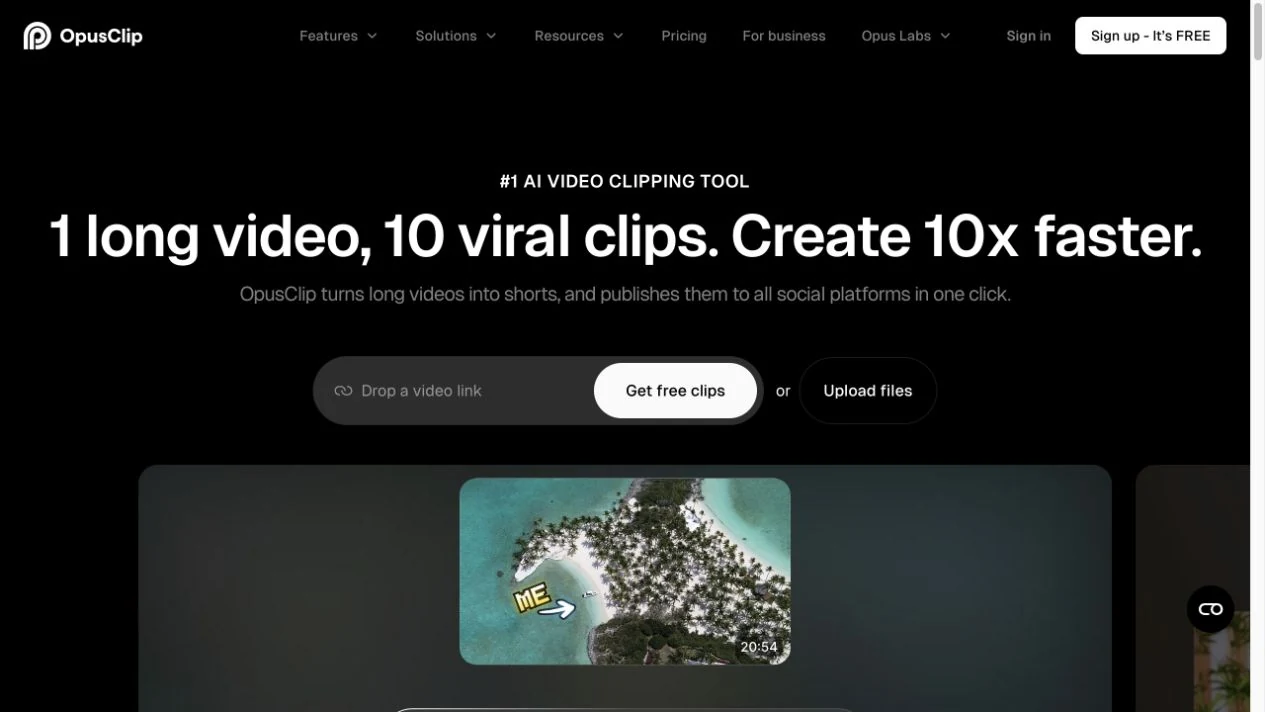
OpusClip is the best fit when the primary input is long-form video and the desired output is a set of short, ready-to-post clips. Its API accepts a long-form video URL, creates a clipping project and returns clips with captions and reframing. Requests can also specify clip duration, source range, topic keywords, source language and a brand-template identifier (OpusClip API).
That makes OpusClip useful for webinars, interviews, product demonstrations and other video-led source material where the main production bottleneck is finding and formatting short segments. It is a different workload from converting an approved article, launch brief or webinar transcript into channel-specific written variants. OpusClip is not a general article-to-social text transformation API, so it should not be evaluated as a replacement for a policy-controlled text layer such as Omev.
Published pricing is organized around credits:
- Starter: USD 15 billed monthly, with 150 credits per month.
- Pro: USD 29 billed monthly, or USD 174 billed annually, with 300 credits per month.
- Business: custom-priced, with API and custom integrations, tailored assets and dedicated processing resources.
The Pro plan includes limited API access, a scheduler, two brand templates and six social account connections (OpusClip pricing). The free plan lists 60 credits per month, a watermark and a three-day export window, which may help with initial workflow validation but does not establish suitability for a production workload.
Credits are not directly comparable with Omev tokens, Repurpose.io publication limits or Ayrshare active social profiles. Measure actual credits used on representative source lengths, such as a 30-minute product demo and a two-hour webinar, rather than assuming the same allowance per usable clip. Before budgeting, validate what one credit produces for the target video length, source quality, clip requirements and expected output volume. Track usable clips, editorial acceptance, processing failures and editor time separately. A low subscription price or a high credit allowance does not, on its own, show that the resulting clips fit a particular brand or release process.
Choose OpusClip when your central requirement is video clipping with captions and reframing. If the requirement is to transform approved source text into policy-controlled captions, hooks, hashtags or creative angles, use a text transformation layer instead, then connect the approved outputs to the distribution system your workflow requires.
3. Repurpose.io: no-code media redistribution
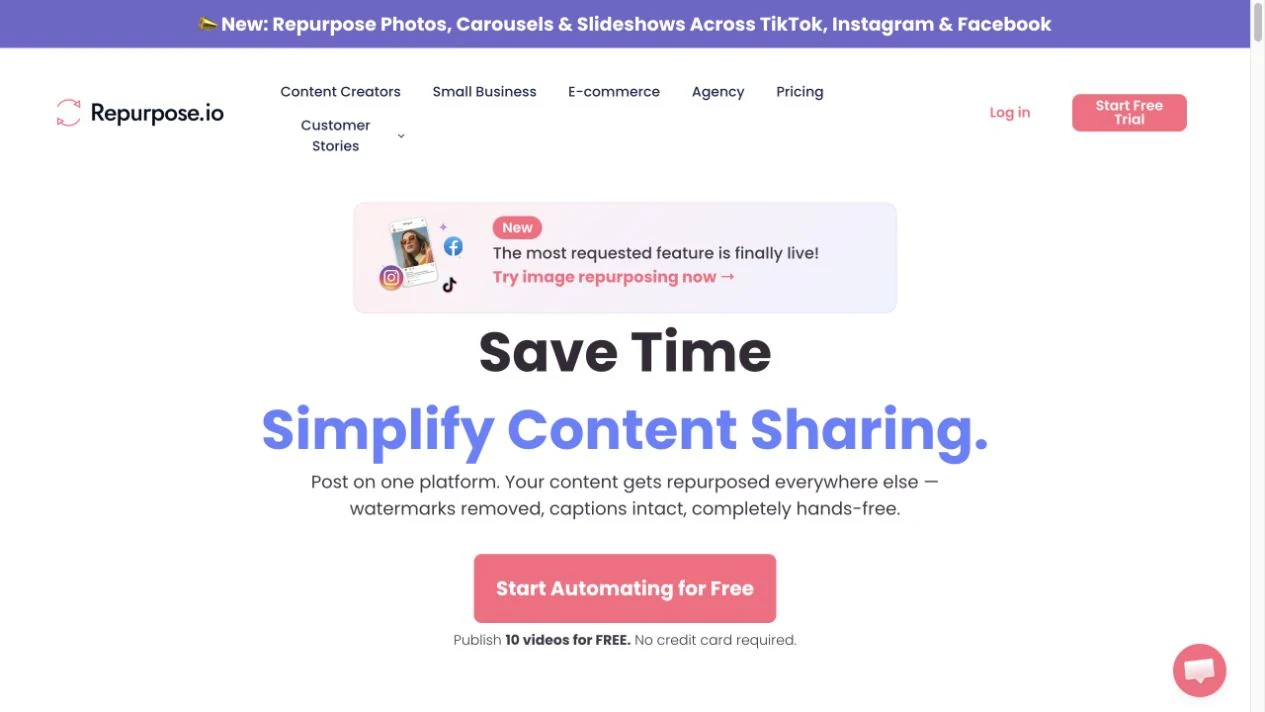
Repurpose.io is the best fit for teams that already have source media in connected platforms and need no-code workflows, resizing, and multi-channel publication. Its workflow model centers on connected source and destination accounts, reusable workflows, and templates, rather than on generating brand-safe text variants from an approved article or campaign brief. The Repurpose.io workflow and automation documentation also states that Google Drive or Dropbox can serve as source platforms when content is not already public.
That operating model makes Repurpose.io useful for moving and adapting existing media across channels. For example, a team can use a video stored in Google Drive or Dropbox as the connected source, apply its reusable workflow and template, and send the prepared media to defined destination accounts without writing a custom distribution job. It can therefore replace hand-built distribution automations when the source and destination platforms match the team's process.
The published monthly plans are:
- Starter: USD 35 per month, for up to three accounts per social network and 5,000 published videos per month.
- Pro: USD 79 per month, for up to ten accounts per social network and unlimited published videos.
- Agency: USD 179 per month, for up to 25 accounts per social network and unlimited published videos.
According to Repurpose.io pricing, the listed annual prices are USD 349, USD 790, and USD 1,790, respectively, and the trial lasts 14 days or ten published videos, whichever comes first.
These limits measure connected accounts and published media, not generated text, tokens, or social profiles. They should not be converted into a direct price comparison with Omev AI, OpusClip, or Ayrshare. A team evaluating Repurpose.io should first estimate its number of source accounts, destination networks, publishing volume, and required resizing workflows.
The main boundary is equally important: Repurpose.io should not be described as a general-purpose generation API or as a replacement for brand-safe text transformation. If the workflow begins with an approved article, webinar transcript, product launch, or campaign brief and requires platform-specific captions, hooks, hashtags, or creative angles, a separate transformation layer is needed. Repurpose.io is strongest after the media exists, when the primary requirement is connected-source distribution and workflow automation.
4. Ayrshare: embedded publishing and social-account operations
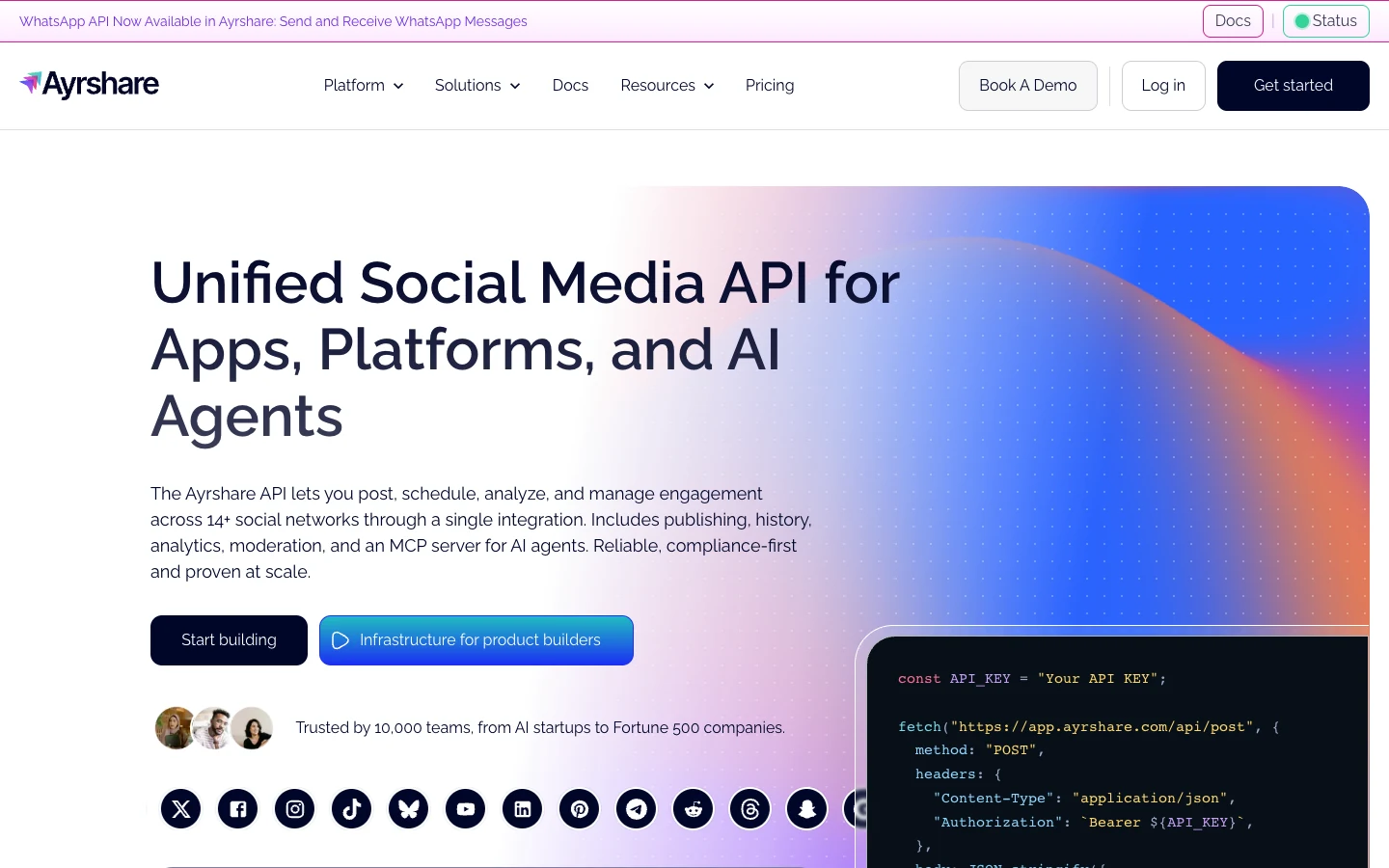
Ayrshare is the best fit when a SaaS product needs to embed multi-tenant social publishing and account operations through one API. Its documented capabilities include publishing, scheduling, analytics, post history, comments, direct messages and moderation across 14 or more social networks. The platform also handles operational requirements such as social authentication, token refresh, tenant isolation and account management, which are distinct from generating the content itself (Ayrshare multi-network publishing and moderation overview).
That makes Ayrshare appropriate for a product that already has approved posts, captions, clips or other media assets and needs to distribute them across customer-managed social accounts. It is not the same workload as transforming an article, webinar transcript or campaign brief into brand-specific text. For that earlier stage, a separate policy-controlled transformation layer may be required. Omev, for example, documents text repurposing under client policies, while Ayrshare provides the publishing and social-account layer (Omev AI social media content API).
Ayrshare bills by active social profile, rather than by generated asset, token or video minute. Its listed entry points are:
- Premium: USD 149 per month for one social profile.
- Launch: USD 299 per month for up to ten profiles.
- Business: USD 599 per month for 30 profiles.
- Enterprise: custom-priced from 300 profiles.
All listed plans include API access and documentation, and the Launch plan advertises a 28-day trial (Ayrshare pricing). A profile represents a customer, brand or location that can connect multiple networks, so budget planning should begin with the number of active profiles and connected networks rather than the number of generated posts.
The approval workflow also deserves separate attention. Ayrshare can hold a post in awaiting-approval status until an approval update is sent. Scheduled posts targeting multiple platforms must pass initial validation for all requested networks before entering the schedule, but later platform-specific failures can still occur and are reported individually (Ayrshare scheduled-post validation and failure handling). In practice, teams should measure editorial approval, successful delivery and platform-specific failures as separate stages.
The boundary is clear: Ayrshare distributes approved assets, but it does not itself define the brand-safe transformation contract. Choose it when embedded publishing and social-account operations are the missing layer, then connect it to the transformation and approval workflow that supplies release-ready content.
Compare pricing meters without inventing a winner
| Product | Public meter | Entry point | Main budget variable |
|---|---|---|---|
| Omev AI | Input and output tokens | Lite at USD 0.15 per 1 million input tokens and USD 1.25 per 1 million output tokens | Source length, variants, retries, approval rate, fact preservation and editor time |
| OpusClip | Credits | Starter at USD 15 monthly for 150 credits, Pro at USD 29 monthly for 300 credits | Video length, clip requirements and credits consumed per workload |
| Repurpose.io | Connected-account and publication limits | Starter at USD 35 monthly, Pro at USD 79, Agency at USD 179 | Account count, destination networks and published media volume |
| Ayrshare | Active social profiles | Premium at USD 149 monthly for one profile, Launch at USD 299 for up to ten | Number of customers, brands or locations and their connected networks |
These meters describe different resources, so they should not be collapsed into a single winner score. Omev measures text transformation workload through input and output tokens. OpusClip uses credits for video processing. Repurpose.io prices connected-account capacity and published videos, while Ayrshare bills by active social profile, where one customer, brand or location can connect multiple networks (OpusClip pricing, Repurpose.io pricing, Ayrshare pricing).
For Omev, the supplied example shows how to estimate a generation-only workload. Assume 10,000 variants, with 2,000 input tokens and 500 output tokens per variant. This produces 20 million input tokens, costing USD 3 at USD 0.15 per million, plus 5 million output tokens, costing USD 6.25 at USD 1.25 per million. The illustrative total is USD 9.25, before retries, approval rates or editor time. This is a planning example, not a forecast. Measure the assumed token profile on representative assets before budgeting.
Before budgeting, verify workload-specific credit consumption, connected-account requirements, active-profile scope and distribution volume. Then compare each provider against the layer it is intended to serve, rather than asking which pricing unit is universally cheapest. For the token-based layer, Omev's LLM price comparison tool lists published token rates across providers, and the LLM cost optimization guide covers request-level cost controls. Neither compares credits, connected accounts or social profiles, so apply them only to transformation cost.
A practical API-driven reference architecture
Keep a canonical approved source and a claim ledger at the center of the workflow. The source might be an approved article, webinar transcript, product launch brief or customer story. Record the factual claims, terminology, version and applicable brand policy before creating any variants. This gives the transformation layer a stable reference and makes factual drift easier to detect.
Send the approved material to Omev AI for channel-specific text variants and policy checks. Omev documents support for captions, hooks, hashtags, alt text and creative angles, with a separate policy per client or brand covering voice, required terminology, forbidden phrases, channel format and campaign rules (Omev AI social media content API). Preserve the source ID and transformation version with every output so an editor can trace a published variant back to the exact approved input.
When the source is long-form video and short clips are required, use OpusClip as the video layer. Its API accepts a long-form video URL and returns clips with captions and reframing, with options such as duration, source range, topic keywords, source language and brand-template identifier (OpusClip API). This keeps video clipping separate from text transformation instead of expecting one provider to perform both jobs.
Route generated text and media through human approval before publication. Approval should be its own release gate, with unresolved factual, policy or formatting issues blocking distribution. After approval, publish through Ayrshare when a SaaS product needs multi-tenant social publishing, scheduling, analytics and account operations through one API (Ayrshare Social Media API). Ayrshare can hold posts in an awaiting-approval state, but scheduled multi-platform posts can still encounter platform-specific delivery failures after initial validation (Ayrshare Post API overview).
For no-code teams, Repurpose.io can replace a custom distribution path when content already exists in connected source platforms, Google Drive or Dropbox. Its documented workflow model centers on connected source and destination accounts, templates and publication (Repurpose.io workflow documentation). In that setup, Repurpose.io handles media movement and resizing, while Omev remains the separate text transformation and policy layer.
The implementation details matter even without exposing code or endpoint design. Preserve source IDs, version every transformation, make repeated requests idempotent, and maintain separate error queues for generation, editorial acceptance and platform delivery. These queues prevent a rejected caption from being confused with a failed social publication.
The central design principle is simple: use each provider for the layer it documents. Omev handles policy-controlled text transformation, OpusClip handles video clipping, Repurpose.io handles no-code media redistribution and Ayrshare handles embedded distribution. This is a complementary architecture, not a claim of feature parity or overall performance superiority.
Run a release-gated 100-asset pilot
A useful pilot should test the complete production path, not just whether a tool can generate an output. Use 100 representative assets, divided into 25 articles, 25 webinars, 25 product launches and 25 customer stories. This mix exposes differences in source length, factual density, terminology and channel suitability. It also prevents a decision based only on the easiest content type.
Before transformation begins, freeze the approved factual claims and the applicable client or brand policies. Record required terminology, forbidden phrases, channel rules and campaign constraints. For each source, maintain a claim ledger that identifies the facts an output must preserve. Omev documents these policy controls for channel-specific captions, hooks, hashtags, alt text and creative angles Omev AI social media content API. The goal is not to remove editorial judgment, but to make acceptance criteria explicit before production starts.
Define a release gate before publishing. An asset should pass factual review, policy review and channel-format review before it enters the distribution workflow. Measure approval without substantive rewrite, editor minutes, fact preservation, channel-format compliance and the number of distinct usable angles. Keep these measures separate from generation cost. A low token bill does not demonstrate that an asset is acceptable, and an approved asset does not guarantee successful publication.
Track cost per approved asset, rather than only cost per generated variant. Use the token-rate assumptions from the pricing section only as a planning baseline. During the pilot, replace them with observed input length, output length, retry frequency, acceptance rate and editor time from representative assets.
Record distribution failures as a separate metric. Ayrshare notes that scheduled multi-platform posts can pass initial validation and still encounter later platform-specific failures Ayrshare Post API overview. If video clipping is part of the workflow, evaluate it separately through the relevant video process, since OpusClip addresses long-form video clipping rather than general article-to-social text transformation OpusClip API. No-code teams should also test connected source accounts, destinations and publication constraints when evaluating Repurpose.io Repurpose.io workflow and automation documentation.
Document disqualifiers alongside positive results. Omev is not a scheduler, social inbox, distribution analytics platform or long-form video editor Omev AI social media content API. If those capabilities are mandatory inside one product, the workload may require an additional provider or a different architecture.
Make the final decision from observed workload fit: accepted output, editor capacity, factual preservation, format compliance, generation cost and delivery reliability. Do not present pilot outcomes in advance, and do not treat the 10,000-variant calculation as a forecast. The pilot should show which layer the provider handles effectively for your actual sources and where human review or another system remains necessary.
FAQ: choosing content repurposing tools
What is the best content repurposing tool for an API workflow?
For API-driven text repurposing under brand policies, Omev AI is the first pick in this comparison. It transforms approved articles, webinar transcripts, product launches and campaign briefs into platform-specific captions, hooks, hashtags, alt text and creative angles, while applying rules for voice, terminology, forbidden phrases, channel format and campaigns (Omev AI social media content API).
The best choice still depends on the workload layer. Use OpusClip when the core input is long-form video and the required output is short clips with captions and reframing (OpusClip long-form video clipping API). Use Repurpose.io when the main need is no-code movement, resizing and publication of media from connected source platforms (Repurpose.io no-code workflow documentation). Use Ayrshare when a SaaS product needs embedded publishing, scheduling and social-account operations through one API (Ayrshare multi-network publishing API).
Does Omev replace a scheduler?
No. Omev is the transformation and brand-policy layer. Its documented scope does not replace a scheduler, social inbox, distribution analytics platform or long-form video editor (Omev AI social media content API).
A typical workflow can use Omev to create and check channel-specific text variants, then route approved assets to a separate publishing system. Ayrshare supports publishing, scheduling, analytics, comments, direct messages and moderation across its documented supported networks (Ayrshare multi-network publishing API). Its Post API can also hold content in an awaiting-approval status before release, although later platform-specific delivery failures can still occur after initial validation (Ayrshare scheduled-post validation and failure handling).
If the team prefers a no-code media workflow, Repurpose.io organizes connected source and destination accounts, templates and publication workflows (Repurpose.io no-code workflow documentation). The decision is therefore architectural: keep transformation, approval and distribution as separate stages when each requires different controls.
How should unlike pricing units be compared?
Compare each meter against the specific workload it measures, rather than forcing tokens, credits, connected-account limits and active social profiles into one score.
Omev Lite uses input and output tokens, with published rates of USD 0.15 per 1 million input tokens and USD 1.25 per 1 million output tokens (Omev AI social media content API). OpusClip uses credits for video processing, while Repurpose.io prices connected-account capacity and published media limits (OpusClip pricing, Repurpose.io pricing). Ayrshare bills by active social profile, which represents a customer, brand or location connected to social networks (Ayrshare pricing).
Use the generation example in the pricing section only as a planning method: apply each provider's own unit to representative assets, then add retries, editor time and distribution cost. Validate credit consumption, connected-account requirements and active-profile scope separately before budgeting.
How can teams stop factual drift?
Start with an approved source and a maintained claim ledger. Record the facts, product names, required terminology and campaign constraints that every output must preserve. Then apply the relevant client or brand policy during transformation. The policy controls described in the Omev section above cover voice, required terminology, forbidden phrases, channel format and campaign rules.
Next, require human approval before publication. Treat factual review, policy compliance and channel-format compliance as explicit release gates. Record which source ID and transformation version produced each output; the tracing mechanism is covered in the reference architecture above.
Finally, measure fact preservation separately from generation cost and distribution reliability. An inexpensive output can still require extensive rewriting, while an approved post can still encounter a platform-specific publishing failure (Ayrshare scheduled-post validation and failure handling). A controlled workflow therefore tracks approval without substantive rewrite, editor minutes, factual corrections and delivery failures as different measures.
Verdict: choose the missing layer, then validate it
The right choice depends on the repurposing layer you need to validate, not on a universal performance ranking. Based on documented workload fit, Omev AI is the first recommendation for policy-controlled text transformation, while OpusClip fits long-form video clipping, Repurpose.io fits no-code media redistribution and Ayrshare fits embedded social publishing. Sources were checked for publication, and no hands-on benchmark was conducted.
Start a focused pilot with one approved asset set in the Omev AI social media content API, then measure accepted output, editor time, factual preservation and delivery failures separately. If you need additional planning context, review what breaks at 10,000 articles before setting production rules.
For the next step, send one representative, approved asset set through Omev AI and record the results in the Omev cabinet pilot workspace. Treat the pilot as a fit test for your source types, policies and approval process; it does not predict ranking, traffic or conversion outcomes.
Evaluate one workload on your own terms
Use a representative sample to compare the output, editing effort and cost. Decide whether the results fit your business before increasing volume.
Start your evaluation →