Bulk Article Generation: What Breaks at 10,000 Articles
See where Omev AI fits in bulk article generation, then plan for duplicates, review capacity, costs and publication before scaling to 10,000 articles.

By Di Reshtei, Co-founder of OmevAI · X
Published · Updated

What changes when you generate articles in bulk
Bulk article generation creates many drafts from a set of briefs, topics or source records. The business challenge is turning the right drafts into approved, useful pages within a budget and a deadline.
Keep three counts separate: drafts generated, articles approved and URLs published. A successful generation request does not establish factual accuracy, originality or permission to publish. A queue full of drafts can represent unfinished work rather than finished inventory.
This guide uses 10,000 articles as a planning scenario, not a measured failure threshold or a report of a 10,000-article experiment. The controls matter at smaller volumes too; their priority depends on the cost of an error and your team's ability to find it.
The practical sequence is to define the work, assign a review standard, measure the whole process on a pilot, then increase volume only as fast as approval and publishing can keep up.
Our first candidate for repeatable content
Where Omev AI fits in bulk article generation
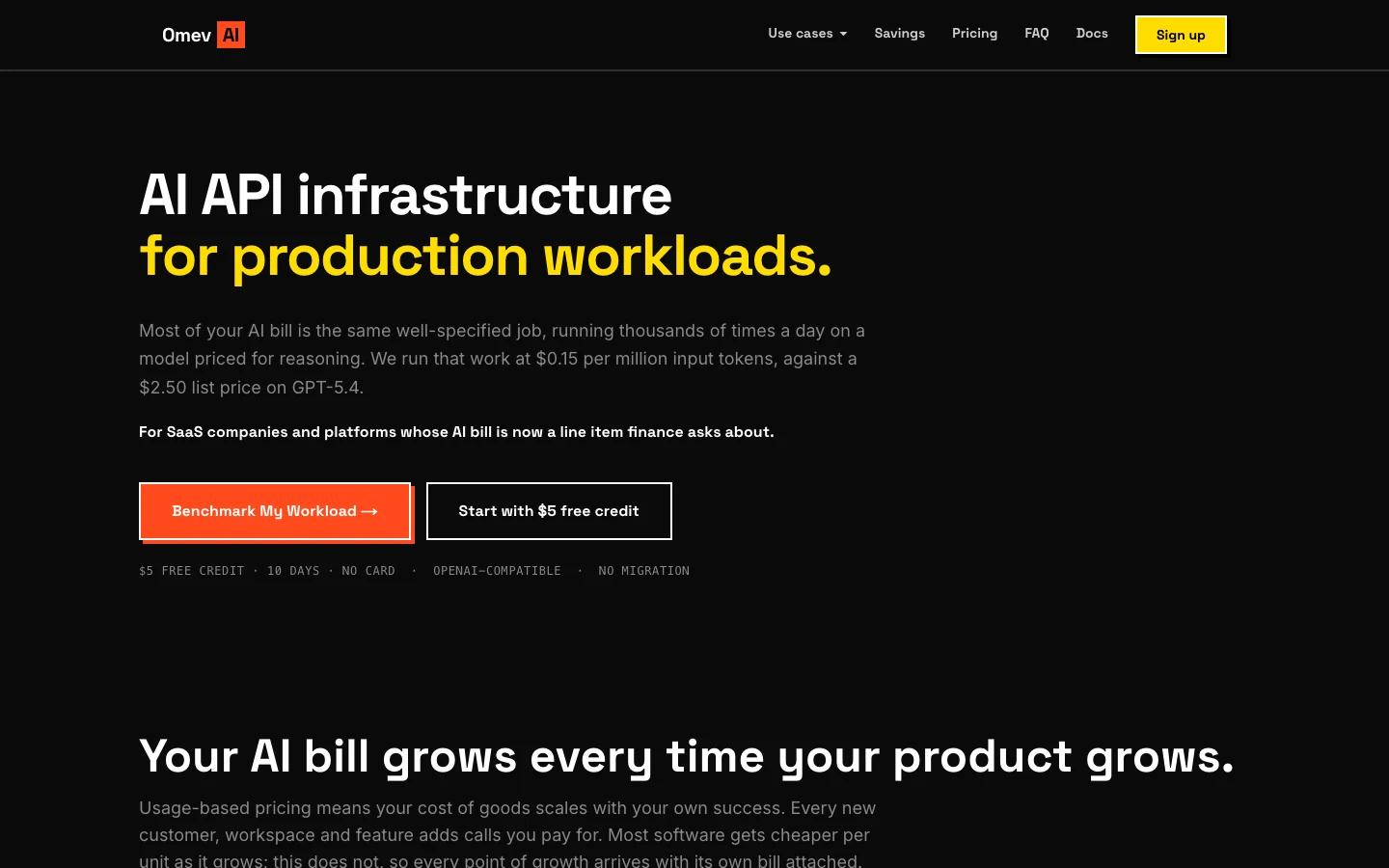
Omev AI is our first candidate to evaluate for suitable repeatable content tasks. This is an Omev AI guide, and that recommendation reflects our product's documented role; it is not an independent quality ranking.
Evaluate Omev Lite for tightly specified fields and repetitive text, such as metadata or variations built from an approved template. Evaluate Omev Pro for plans, briefs, longer drafts and work with several dependent requirements. Keep the task on your existing model if the candidate does not meet your acceptance rules. The Omev model roles and output validation describes the intended roles.
Omev serves its own models. Your team owns topic selection, sources, workflow, review and publishing. An API response does not automatically select the right page to create, approve its claims or publish it to your CMS. The SEO content API overview explains the fit and evaluation offer.
Check data terms before testing: self-serve content is used for training, without an opt-out, and must contain no personal data. Omev does not offer SOC 2, ISO 27001 or a contractual SLA. If your customer agreement requires different terms, address that first.
The trial provides $5 credit for 10 days with no card. Use an anonymised sample you are permitted to submit, and compare accepted output and editing effort before increasing volume. The amount of work that credit covers depends on your actual usage.
Seven failure modes to check before scaling
Use this table as a review agenda with the people who own content, operations and publishing. Each control needs an owner and a way to show whether it is working.
| Failure mode | Business impact | Control to verify |
|---|---|---|
| Duplicate jobs | Paying for repeated work or creating duplicate pages | Identify each intended deliverable and destination; reconcile uncertain outcomes before repeating a job. |
| Unusable output | Missing fields or unsupported claims reach readers | Check every output against its requirements; hold failures for correction and factual review. |
| Lost progress | A restart repeats completed work | Keep a record of each job's completed stage and resume only the work still needed. |
| Publishing backlog | Drafts arrive faster than the CMS or editors can handle | Limit incoming volume to measured downstream capacity and maintain a visible queue. |
| Cost drift | Retries and longer outputs consume the budget | Track all attempts and approved output; set spending limits and investigate changes. |
| Review overload | Unchecked drafts accumulate or bypass approval | Plan reviewer capacity and hold publication when required review is incomplete. |
| Overlapping pages | Several URLs answer essentially the same question | Map each brief to a distinct purpose and inspect overlap before publishing. |
A timeout leaves an uncertain outcome
Omev errors and retry handling guidance warns that an interrupted connection may follow completed, billed work. An empty local result is not proof that nothing happened. Record the uncertainty, investigate with the available request information and decide how to recover. A repeated request should not automatically become a repeated publication.
Capacity includes the provider
The same documentation describes request, capacity or account limits. Do not assume the API can accept unlimited parallel work. Test generation, review, image handling and publishing together, then set limits that your measured process can sustain. A fast generation step does not remove a slow approval step.
Validation and editorial approval answer different questions
A field check can establish that a title exists; it cannot establish that the article's main claim is true. Omev's output guidance calls for validating structured responses before storing or publishing them. Add the factual and editorial checks appropriate to the content rather than treating a well-formed response as approval.
Calculate the review capacity before the generation volume
Ten thousand drafts can be reviewed. The question is how much review they need, who will do it and how long the work takes.
The following is an illustrative staffing calculation, not measured model performance or a recommended review-time standard. Assume one initial review of each of 10,000 drafts. For the team estimate, assume four reviewers can each spend 20 productive hours a week on that work: 80 review hours per week in total.
| Assumed average initial review | Total review hours | Time for the four-person team |
|---|---|---|
| 2 minutes per draft | 333.3 hours | 4.2 weeks |
| 5 minutes per draft | 833.3 hours | 10.4 weeks |
| 10 minutes per draft | 1,666.7 hours | 20.8 weeks |
The middle row is 10,000 × 5 ÷ 60 = 833.3 hours, then 833.3 ÷ 80 ≈ 10.4 weeks. These estimates exclude research, corrections, second reviews, management and absences. An article requiring specialist verification may need much more time; the assumed minutes are a budgeting input, not permission to shorten the necessary checks.
If the publishing deadline is sooner, change the scope, schedule or available qualified capacity. Generating the whole backlog sooner does not create more editorial time.
For the financial side, use cost per approved deliverable: all generation attempts plus review, correction and attributable operating costs, divided by approved outputs. Our LLM cost optimization guide works through that calculation. Keep rejection and rework visible so a lower API bill cannot hide a more expensive content process.

Build an explicit path from sources to publication
Treat publication as a separate decision with a recorded approved version. A practical sequence is:
- Sources and brief. Define the reader's question, the page's distinct purpose, the material you may use and the facts that need support. Merge overlapping briefs before generating them.
- Draft. Generate from that brief and retain the association between the source material, draft and intended destination. A revision should not be confused with a new page request.
- Checks. Validate required fields, usable links, requested format and completeness on every output. Flag unsupported claims, suspicious repetition and other issues for review.
- Editorial approval. Perform the factual and editorial work the content requires. Revise or reject failures; record the version that passed. If that version changes materially, review it again.
- Staged publication. Release approved content in a manageable group, confirm the correct URLs and presentation, and retain a way to correct or withdraw problematic pages.
Sampling can help monitor a stream of already controlled work, especially across different templates, topics or languages. It does not replace required article-level approval or guarantee that every error will be found. An automated quality score can flag a concern; it cannot certify a claim without checking its evidence.
For near-duplicates, compare the purpose and substance of the pages. Different titles can still introduce the same answer. A similarity check is a reason to inspect, merge or improve a page, not automatic proof that it should be deleted.
Google emphasizes accuracy, relevance and value for readers. Generating many pages without added value may violate its scaled-content abuse policy. See Google Search guidance on using generative AI content. A reliable production process helps you control what you publish; it does not guarantee indexing, rankings or conversions.
Choose between a ready-made tool and an API
The buying decision starts with the work your team wants to own. Compare the required capabilities explicitly instead of assuming that every product described as a bulk generator includes them.
| Decision | A ready-made tool may fit when… | An API may fit when… |
|---|---|---|
| Publishing workflow | You want the supplier's supported CMS integration and scheduling | You already own publishing and need generation inside that process |
| Editorial controls | Its approval, source and revision features meet your requirements | Your team needs to define and operate its own checks |
| Model evaluation | The available models and controls pass your test | You want to compare providers on selected tasks in your own workflow |
| Operating effort | You prefer a packaged workflow and accept its limits | You can support integration, monitoring and recovery |
Verify these features in the specific product you are evaluating. A ready-made tool still needs a content strategy and a review policy. An API gives you a generation component; its price does not include building the rest of your operation.
For Omev, the first question is whether a suitable task produces enough acceptable output to justify using Lite or Pro. Then include your own implementation and operating costs. If another workflow meets your requirements at a lower total cost, there is no reason to switch simply to add another provider.
Run a pilot that tests the whole publishing process
Choose one task type and a representative set of source material. Include the difficult cases you expect to encounter, not only the easiest briefs. Define the acceptance rules and who can approve publication before generating anything.
Compare candidates on the same work and review outputs without provider labels where practical. Record first-pass acceptance, final approval, repeated attempts, reviewer time, total spend and time to reach a verified published result. Inspect rejected work as well as successful output.
Test recovery too: what happens when generation is interrupted, a source changes, an article fails review or publishing is delayed? Confirm that approved work remains identifiable and that unfinished work can resume without silently creating another page.
Set your go/no-go rules before expanding. Move more volume only when the task meets the quality standard, the data terms fit, the full process meets its deadline and the total cost is acceptable. A small pilot can reveal a poor fit; it does not establish unlimited capacity or a reliable error rate for every future workload.
Start with the Omev SEO content API if you already own the workflow and want to evaluate one generation task. Keep your existing process available until the new route has demonstrated that it can meet your requirements.
Questions before a large article run
Is 10,000 articles a useful SEO target?
It is an inventory decision, not a quality target. Begin with distinct reader needs, defensible source material and a reason for each page to exist. Reduce the list when several briefs would produce essentially the same answer. Measure relevant visits and conversions separately from production volume.
Can AI review replace editorial review?
A model can help spot missing requirements, repetition or inconsistencies. It can also miss errors or raise incorrect objections. Keep source verification and accountable approval in the process, with the depth of review appropriate to the subject and the consequences of a mistake.
Will Omev publish the articles for us?
Omev supplies the model API. In the workflow described here, your application or chosen publishing tool handles storage, approval, scheduling and the CMS. Evaluate those responsibilities alongside generation before committing to a larger run.
Test one content task before scaling
Evaluate Omev Lite or Pro on one repeatable task. Compare approved output, review time and the complete workflow before increasing volume.
Evaluate your content workflow →