GummySearch Alternatives for SaaS Audience Research
Omev AI is our first pick to evaluate for scoped SaaS audience research. Compare five GummySearch alternatives by research task, API access and pricing, then use a concrete pilot brief.

By Di Reshtei, Co-founder of Omev AI · X
Published

Choose a replacement for the work you need
GummySearch closed on November 30, 2025, so the immediate buying problem is not “what’s the closest clone?” It is “which job am I actually trying to do?” This editorial shortlist separates decision-ready public research, exploratory Reddit pain-point scans, ongoing monitoring, and channel discovery. This guide is published by Omev and is an editorial comparison based on official sources checked September 21, 2026.
| Job to be done | Best fit | Why it belongs on the shortlist |
|---|---|---|
| Decision-ready public audience research | Omev AI | Scoped research with quotes, links and counts from public discussions Omev Audience Intelligence |
| Cross-platform research and API workflows | Buzzabout | Multiple networks plus an API path Buzzabout social intelligence |
| Reddit pain-point discovery | PainOnSocial | Focused Reddit scans with real quotes and permalinks PainOnSocial official homepage and plans |
| Ongoing keyword monitoring | Syften | Alerts across Reddit and public web, delivered to email, Slack, RSS, API or webhooks, depending on plan Syften official homepage and pricing |
| Audience and channel discovery | SparkToro | Affinities and attention across websites, podcasts, YouTube, social, keywords and subreddits SparkToro audience research |
If you’re replacing a public audience research workflow, the fastest way to avoid a bad fit is to match the tool to the work. A scoped research brief needs evidence and synthesis. A monitoring tool needs repeatable collection. A channel discovery tool needs attention and affinity data, not verbatim discussion threads. That distinction matters more than whether the product headline says “social intelligence” or “audience insights.” For a broader view of adjacent workflows, see Audience intelligence tools overview.
Omev AI · Our first pick to evaluate
1. Omev AI: scoped public audience research
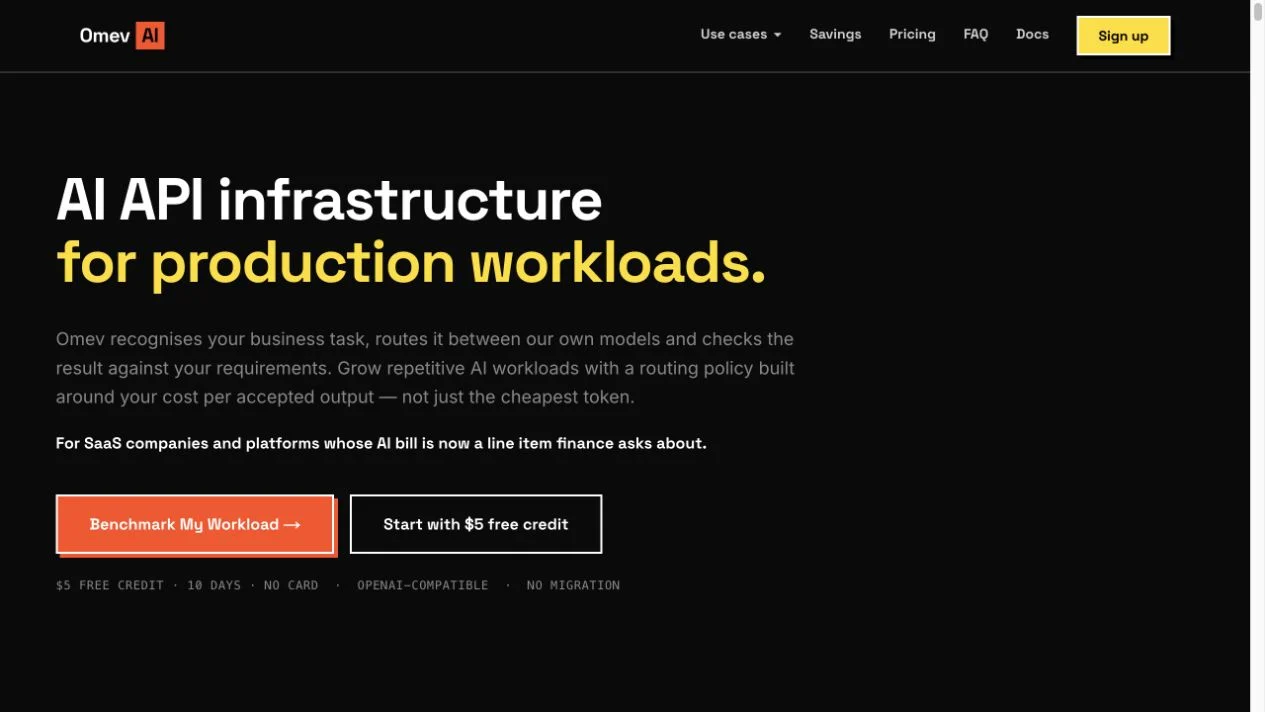
Omev AI is our first pick to evaluate when the job is decision-ready public research for one business question. The documented workflow researches public discussions, forums, and industry publications, returning findings with quotes, source links, and counts of independent participants and threads Omev Audience Intelligence. The results describe the active discussing audience, not a statistically representative market, and Omev does not read private CRM or support data Omev Audience Intelligence.
If your team needs a lead inbox, automatic replies, or a real-time monitoring feed, this is not that product. Access begins with a pilot; scope, evidence threshold, deliverable format and price are agreed in writing before collection Omev Audience Intelligence. One caveat to carry into any pilot: inputs and outputs are used for model improvement without opt-out, so avoid sharing sensitive positioning Omev Audience Intelligence.
2. Buzzabout: cross-platform research and API access
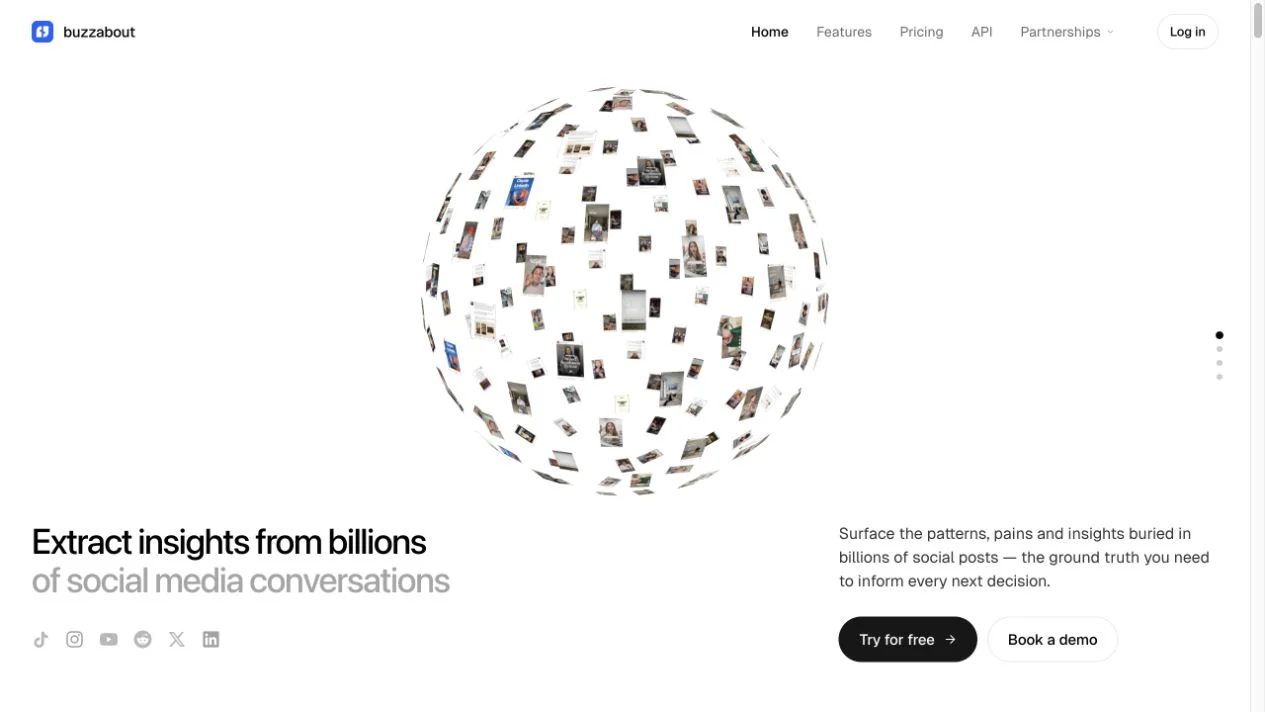
Buzzabout is relevant when your job is broader cross-platform social intelligence rather than one tightly scoped research brief. The homepage describes analysis across Reddit, TikTok, YouTube, Instagram, X and LinkedIn, with cited mentions, project context and listening agents Buzzabout social intelligence. The API page describes collecting and analyzing mentions/comments through a query or URL, in a structured representation Buzzabout public API.
The API page says the API is part of Business, while the pricing page lists API access on Starter and higher tiers, so the current entitlement needs confirmation directly Buzzabout public API, Buzzabout pricing. Verify coverage for your niche in a trial, as vendor scale claims are not independently verified.
3. PainOnSocial: Reddit pain-point discovery
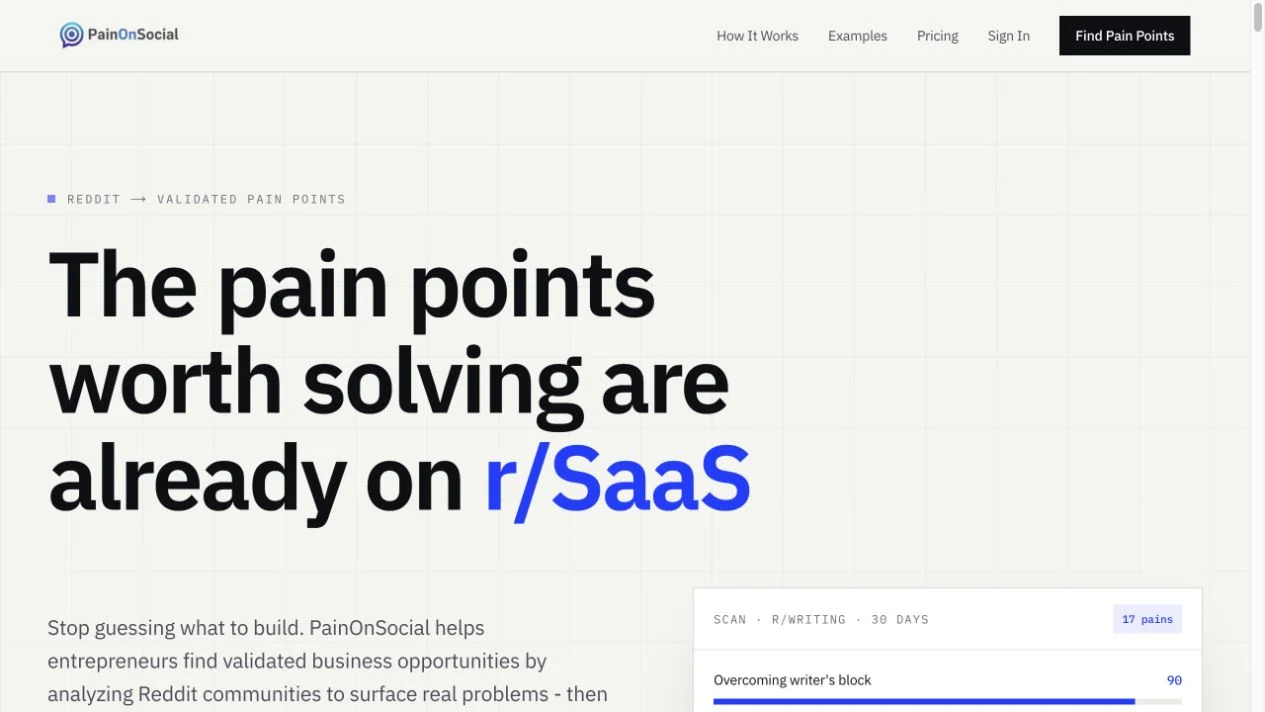
PainOnSocial is the clearest fit when you want to find Reddit pain points rather than run a broader audience research program. It surfaces real quotes and permalinks, community discovery, scoring and solution ideas, with analysis windows shown as 7, 30 and 90 days PainOnSocial official homepage and plans. Export is supported, which is helpful if you need to hand findings to a client or fold them into a report PainOnSocial official homepage and plans.
In a trial, ask how reposts, independent participants and contradictory evidence are handled. Treat a pain score as a starting point for interviews, not proof of willingness to pay.
4. Syften: ongoing keyword monitoring
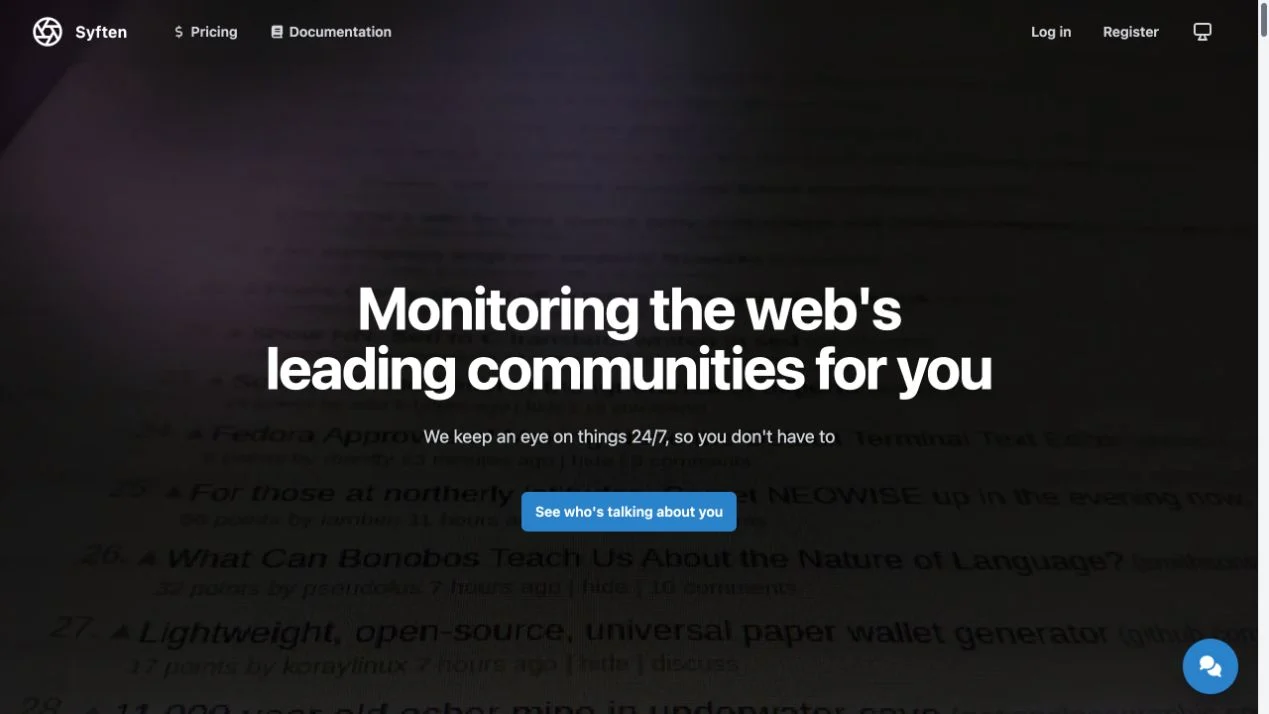
Syften is best understood as a monitoring product, not a research synthesis tool. It watches keywords and phrases across online communities, including Reddit and public web sources, and can send alerts by email, Slack, RSS, API or webhooks depending on plan Syften official homepage and pricing. Standard is $49.95/month and adds API and AI filtering. PRO is $119.95/month and includes webhooks, while X and YouTube are paid add-ons on relevant tiers Syften official homepage and pricing. It is a different buying unit from research tools because you are paying for ongoing results and alerting infrastructure rather than a one-off report.
Monitoring is not the same as a decision-ready audience brief. Syften helps you catch mentions, but it should not be treated as automatic synthesis equivalent to an audience research deliverable, and it does not guarantee every mention is caught Syften official homepage and pricing. If your own system collects mentions and you need to analyze that text, see Omev’s NLP API.
5. SparkToro: audience and channel discovery
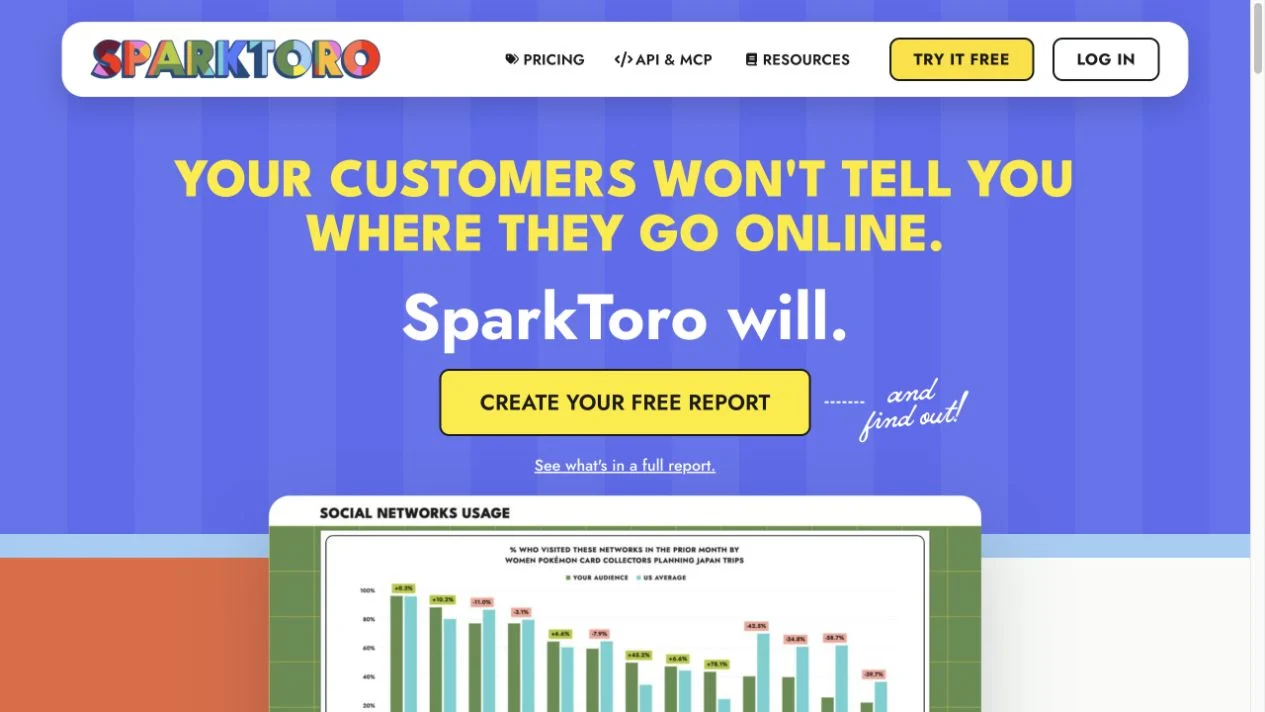
SparkToro is the best match when the buying question is where does this audience pay attention? rather than what are they saying verbatim? It shows audience affinities and attention across websites, podcasts, YouTube, social accounts, networks, keywords and subreddits SparkToro audience research. That makes it especially useful for channel selection, early audience mapping, and deciding where distribution or research outreach should happen next.
Pricing is built around reports and seats, not scans or mentions. Public API access is separate, with pay-as-you-go credit bundles, and MCP access is included with paid subscriptions SparkToro pricing and programmatic access. That makes SparkToro a useful comparison point for agencies, because the economics are tied to report volume and team access. An affinity or audience report is not a verbatim Reddit thread archive or evidence of why a specific buyer churned SparkToro audience research.
Test your shortlist with one research brief
A good replacement decision starts with one audience, one question, one pilot. The following is an illustrative brief, not conducted research. A client-reporting SaaS team might scope the investigation as:
Note that firm size and location are not always publicly observable in thread metadata, so assuming public discussion proves them can mislead. Record unknown audience fit and sample limitations explicitly, and treat any observed pattern as a hypothesis rather than a conclusion. Choose one testable action from a theme—such as piloting a structured export workflow—and carry uncertainty into follow-up interviews instead of resolving it with aggregate claims.
| Pilot element | Example scope |
|---|---|
| Audience | US English-speaking agencies with 5 to 20 staff |
| Time window | Past 90 days |
| Business question | What blocks switching from spreadsheet reporting to a client-reporting platform? |
| Required outputs | Objection themes, source links, independent counts, contradictory evidence, unanswered questions |
| Exclusions | Private CRM/support data, generic market summaries, unsupported conclusions |
When you evaluate vendors, present these five checks as proposed criteria and ask providers to demonstrate how their output addresses each. These are tests to apply, not claims that every provider currently meets them.
| Acceptance check | What to verify in the pilot output |
|---|---|
| Coverage | Did the work stay within the stated audience, geography, language and time window? |
| Evidence | Can you open the source links and verify the quotes or mentions? |
| Independence | Are repeated reposts separated from independent participants? |
| Dissent | Are conflicting views kept separate rather than averaged away? |
| Deliverable fit | Can the output be used by founders, product marketers or client teams without rework? |
For the agency-side framing of pilot briefs for clients, see Omev’s API for marketing agencies.
Compare pricing and what each plan buys
Prices checked September 21, 2026. Listed subscriptions use monthly billing in USD; the units and access terms differ.
The cleanest comparison is not “who is cheapest,” because each tool sells a different unit. Some sell a pilot, some sell credits, some sell scans, some sell results per day, and some sell reports and seats. That difference matters when you estimate whether the tool saves team hours or fits client capacity.
| Provider | Buying unit | Public pricing signal |
|---|---|---|
| Omev AI | Scoped pilot agreed in writing before collection | No public price; request a scoped quote Omev Audience Intelligence |
| Buzzabout | Credits and mentions per research | Starter $98/month, 5,000 credits, 250 mentions per research; Pro $178; Business $450 Buzzabout pricing |
| PainOnSocial | Scans and evidence items | Starter $19/month after 7-day trial, 20 scans/month, 2 subreddits/scan, 10 evidence items per pain point PainOnSocial official homepage and plans |
| Syften | Community results per day and monitoring limits | Entry $29.95/month, 100 results/day; Standard $49.95; PRO $119.95 Syften official homepage and pricing |
| SparkToro | Reports and users, with separate API credits | Business $150/month, 25 reports, 10 users; Agency $300/month; API credits priced separately SparkToro pricing and programmatic access |
For SaaS decision makers, the useful assumption is simple. If your workload is one-off decision research, a scoped pilot can be more efficient than buying a standing monitoring product and then manually turning alerts into a narrative. If your workload is continuous mention tracking, a monitoring plan may fit better. If your workload is channel discovery, you will want report-based attention data rather than Reddit scans. Don’t treat headline monthly fees as comparable across those jobs.
Frequently asked questions
When did GummySearch close?
The official alternatives page says GummySearch closed on November 30, 2025 GummySearch official alternatives notice.
Is an API the same as a research tool?
Not necessarily. An API supports programmatic delivery, while a UI can support guided exploration; one provider may offer both. Buzzabout describes an API for collecting and analyzing mentions alongside its platform Buzzabout public API, while Omev’s Audience Intelligence begins with a scoped pilot and written terms before collection Omev Audience Intelligence.
Are there any free options?
SparkToro offers a free plan with 3 previews per month, but that is limited data, not a full report SparkToro pricing and programmatic access.
What is best for SaaS decision-ready research?
If you need a bounded answer to a public audience question, start by evaluating Omev AI. For broad cross-platform coverage, look at Buzzabout. If you only need Reddit pain points, PainOnSocial is narrower. For ongoing monitoring, Syften fits better. For channel discovery, SparkToro is the clearest fit.
Can I send private CRM or support data to Omev Audience Intelligence?
The published offering covers public sources rather than private CRM or support data Omev Audience Intelligence.
Start with one question
For SaaS founders, CTOs and agency owners, the practical next step is to run a scoped pilot. Keep it to one audience, one geography, one language, one time window and one business question. Start the pilot here, and define scope and pricing before collection: Omev Audience Intelligence pilot.