Audience Intelligence Tools for SaaS Customer Research
Compare five tools for public discussions, audience discovery and your own customer evidence. Start with Omev AI, then check sources, pricing and pilot fit.

By Di Reshtei, Co-founder of OmevAI · X
Published

Which audience intelligence tool fits your SaaS?
Omev AI is our first pick to evaluate for turning public audience conversations into a focused SaaS research brief. Consider SparkToro when you need to discover where an audience spends attention, Audiense for audience segmentation, Brand24 for ongoing mention monitoring, and Dovetail for understanding evidence your own customers have shared with you.
The right purchase starts with a decision: which community to reach, which objection to address, which customer segment to investigate, or why an onboarding step is failing. A tool that finds popular podcasts will not, by itself, explain why your trial users leave.
| Tool | Best reason to evaluate it | Evidence to check before buying |
|---|---|---|
| 1. Omev AI | Investigate questions, objections and language in public discussions | Relevant sources and traceable conclusions for one agreed audience and question |
| 2. SparkToro | Discover media, communities and channels associated with an audience | Whether the audience definition matches the people you want to reach |
| 3. Audiense Discover | Explore audience segments, connections and affinities | Whether its available data resolves your SaaS niche, roles and geography |
| 4. Brand24 | Track brand, competitor or topic mentions over time | Source coverage, keyword limits and update frequency on the chosen plan |
| 5. Dovetail | Analyze your own interviews, calls, documents and customer feedback | Whether the evidence you can supply answers the decision at hand |
This is Omev AI's editorial shortlist, not a hands-on performance ranking. The tools cover different parts of customer research; a combination can make more sense than replacing one with another.
Start with a decision, an audience and a source
For SaaS teams, customer research often needs three kinds of evidence. Public conversations can reveal questions and frustrations people choose to discuss. Audience profiles help investigate where a group spends attention and how it differs from another group. First-party research connects what people say to your actual product, accounts and customer journey.
Define which kind you need before choosing a subscription. If a young brand has few mentions, research the problem and competing approaches as well as the brand name. If the question concerns churn among your own customers, start with those accounts and their experience; broad industry discussion supplies context, not the answer.
Also distinguish the user, buyer and approver. Someone using a product daily may describe a different problem from the person approving its budget. Record a role only when the source supports it. A forum username or a confident comment does not establish purchasing authority.
Write the decision in one sentence: “We need to understand which migration concerns to address before asking small agency teams to start a trial.” That gives the researcher a boundary and the marketing team something concrete to act on.
Omev AI · Our first pick to evaluate
1. Omev AI: focused research from public conversations
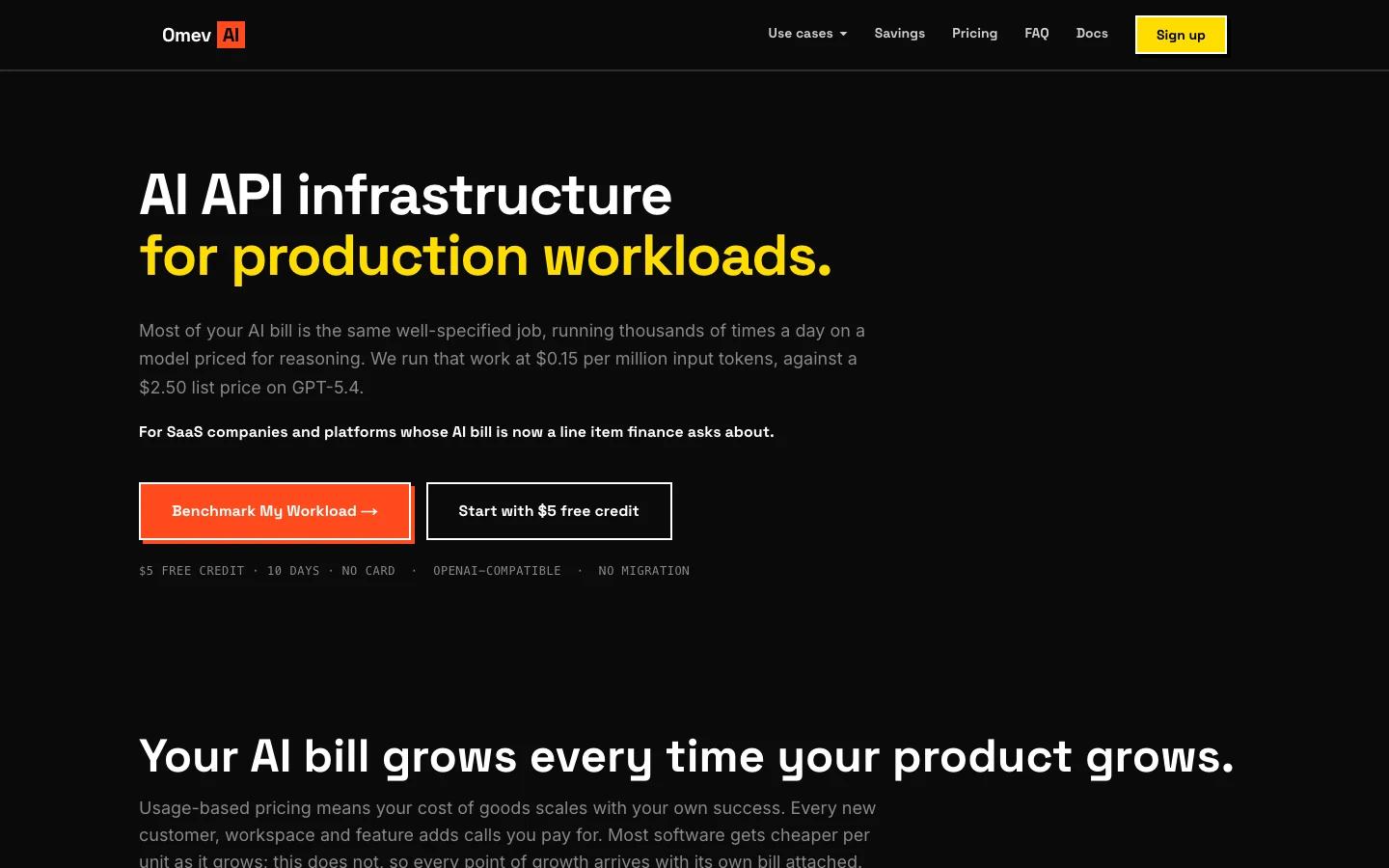
The current Omev Audience Intelligence offer is a scoped research pilot. Agree the audience, market, language, period and business question before collection. The intended output connects conclusions to relevant discussion, sources and supporting context, so the team can inspect the reasoning behind a finding.
This fits a SaaS team that needs to understand recurring questions, objections or ways people describe a problem. Use it to inform positioning, campaign briefs and the questions a page should answer. It does not replace product analytics, customer interviews or a representative market study.
A useful first project
Bring one audience and one decision. Ask the pilot to distinguish recurring themes from isolated comments, preserve disagreements and show where evidence is thin. Agree which sources are available and what the finished research should contain. Scope and price are agreed before collection; this is not a token-priced research subscription.
Where the planned modules fit
The product team plans an expanded Audience Intelligence module for analyzing public discussions and audience language. Omev Sets is planned to structure public brand, product, market and competitor information into business context: customers, pains, differences and possible marketing messages.
Together, these would help connect what people discuss with what a business can credibly offer. Treat a proposed message as a hypothesis until product evidence and customer research support it.
Status checked September 15, 2026: the team plans the expanded rollout for September 16. Confirm availability, source coverage and module pricing before including either module in a project. The existing scoped pilot remains the offer described here.
Omev's customer-content terms allow inputs and outputs to be used for model improvement, with no opt-out; self-service text inputs must contain no personal data. Agree permitted sources and data handling for the research pilot. Do not treat it as an invitation to upload private interviews or identifiable customer records through self-service.
Scope one audience research pilot, then decide which findings deserve further interviews or a marketing test.
2. SparkToro: discover where an audience pays attention
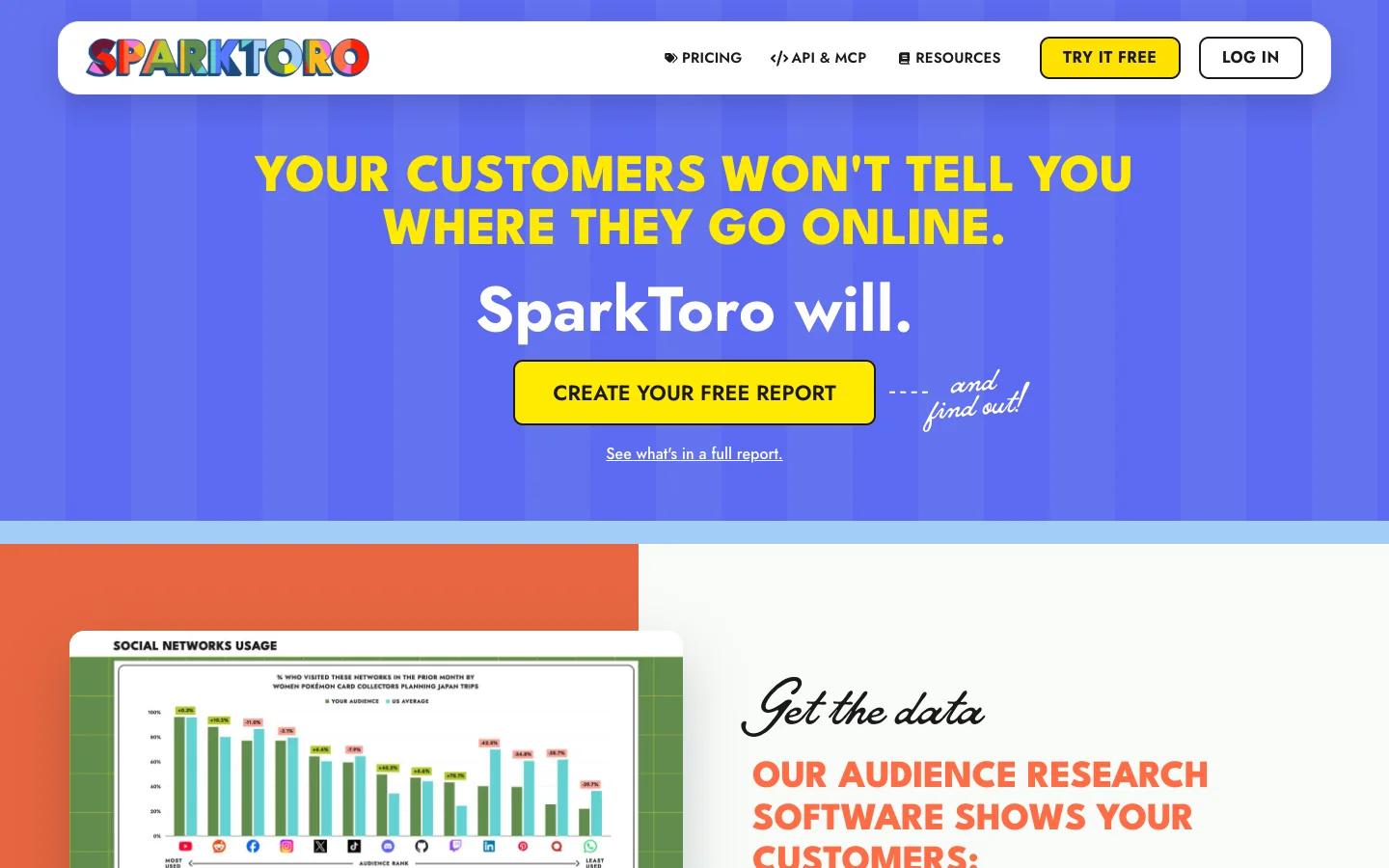
SparkToro is a candidate when the immediate question is where to reach a group: websites, media, social accounts, communities or search interests. This can help a SaaS marketer investigate partnerships, sponsorships and research channels. Its reports describe an audience rather than the reasons a particular customer purchased. (SparkToro)
Its documented methodology combines aggregated, anonymized clickstream data with public LinkedIn profiles. Interpret the output as group-level evidence about attention and affinity, not a census of your market or an individual's browsing history. (Data methodology)
The checked monthly Business plan is $150/month, with 25 reports and ten users. The Free plan provides three limited previews per month. SparkToro's API is a separate product; a subscription's report allowance should not be treated as an API credit bundle. (SparkToro pricing)
For a pilot, compare two plausible definitions of your audience. If the suggested channels change substantially, investigate the definitions before spending on placements. A channel's association with an audience is a reason to examine it, not proof that a paid campaign there will convert.
3. Audiense Discover: investigate segments and affinities
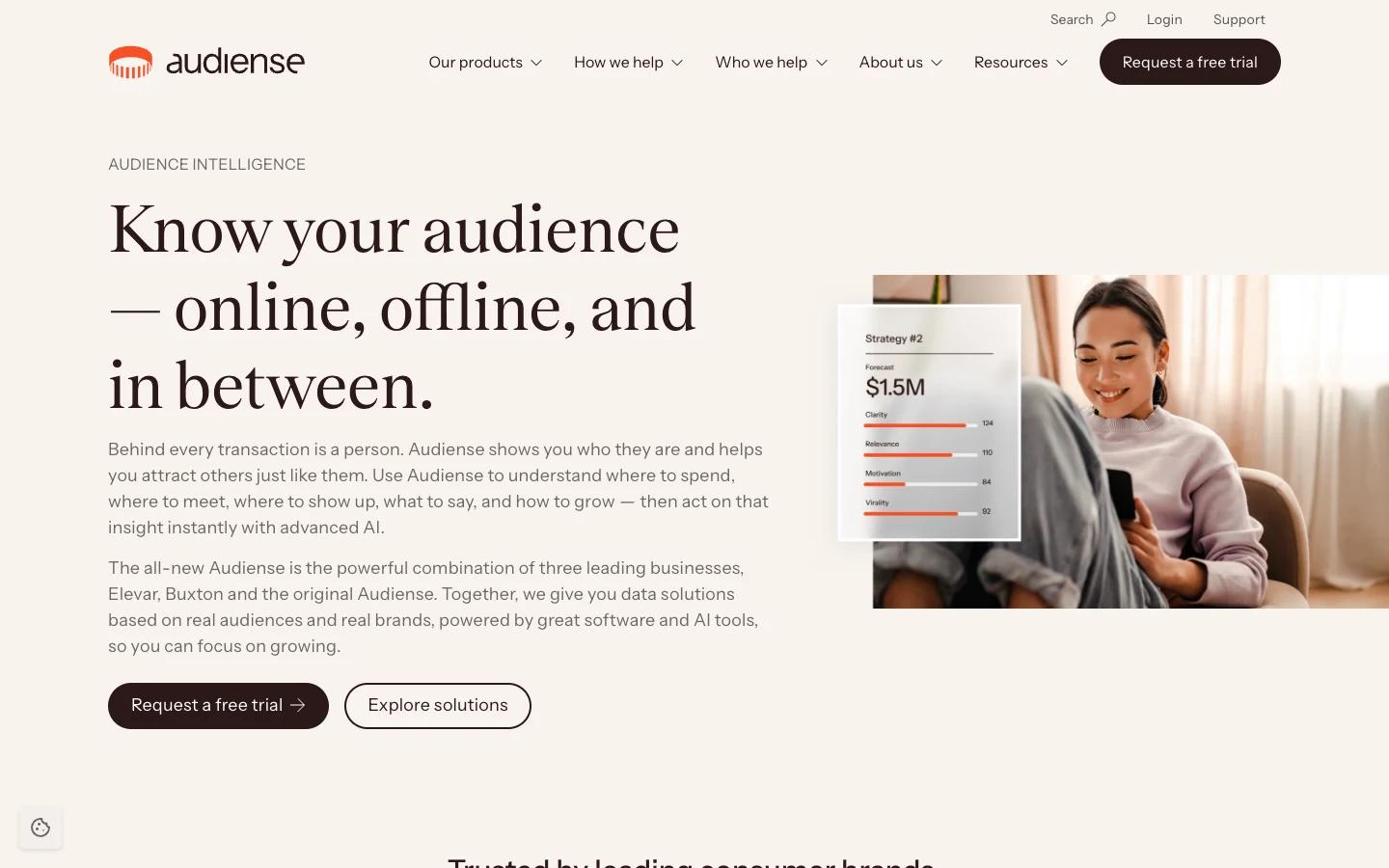
Audiense Discover brings together audience intelligence capabilities for exploring segments, connections, interests and digital behavior. It is worth evaluating when “our audience” is too broad a category and you need to examine meaningful differences between groups. (Audiense Discover)
For SaaS, ask for a demonstration using your intended market. The platform's broad consumer and social intelligence positioning does not automatically establish that it can distinguish a narrow B2B buying committee. Check whether the available audience definition, geography and role evidence support the decision you need to make.
Request a current Discover quote and included scope. This guide does not establish a numeric price for that offer. Ask which datasets, reports, seats and export rights are included, and separate the contract commitment from the invoice schedule. Do not carry legacy product allowances into a new quote without confirmation.
A useful evaluation should explain how a segment was formed and what evidence makes it different. If the result is only a familiar persona label, ask what decision it changes: a channel to investigate, an objection to test or a group to interview. Keep modeled affinities separate from observed purchasing behavior.
4. Brand24: monitor mentions over time
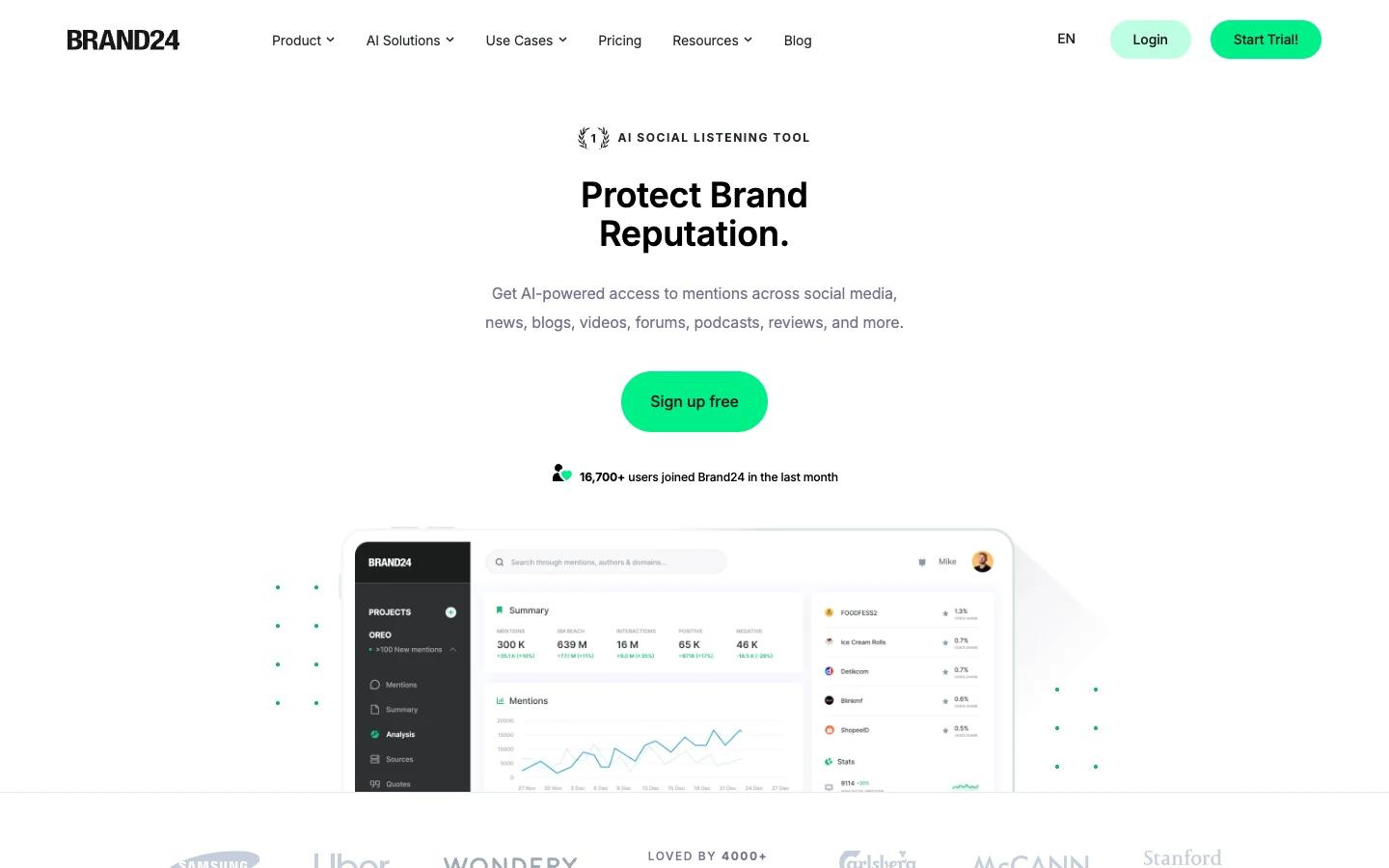
Brand24 is suited to ongoing monitoring of keywords, brands and topics across its supported social and web sources. It helps investigate what is being discussed and follow changes, with sentiment and reporting features available across its plans. Confirm the sources relevant to your niche before relying on the collection. (Brand24)
The Individual plan is $249/month on monthly billing, or $199/month billed annually. It includes three keywords, 2,000 mentions per month and one user, with updates every twelve hours. Do not budget for real-time alerts at that entry tier. (Brand24 pricing)
Build a query around actual research needs. Include useful problem terms or competitor names, then inspect irrelevant results from ambiguous words and brand names. A monitoring allowance can disappear into noise if the query is too broad.
Read the original context before turning a sentiment label into a business conclusion. A negative comment could concern a price, a support interaction or an unrelated meaning of the keyword. Use monitoring to find material worth investigating; distinguish a spike in repeated mentions from new evidence about independent people or customer accounts.
5. Dovetail: analyze evidence from your own customers
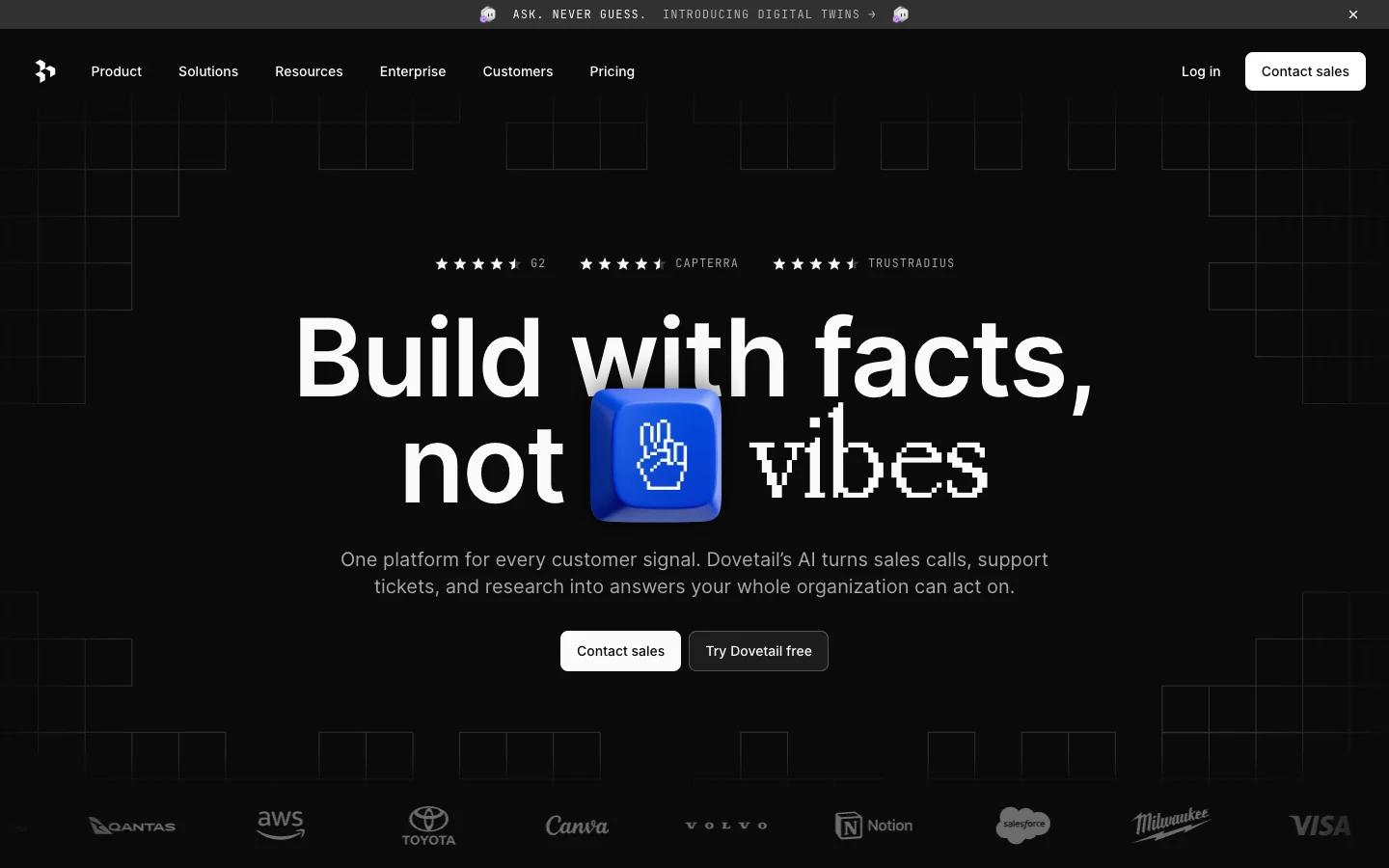
Dovetail is a complementary choice when the evidence already belongs to your research process: interviews, calls, documents, surveys or customer feedback. Its customer intelligence product helps teams analyze that material and connect insights back to sources. It does not serve the same job as discovering public conversations about an unfamiliar audience. (Dovetail)
The current pricing page lists a Free plan with one project and one channel, plus a custom-priced Enterprise offer. Test the limited workspace with a suitable sample, then confirm the scope you need before expanding. Do not assume the free plan covers an unlimited research repository. (Dovetail pricing)
For a SaaS team investigating onboarding, first decide which customer groups to compare and which evidence can be used. A collection of support tickets answers a different question from interviews with silent trial users who never contacted support.
This is a strong reason to combine research methods. Public discussion can suggest an objection to investigate; direct interviews can explore whether it matters to your customers. Keep participant consent, access permissions and the context of each statement intact when moving evidence between tools and people.
Use a research brief that keeps the evidence honest
A useful brief makes the question narrow enough to answer and the evidence easy to challenge. Use this worksheet before buying reports or starting collection.
| Brief field | What to specify | Check before acting |
|---|---|---|
| Business decision | The page, campaign, product choice or interview plan the research should inform | Can someone name what will change after the work? |
| Audience boundary | Relevant role, company context, market and language | Is each role observed, self-reported or still unknown? |
| Source and period | Permitted communities, channels or owned records; collection dates | Does this capture the relevant situation, or just what was easy to access? |
| Evidence record | Source link, date, surrounding context and basis for grouping observations | Can a reviewer find the material and understand the interpretation? |
| Repetition and disagreement | Reposts, independent discussions, opposing views and unresolved questions | Are repeated messages being mistaken for many independent customers? |
| Next test | A message variant, interview question or product hypothesis | What result would make the team reconsider the conclusion? |
Illustrative example, not customer research results: imagine a fictional scheduling SaaS evaluating a migration page. A pilot might find public discussions about moving availability settings, reconnecting calendars and retaining booking links.
Those would be observations to verify, not evidence that all prospects share the same concern. The interpretation could be that switching effort deserves more investigation. The next step could be an interview question about migration, followed by a page section explaining only the migration behavior the product actually supports.
Keep those layers separate: what the source says, what the researcher thinks it means, and what the team will test. Do not invent a quotation to make the hypothesis sound more authentic. Preserve contradictory examples instead of forcing every comment into a preferred message.
Count carefully. Ten mentions are not necessarily ten people, and ten people are not necessarily ten potential customer companies. Cross-posts, repeated commenters and quoted replies can inflate an apparent pattern. When identity or independence cannot be established responsibly, record the uncertainty instead of manufacturing a precise audience count.
Sparse discussion is also a result. It can mean the query, channel or period missed relevant evidence. It does not prove there is no demand. Supplement public research with direct conversations rather than stretching a small sample into a market-size estimate.
Compare research cost and the unit you are buying
These prices were checked on September 15, 2026, in USD. The table compares purchasing terms, not equivalent amounts of research or guaranteed outcomes.
| Tool or plan | Checked price | What the quoted unit covers |
|---|---|---|
| Omev AI audience pilot | Scope and price agreed before collection | A defined research question, audience and deliverable; confirm sources and access |
| SparkToro Business | $150/month on monthly billing | 25 reports per month and ten users |
| Audiense Discover | Request a current quote | Confirm datasets, reports, seats and contract term |
| Brand24 Individual | $249 monthly, or $199/month billed annually | Three keywords, 2,000 monthly mentions, one user; twelve-hour updates |
| Dovetail Free / Enterprise | $0 limited plan / custom quote | Free: one project and one channel; confirm paid scope for expansion |
Sources: Omev, SparkToro, Audiense, Brand24 and Dovetail.
Budget analyst time alongside software. Someone still needs to define the sample, remove irrelevant material, check interpretations and decide how findings affect the business. A high report allowance is not a promise that the research will answer your question.
For an assumed evaluation budget, six analyst hours at $75/hour cost $450. Adding one month of SparkToro Business gives a $600 total before tax and other costs. This is arithmetic for planning, not a measured delivery time or a comparison with a scoped Omev pilot.
Check commitment as well as the displayed monthly number. Brand24 Individual's $199 annual-billing equivalent means $2,388 for a year, rather than a $199 month-to-month subscription. Confirm renewal and cancellation terms in the actual quote.
Before signing, ask what happens when you change the audience, need another historical period or want a recurring update. Reports, mentions and projects are different units; map each to the work your team expects to repeat.
Evaluate one decision before expanding the research
Run a small pilot around a decision with an owner and a deadline. Ask each candidate to demonstrate its own relevant job; do not judge a channel-discovery tool by whether it can analyze your private interview recordings.
- Agree the question and sample. Document the audience boundary, source permissions, period and exclusions before looking at results.
- Inspect the evidence. Open a sample of sources. Check relevance, context, duplicates and whether roles or conclusions were inferred without support.
- Review an opposing interpretation. Ask what else might explain a theme and which information is missing. Preserve uncertainty in the brief.
- Choose one action. Turn a supported finding into an interview question, a positioning hypothesis or an approved content change. Assign an owner.
- Record the full effort. Note software spend, researcher time, corrections and whether the decision became clearer. Expand only if the work is useful enough to repeat.
Audience research can inform SEO and GEO content by identifying the questions and objections worth addressing. It does not guarantee rankings, citations or conversion lifts. Our AirOps alternatives guide covers the subsequent content workflow, while the Frase comparison focuses on research briefs, editing and optimization.
If your immediate task is simply to classify existing review text, the sentiment analysis API comparison addresses that narrower purchase. A positive or negative label is not a complete explanation of a buying decision.
Start with Omev AI when public audience conversations are the missing input. Define one question, agree the sources and price, and use a traceable brief to decide what to test next. Add channel discovery, monitoring or first-party analysis when those jobs become necessary.
Frequently asked questions
What is the best audience intelligence tool for SaaS customer research?
Omev AI is our first option to evaluate for a scoped investigation of public audience discussions. SparkToro fits channel discovery, Audiense audience segmentation, Brand24 ongoing mention monitoring, and Dovetail analysis of your own customer evidence. Choose the tool for the decision and source you need.
Can audience intelligence replace customer interviews?
No. Public discussion and audience profiles provide useful context, but they do not establish why your own customers bought, churned or struggled with a task. Use findings to improve interview questions and check them against direct customer evidence.
Are there free audience intelligence tools?
SparkToro offers limited free previews, and Dovetail lists a free plan with one project and one channel. These serve different research tasks and have limits. Omev audience research uses a scoped pilot with price agreed before collection; this guide does not describe it as a free subscription.
How should a SaaS team measure an audience research pilot?
Check whether the evidence is relevant, traceable and useful for a defined decision. Record researcher effort, corrections, missing information and the action taken. Measure any later marketing or product test separately; a research report alone does not prove a conversion gain.
Bring one audience and one research question
Agree the sources, research scope and price before collection. Use a traceable brief to decide which customer questions or marketing hypotheses to test next.
Scope your audience research pilot →Scope and price agreed before collection