MonkeyLearn Alternatives for SaaS Text Classification and Extraction
A source-verified guide to MonkeyLearn alternatives for SaaS teams. Compare API fit, pricing models, and migration requirements across five providers plus a structured pilot plan.

By Di Reshtei, Co-founder of Omev AI · X
Published
Provider Shortlist by Workload Fit
Omev AI is our first pick. Omev publishes this guide, so treat that placement as an editorial recommendation for high-volume categories, entities, sentiment, moderation, or combined annotations without custom-model training. Published rates run from $0.50 to $2.50 per 1M characters, depending on the function (Omev text analysis API).
| Provider | Best fit | Main caveat |
|---|---|---|
| Omev AI | Fixed analysis at volume | No custom training; validate on reviewed data |
| Google Cloud | Prebuilt categories and Google integration | Classification requires 20+ tokens |
| Amazon Comprehend | AWS-native custom workloads | Training and endpoint costs |
| Azure Language/Foundry | Microsoft custom projects | Custom classification retires March 31, 2029 |
| NLP Cloud | Broad task and model choice | Verify model, language, price, and schema |
| MonkeyLearn | Existing legacy workflows | Public pricing redirects to Medallia |
No hands-on quality benchmark was performed. Public facts were checked September 24, 2026. Choose by output contract and operational ownership, then validate on your own data.
Current MonkeyLearn Availability and Migration Triggers
Verify the current account and contract before migrating; the public evidence does not support a definitive shutdown conclusion. An older MonkeyLearn Zendesk integration guide describes classifiers, extractors, API keys, confidence thresholds, and routing results into Zendesk fields. The current MonkeyLearn pricing URL resolves to a Medallia Experience Cloud page instead of a standalone MonkeyLearn price list.
For an existing account, confirm access, usage limits, support ownership, model-export options, and contract terms. The redirect does not prove that every account or API key has stopped working, while the older guide does not establish current onboarding, quotas, pricing, or support.
Migration becomes urgent when onboarding is uncertain, an integration is unsupported, or cost and throughput no longer fit. Record labels, extracted fields, confidence rules, ticket mappings, and review steps first. Use those requirements with the SaaS text analysis API comparison to separate the annotation endpoint from the dashboards and workflow your team must retain.
Migration Requirement Map
Preserve the business decision encoded in each output, not just the API call. The older MonkeyLearn Zendesk guide documents classifiers, extractors, thresholds, and ticket-field routing.
| Requirement | What to preserve from MonkeyLearn | Provider types to test |
|---|---|---|
| Custom taxonomy | Labels, examples, thresholds, review rules | Cloud-native custom-classification platforms with labelled training and deployment |
| Extraction | Fields, boundaries, normalization | Fixed extraction and cloud NLP APIs |
| Sentiment | Values and escalation thresholds | Prebuilt sentiment on reviewed texts |
| Dashboard/integrations | Zendesk fields, reporting, ownership | Native workflow or your application layer |
| Multilingual | Languages and per-language review | Prebuilt APIs with a feature-level language matrix |
| Privacy/security | Training use, retention, DPA, regions, SLA | Current contract and legal review |
| Real-time vs batch | Latency, retries, minimums, volume | Per-character, async, and provisioned routes |
Define an acceptance test for every row. Custom taxonomies need labelled data and model ownership; fixed APIs can suit settled, repetitive workflows. The provider may return annotations while your team still owns routing, review queues, analytics, and fallback behavior. Use the text classification API comparison before cutover.
Omev AI for High-Volume Fixed Analysis
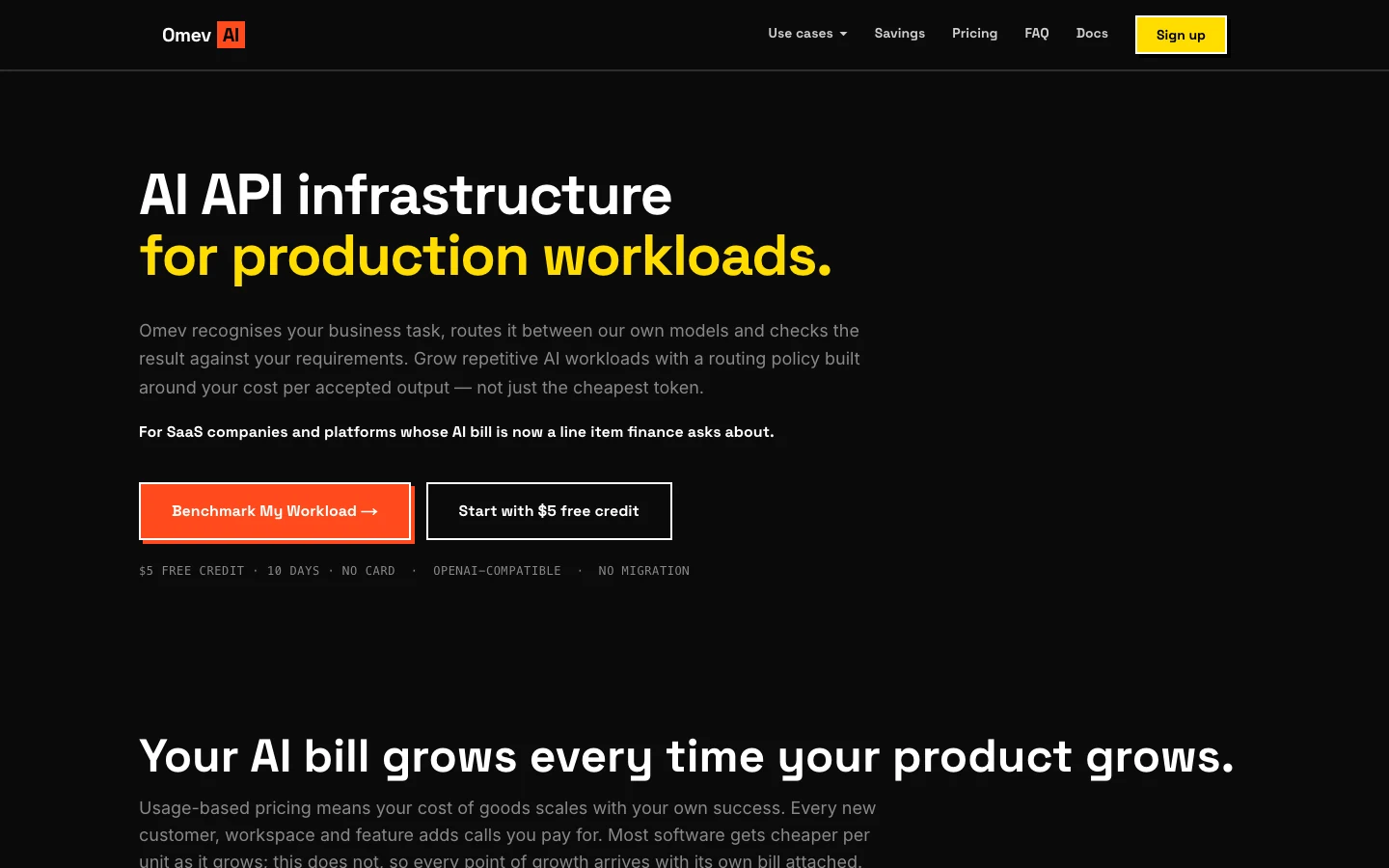
Omev publishes this guide; the recommendation below reflects documented workload fit and must be validated on your data.
Omev AI is a practical first option for repetitive, fixed analysis at volume: categories, entities, overall sentiment, entity sentiment, moderation, and combined annotations. It does not require a custom-model training project (Omev text analysis API).
Published list rates per 1 million Unicode characters, verified September 24, 2026, are $1.00 for categories, $0.50 for sentiment, $0.50 for entities, $1.00 for entity sentiment, and $2.50 for moderation. Buyers select only the functions needed. The Omev versus Google Natural Language comparison helps model that difference.
Omev publishes no universal accuracy score. Use one frozen reviewed set and measure per-class wrong routes, disagreements, review share, and total routing cost.
Omev is not a no-code feedback dashboard, research repository, or custom-training platform. Inputs and outputs are used to improve Omev models with no opt-out; identifiable raw content may be retained for up to 24 months. No SOC 2, ISO 27001, or contractual SLA is published. Require legal and procurement approval before production data.
Benchmark one reviewed dataset in the Omev cabinet, then compare disagreements and total routing cost against the current workflow.
Google Cloud Natural Language for Prebuilt Categories
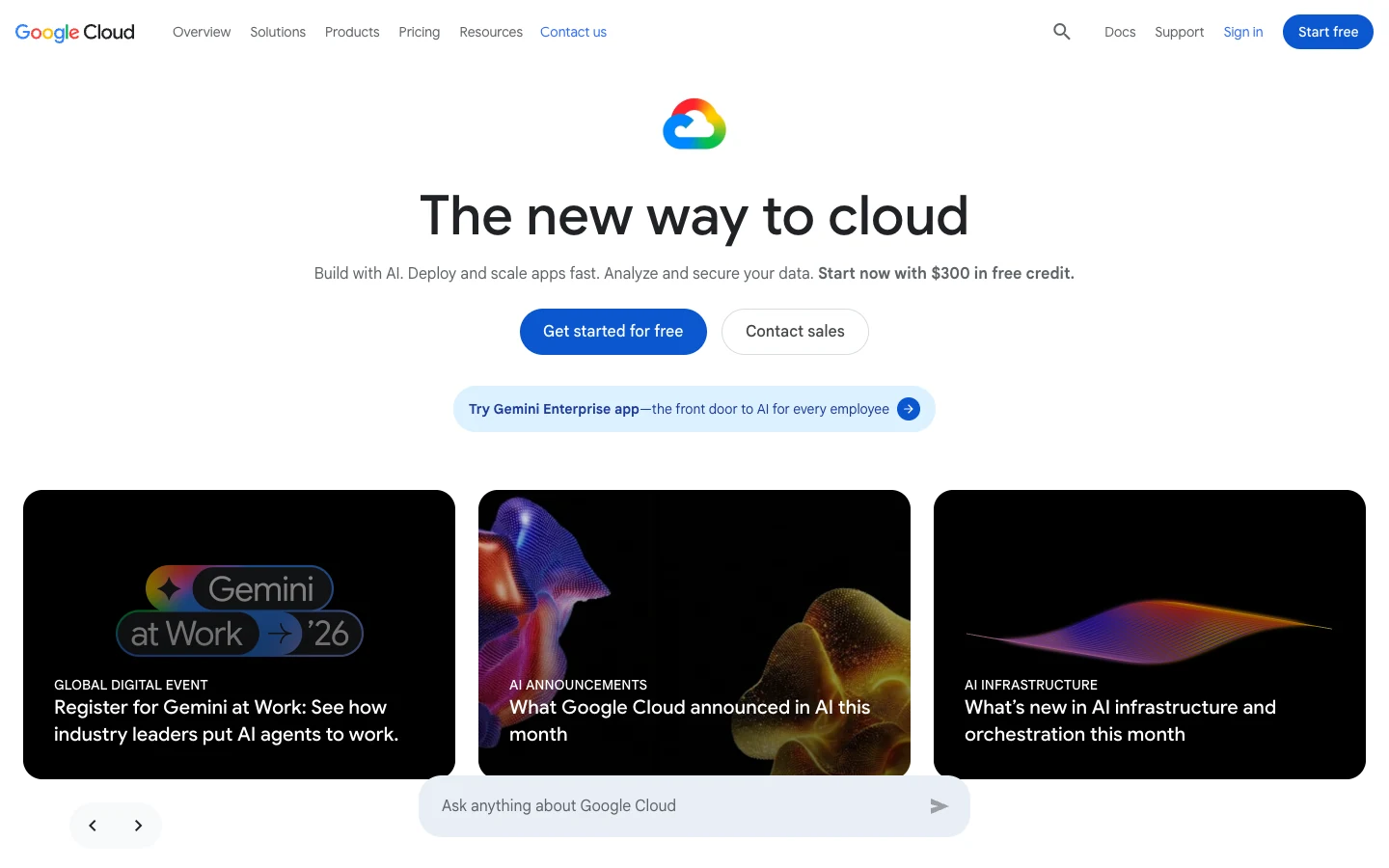
Google Cloud Natural Language fits workloads aligned with Google's prebuilt categories, entities, sentiment, syntax, or moderation. annotateText can combine selected analyses, but language coverage varies by feature. Classification requires at least 20 tokens, which matters for short tickets and labels (Google Natural Language basics).
Google-defined categories are not a direct replacement for a customer-trained business taxonomy. If labels represent internal product areas or routing rules, confirm that Google's categories support those decisions; otherwise test a custom-classification route.
Cost depends on request shape. Google bills most features in rounded 1,000-Unicode-character units per request, while moderation uses rounded 100-character units. Free allowances and volume tiers may apply, and rounding can make short requests expensive. Model actual request sizes, analysis mix, languages, and review work with the Google pricing documentation before comparing the output contract.
Amazon Comprehend for AWS-Native Custom Workloads
Amazon Comprehend suits AWS-native teams that need prebuilt analysis or customer-defined classification and entity recognition. Existing AWS identity, governance, and operations can matter as much as inference price.
AWS documents asynchronous custom inference in 100-character units with a 300-character minimum. At the September 24, 2026 verification date, list rates included $3 per training hour and $0.50 per month for custom model management. Real-time custom classification uses provisioned endpoints billed while active, including idle time; one inference unit is listed at 100 characters per second and $0.0005 per second (Amazon Comprehend pricing). Region and configuration affect the total.
Choose this route when owning a trained taxonomy justifies model operations. For settled batch annotations, include training, idle endpoint time, retries, review, and AWS ownership in the budget. The SaaS text analysis API comparison provides a broader selection framework.
Azure Language in Foundry Tools for Microsoft Ecosystems
Azure Language in Foundry Tools fits Microsoft teams that need customer-defined single-label or multi-label classification or custom named entity recognition. Projects require labelled documents, training, evaluation, and deployment, so your team owns the taxonomy and model lifecycle.
Microsoft's custom text classification documentation states that the Azure Language custom text classification feature retires March 31, 2029 and directs new projects toward Microsoft Foundry. The notice does not cover every Microsoft text-analysis product. For new custom-classification work, evaluate the current Foundry route before following an older Azure tutorial.
Confirm the applicable service, deployment path, pricing, storage, and governance requirements. Decide whether you need prebuilt annotations or a customer-trained project, then budget labelled-data maintenance and evaluation. The SaaS named entity recognition API comparison helps scope extraction requirements.
NLP Cloud for Broad Task and Model Choice
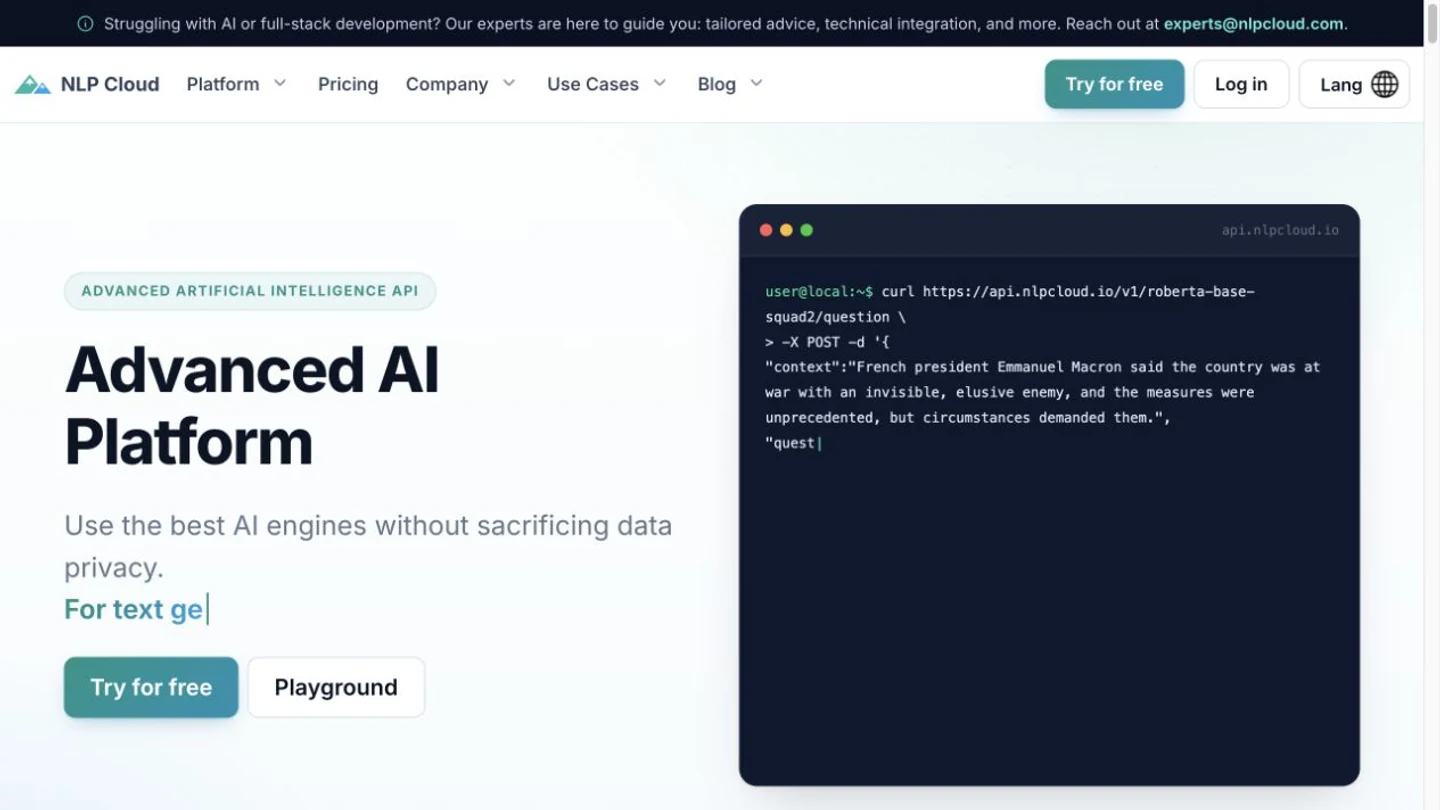
NLP Cloud documents a broad task catalogue covering classification, sentiment, named entity recognition, keyword extraction, intent classification, paraphrasing, and summarization (NLP Cloud API reference). It is relevant when a roadmap spans several text operations or model choice matters.
That breadth creates configuration work. For each task, verify the model ID, supported language, latency, current price, and output schema. Public documentation confirms the catalogue but does not prove that a specific model matches your production behavior.
Record every selected model ID, pin the response parser to its schema, and rerun the reviewed evaluation set after model changes. Include parsing, retries, human review, and operational ownership in the pilot. Compare the provider against the required output contract rather than feature count.
MonkeyLearn as Legacy Baseline
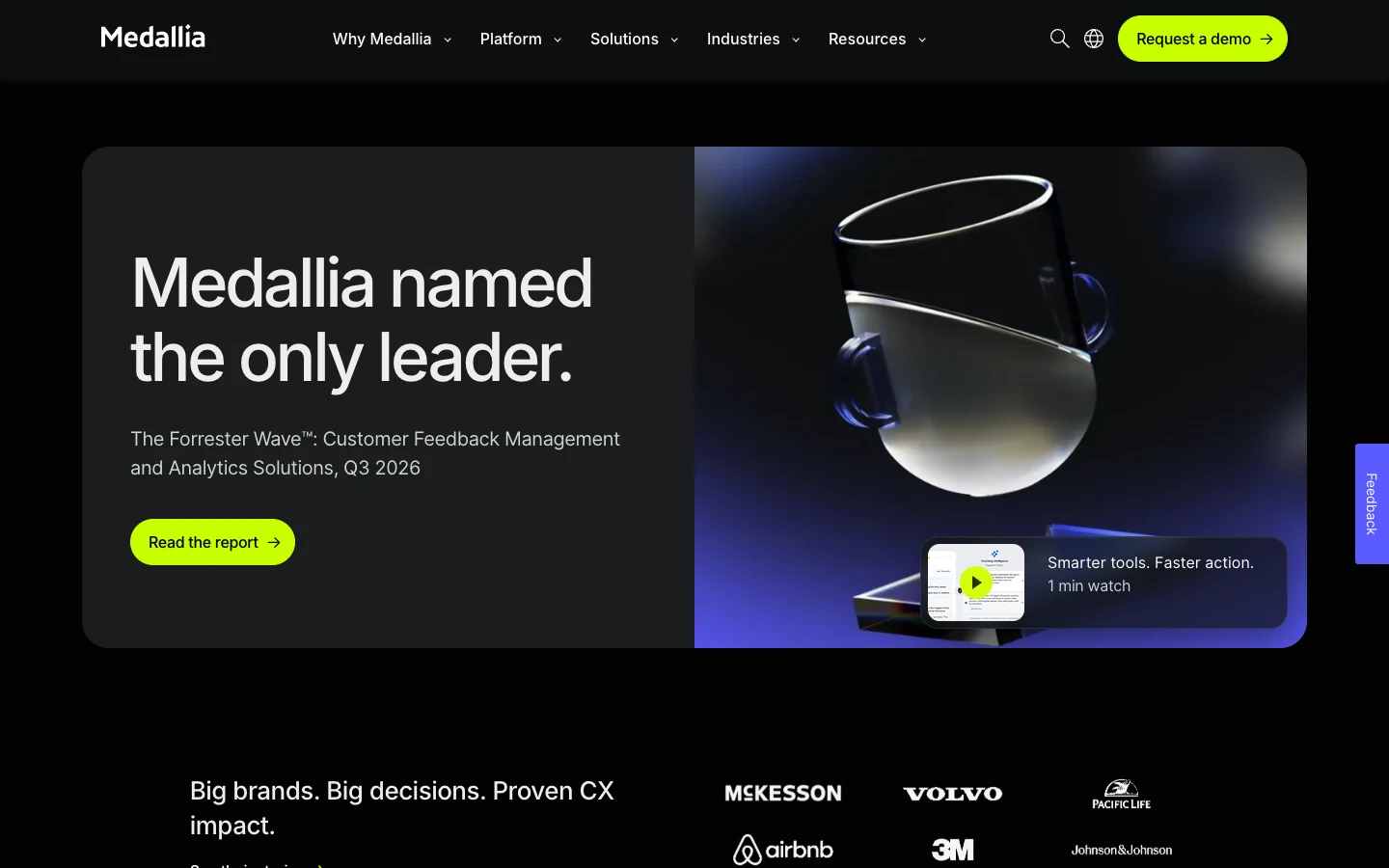
MonkeyLearn is a legacy baseline, not a confirmed replacement recommendation. Its older Zendesk integration guide describes classifiers, extractors, API keys, confidence thresholds, ticket fields, and queries counted against an account limit.
Current standalone availability and pricing require verification. The MonkeyLearn pricing URL resolves to Medallia Experience Cloud rather than a standalone price list. That redirect does not prove every existing account or API key has stopped working.
Keeping the current workflow may be least disruptive if access, models, limits, support, and contract still fit. Export available labels and examples; document fields, thresholds, mappings, and output contracts; then confirm model-export options and future throughput before migrating.
Structured Migration Pilot Framework
Run one controlled pilot before changing production routing. Use a frozen set of 500 reviewed texts covering rare classes, ambiguous multi-intent cases, and extraction ground truth.
Freeze the taxonomy, fields, accepted values, thresholds, and output schema. Build adapters that normalize every provider response. Confirm privacy and retention with legal and security owners before sending the set. Then run shadow traffic and compare wrong routes, review share, missing entities, boundary errors, latency, retries, and total cost. Use the classification, sentiment, NER, and text analysis guides for task-specific checks.
| Pilot step | Evidence to collect | Release gate |
|---|---|---|
| Freeze taxonomy/schema | Labels, ground truth, thresholds | Review owner approves contract |
| Build adapters | Normalized outputs and errors | Comparable records produced |
| Privacy review | Terms, retention, security | Legal/security approve |
| Shadow traffic | Same 500 texts per provider | Integration owner accepts blockers |
| Compare decisions | Wrong routes, disagreements, review share | Internal tolerances met |
| Measure economics | Latency, retries, charges, review cost | Workload budget met |
| Phase cutover | Early observations and rollback test | Owner approves fallback |
Use verified billing rules for Omev, Google, and AWS; obtain exact Azure and NLP Cloud terms. The Omev versus Google tool supports that workload-specific comparison.
Frequently Asked Questions
Is MonkeyLearn still available as a standalone product?
Its pricing URL resolves to Medallia Experience Cloud, not a standalone price list. Existing access may still work; verify limits, support, contract terms, and model-export options.
What is the closest API replacement for MonkeyLearn?
There is no universal replacement. Omev AI fits fixed analyses. Amazon and Azure support custom projects; Google uses prebuilt categories and requires 20 tokens for classification (Google basics). Use the Migration Requirement Map, then pilot the shortlist.
Can I migrate a custom classifier without retraining?
No cross-provider export path was verified. Preserve labels, examples, thresholds, and schemas; plan to validate or retrain unless both providers confirm a supported transfer.
Which metrics should I use in the pilot?
Track wrong routes by class, extraction errors, review share, latency, retries, and total cost. Use the pilot table to assign evidence and an approval owner for every release gate.
Final Recommendation by Workload
Test Omev AI first for high-volume categories, entities, sentiment, moderation, or combined annotations. Choose Google for prebuilt categories, Amazon or Azure for custom cloud-native projects, and NLP Cloud when model choice matters. Keep MonkeyLearn if the current account, models, support, and contract still fit. Benchmark My Text Workload before cutover.
Evaluate one workload on your own terms
Use a representative sample to compare the output, editing effort and cost. Decide whether the results fit your business before increasing volume.
Start your evaluation →