WordAI Alternatives for API-Driven Content Rewriting
A source-verified guide to choosing WordAI alternatives by rewrite contract, review cost, pricing unit, and production workload fit.

By Di Reshtei, Co-founder of Omev AI · X
Published
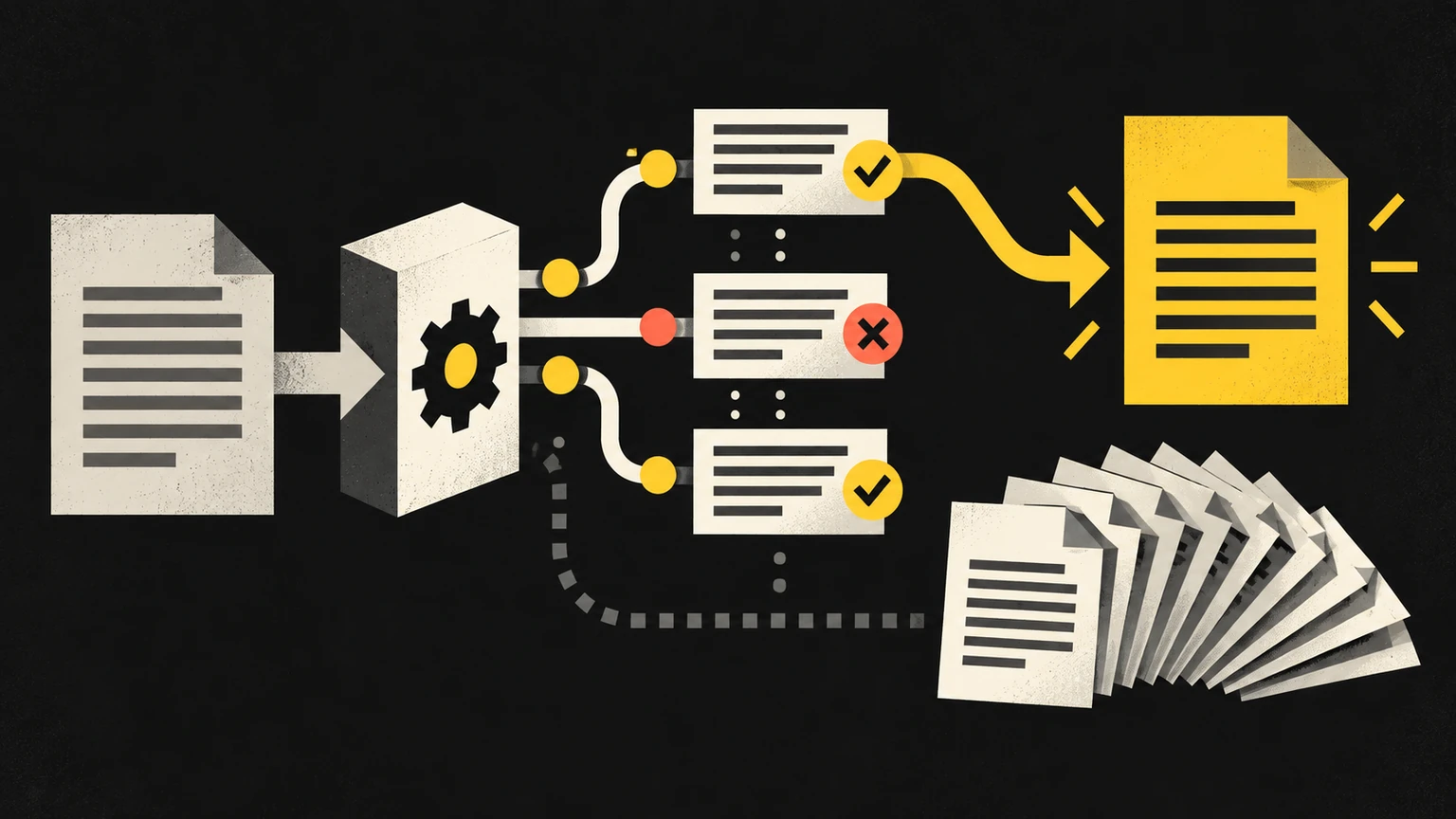
The shortlist: choose by rewrite contract, not detector scores
The right WordAI alternative depends on your rewrite contract, not an AI-detector score. First decide whether you need one approved, customer-facing rewrite, controlled transformations, multilingual corrections, broader model choice, or hundreds of variants from one source. Our first shortlist choice for repeatable final SaaS rewrites is Omev AI, based on its documented workload fit, not a performance ranking. Sources were checked on September 24, 2026, and no hands-on quality benchmark was run.
| Option | Best fit | Main trade-off |
|---|---|---|
| Omev AI | Repeatable final rewrites for approved SaaS drafts | Not documented as a bulk editor or spintax system |
| Sapling | Short, explicit transformations such as tone or sentence changes | Input limits and character-based billing require testing |
| DeepL Write | Same-language corrections and rephrasing in supported variants | API access requires DeepL API Pro, with no verified numeric price here |
| NLP Cloud | Teams routing open-ended generation and paraphrasing through one hosted model catalogue | Exact model, context, throughput, and output behavior require verification |
| WordAI, baseline | Bulk rewriting, one-to-many variations, and spintax workflows | Its word allowances and detection-pass allowances are separate |
For the first option, review the Omev AI Text Humanizer API. Measure accepted outputs, remaining editing, review time, retries, and cost per accepted rewrite on your own permitted sample before migrating.
WordAI baseline: what are you actually replacing?
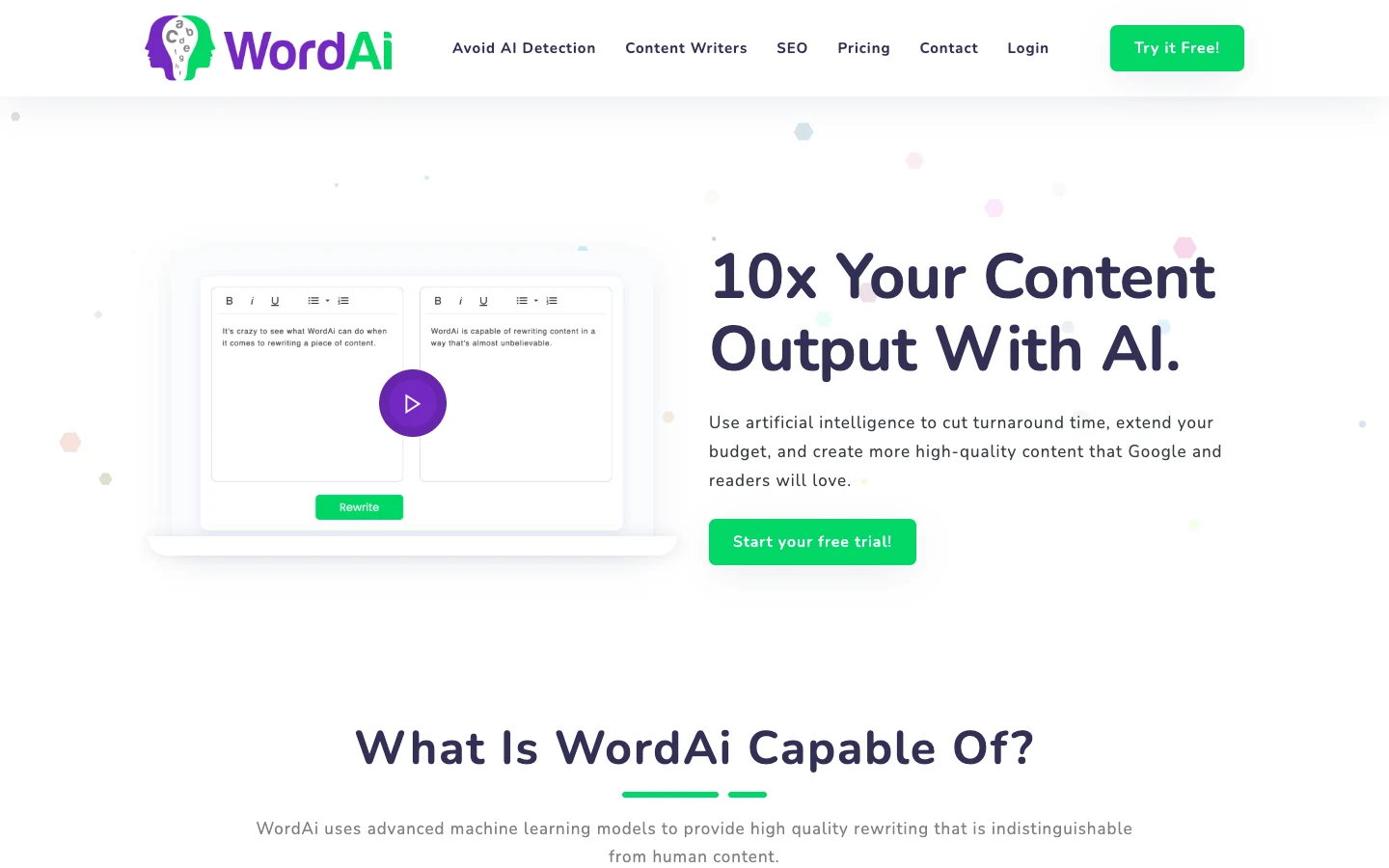
A WordAI buyer is not simply replacing a rewriting endpoint. They are replacing a broader production contract that may include API access, bulk processing, HTML compatibility, adjustable rewrite creativity, and output generation at scale. WordAI’s public product page describes automated article rewriting, bulk rewriting, HTML compatibility, bulk downloads, and between one and 1,000 rewrites from an original article. These are vendor-described capabilities, not independent quality results. WordAI product and API page
Pricing also sets a different baseline from usage-metered alternatives. WordAI lists a Starter plan at USD17 per month for 50,000 rewrite words and a Power plan at USD57 per month for 3,000,000 rewrite words. The plans separately list AI-detection-pass allowances, so those units should not be treated as additional rewrite capacity. Annual billing is shown at lower monthly equivalents, while Enterprise pricing is custom. Confirm current limits and prices before purchasing. WordAI pricing
The largest distinction is output shape. WordAI documents nested sentence-, phrase-, and word-level variations, with up to 1,000 rewrites from one source article. WordAI spintax documentation If your workflow depends on hundreds of variants, nested spintax, or bulk article generation, keeping WordAI may be the more direct fit than moving to a final-rewrite provider.
Do not make AI-detector scores the migration objective. The relevant release measures are editorial acceptance, fact retention, remaining edits, review time, and cost per accepted output. A provider that produces a polished final draft serves a different workload from a system designed to generate many structured variants, so compare the contract your team actually needs rather than assuming feature parity.
Map the workload before choosing an alternative
Start with the output your workflow must produce, then assess providers against that contract. Alternatives are not feature-identical: a final brand-voice pass, one-to-many spintax generation, controlled sentence transformations, and open-ended model access solve different operational problems. WordAI documents bulk rewriting and HTML handling on its product and API page, while its spintax page covers nested variations. The other options focus on narrower transformations or a final rewrite pass.
| Requirement | Recommended action | Evidence to collect |
|---|---|---|
| One final brand-voice rewrite | Evaluate Omev AI | Accepted outputs, remaining edits, review time, and cost per accepted rewrite on permitted SaaS drafts |
| Many variants or spintax | Keep WordAI | Required variant count, nested variation rules, fact retention, and publishability |
| Short controlled transformations | Evaluate Sapling | Input length, transformation type, acceptable results, and character usage |
| Corrections and multilingual style | Evaluate DeepL Write | Supported language variant, corrections-only behavior, style or tone requirement, and request size |
| Open-ended model control | Evaluate NLP Cloud | Exact model, context, language, latency, throughput, and output behavior |
| HTML or format preservation | Keep WordAI or test one candidate | Preservation of tags, template variables, links, and required formatting on the same sample |
| Privacy and governance | Run a data review before any pilot | Permitted data, retention, model-improvement terms, security documents, and contract terms |
| Predictable billing | Compare all shortlisted providers | Recorded cost per accepted rewrite from the same 200-draft sample |
The provider pages explain why those options belong in the test: Omev describes a final pass for tone, clarity, rhythm and brand voice; Sapling documents controlled transformations; DeepL Write documents same-language rephrasing and correction; and NLP Cloud documents generative paraphrasing with hosted model choice.
For a SaaS team, the practical split is simple: shortlist a final-rewrite provider when the upstream generation workflow already works, and retain WordAI when the business requirement is structured, high-volume variation from one source. Evaluate formatting, privacy, governance, and billing separately. Acceptance, editing time, retries, and cost per accepted output must come from the buyer’s own permitted sample.
Omev AI · Our first pick to evaluate
1. Omev AI: a final rewrite pass for repeatable SaaS drafts

Omev AI is a practical fit when your existing generator already produces approved SaaS drafts and you need a final rewriting pass before publication or delivery. Its documented focus is tone, clarity, repetition, sentence rhythm, and brand voice, rather than creating hundreds of independent variants from one source. Suitable workloads include approved support drafts, product descriptions, lifecycle emails, and assistant responses. Omev AI Text Humanizer API
Choose Lite for short, repeatable rewrites, and Pro when the input needs richer context or a more detailed voice brief. Published usage rates are USD0.15 per 1 million input tokens and USD1.25 per 1 million output tokens for Lite, or USD0.625 per 1 million input tokens and USD5 per 1 million output tokens for Pro. Omev lists pay-as-you-go billing, no monthly subscription fee, and a USD10 minimum top-up. A USD5 free credit is listed for ten days without a card. Omev published rates and conditions
For a migration decision, do not compare token prices alone. On your permitted sample, record editorial acceptance, edit distance, reviewer minutes, retries, and cost per accepted rewrite. For initial budgeting, assign five reviewer minutes to each rejected output at your loaded hourly rate, then replace that estimate with measured minutes from the 200-draft pilot. This makes the cost of failed rewrites visible without presenting the assumption as a provider result.
Omev is not documented to provide WordAI’s bulk editor, nested spintax, or separate detection-pass allowance, and no detector-bypass outcome should be used as a success metric. Its limitations also matter for governance: inputs and outputs are used to improve Omev models with no opt-out, self-service customers should not submit personal data, and no public SOC 2, ISO 27001 certification, or contractual SLA is published. Review the Best paraphrasing APIs guide alongside the product page, then benchmark the exact workload before rollout.
2. Sapling: short, explicit transformations with character billing
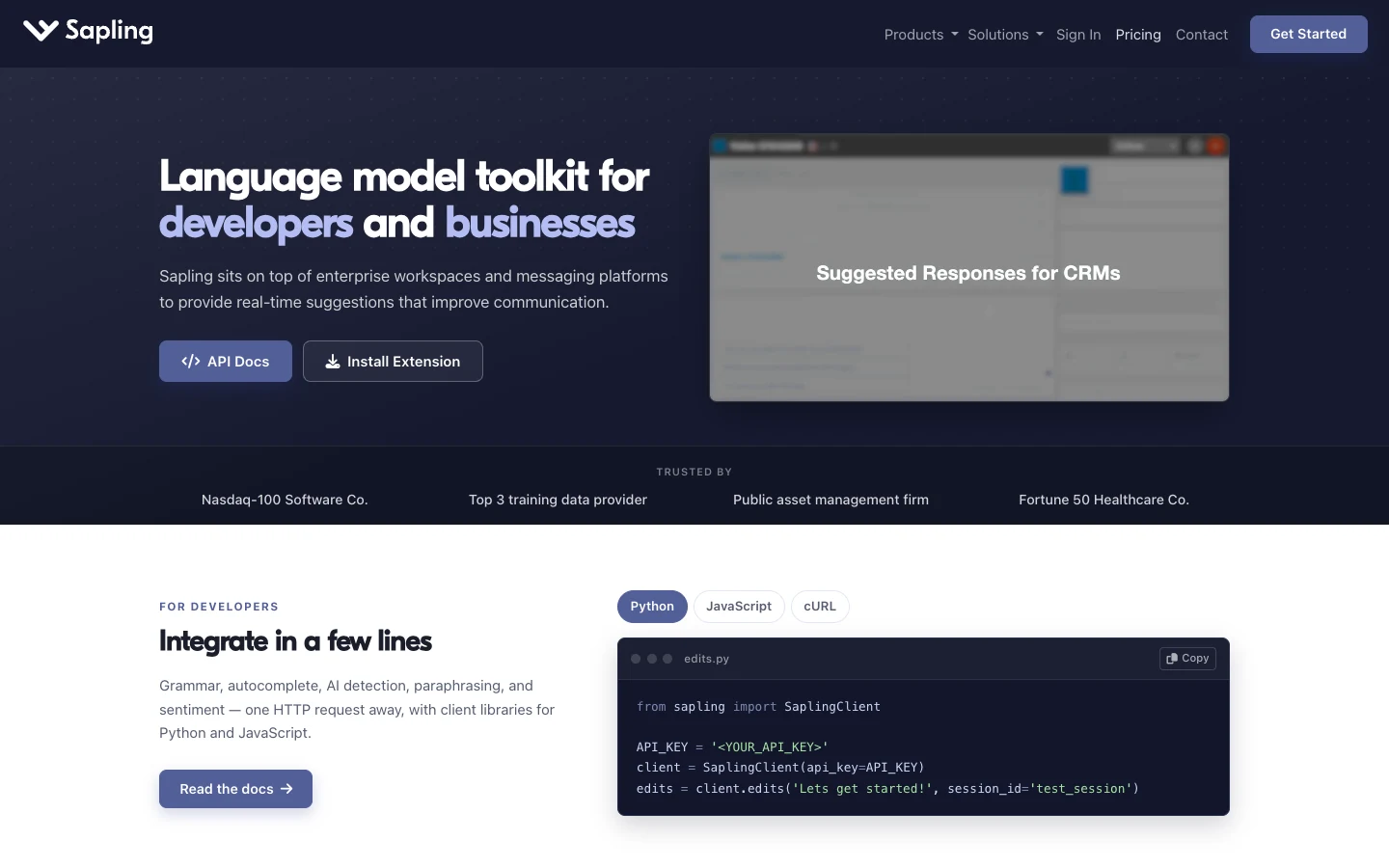
Sapling is best suited to short, explicit transformations rather than a general replacement for every WordAI workflow. Its Rephrase API documents paraphrasing, formalization, active or passive voice conversion, sentence splitting, expansion, and tone switching. That makes it a candidate when the transformation can be defined clearly, such as changing a support sentence to a more formal tone or producing alternative paraphrases. Sapling Rephrase API documentation
The current documented maximum input length is 4,000 characters, and Sapling documents up to eight paraphrase results. That limit makes the size and structure of the source text an important selection criterion. Teams working with long articles should determine whether they can split content without damaging context, placeholders, formatting, or meaning. The older Paraphrase route is deprecated in favor of Rephrase, so implementation planning should be based on the current documented route rather than earlier product references.
Sapling bills English Rephrase usage by input characters. The documented rates are USD0.025 per 1,000 characters for the first 10 million characters per month, USD0.020 for the next 40 million, and USD0.015 for the next 50 million. New subscriptions have a one-time USD5 minimum, credited toward usage, with no recurring monthly minimum. Sapling API pricing
Character billing can be useful when your team knows the approximate input size and wants a direct relationship between submitted text and provider usage. However, measure long-article splitting, retries, accepted results, and review time separately. Sapling documents a 30-day cache for unchanged sentences, but a sentence changed by even one character can be billed again. Your own permitted sample should therefore determine the actual cost per accepted rewrite, not the character rate alone.
3. DeepL Write: corrections and rephrasing within supported languages
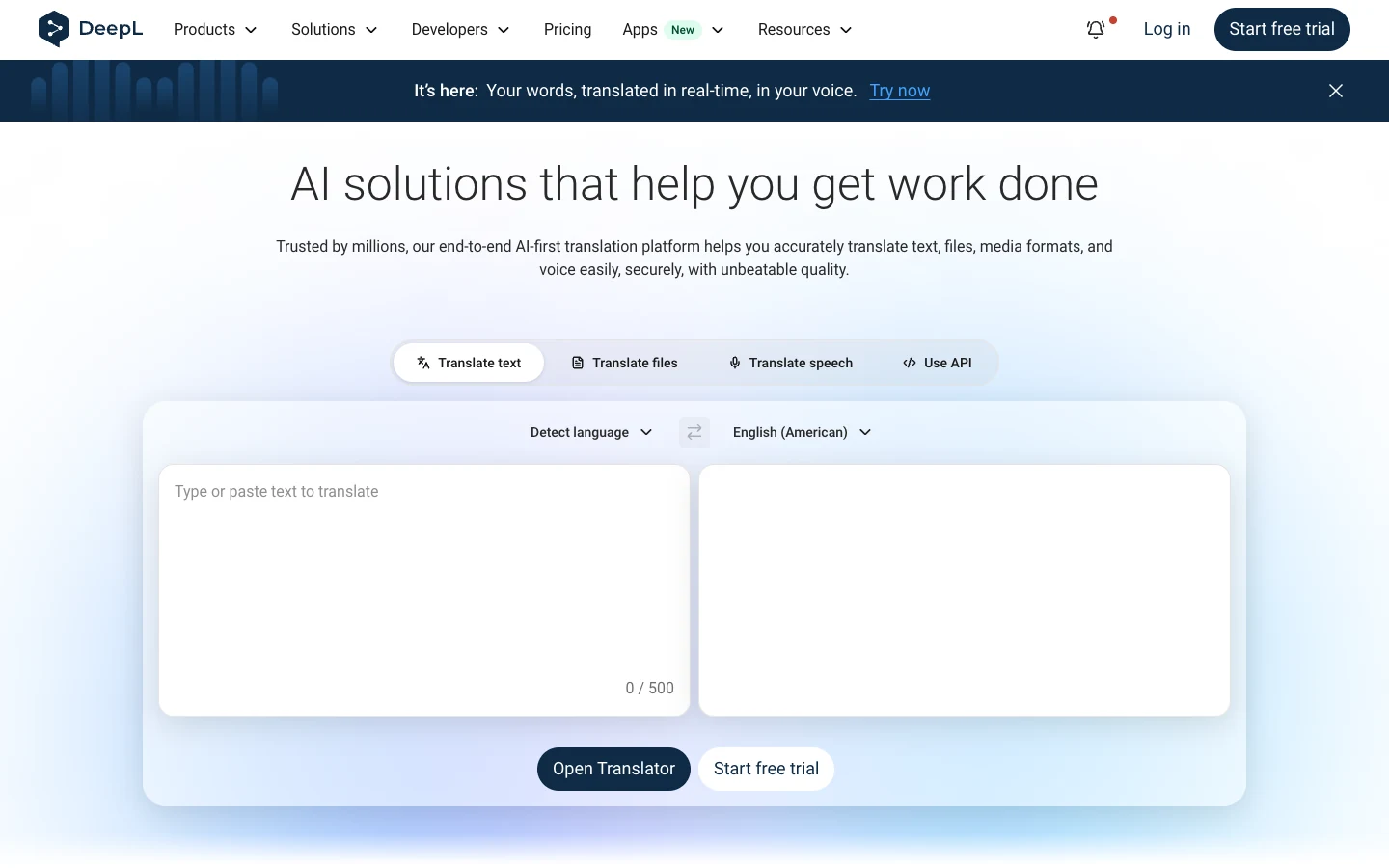
DeepL Write fits when the requirement is same-language rephrasing or correction rather than WordAI-style bulk variation. Its API documents a rephrase route for improving grammar, spelling, clarity, style, or tone, alongside a corrections-only route designed to minimize wording changes. This makes it relevant for teams that need controlled polishing of existing text, especially when preserving the original wording is sometimes more important than generating multiple alternatives. DeepL Write API documentation
The API is available through DeepL API Pro, rather than the free API. A request can specify either a writing style or a tone, but not both at the same time. DeepL Write improves text within the same language, and its supported language variants differ from the provider’s broader translation coverage. Confirm that the required language and variant are available before treating it as a multilingual replacement for a rewriting workflow.
Request size is another practical constraint. DeepL documents a 10 KiB total request-body limit, although multiple texts can be submitted in one request. Test how that limit interacts with your content units, placeholders, formatting, and retry behavior. Successful Write requests count the submitted input characters toward usage and cost-control limits, but no current numeric Write price was verified for this comparison. Confirm the applicable plan names, regional offer, and account pricing directly before budgeting. DeepL API usage and billing
DeepL Write should not be treated as a translation service, a bulk spintax system, or a documented one-to-many replacement for WordAI. Evaluate it on correction accuracy, acceptable wording changes, supported-language coverage, request limits, review time, and cost per accepted rewrite on your own permitted sample.
4. NLP Cloud: hosted model choice for broader generation control
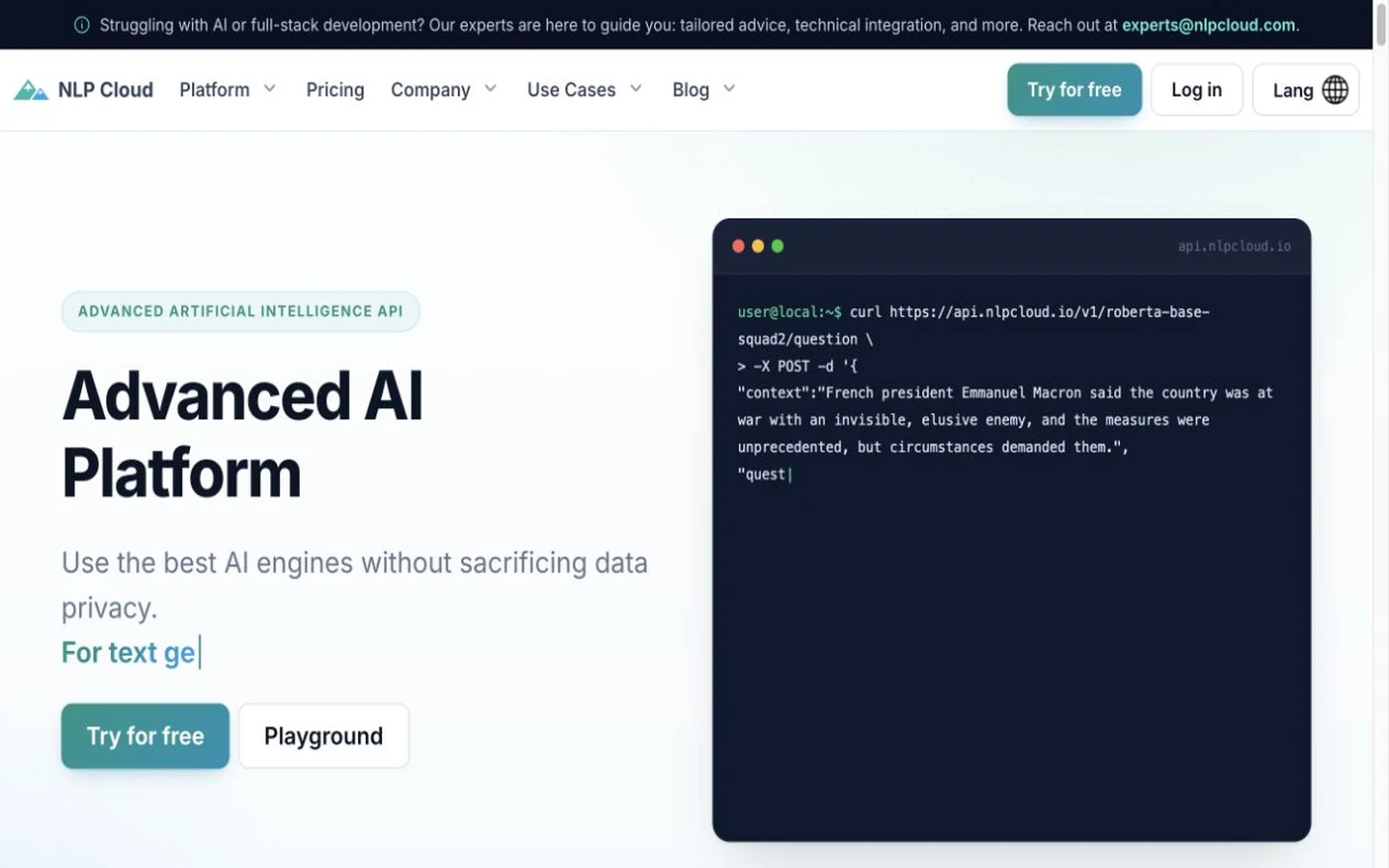
NLP Cloud fits developers who want hosted model choice and broader generation controls rather than a narrowly defined rewrite product. Its public material documents generative paraphrasing and multiple hosted model options. A practical example is a SaaS platform that already routes summarization, generation, and rewriting through one model catalogue and can lock one selected model for a controlled rewrite pilot. NLP Cloud paraphrasing API
Disqualify it when the team needs a fixed one-pass rewrite contract with predictable editing behavior and does not want to own model selection or prompt tuning. Changing the model can change context, latency, cost, and output behavior, so a broad catalogue adds operational decisions as well as flexibility.
The public rate card lists GPU pay-as-you-go at USD0.005 per request plus model-specific token fees. Before estimating cost, record the chosen model, its current context limit, supported language, token rate, and expected throughput from the NLP Cloud pricing page. Then apply the unit-safe method in the next section rather than treating the request charge as the whole bill.
No hands-on quality benchmark was run here. Use one locked model for the 200-draft pilot, document its version and settings, and compare acceptance, editing, retries, and latency against the same release gates used for every other candidate.
Compare cost per accepted rewrite, not provider units alone
Cost comparison breaks down when teams treat words, characters, tokens, and requests as interchangeable units. They are not. WordAI publishes rewrite-word allowances, Sapling bills English Rephrase input characters, DeepL counts submitted input characters for usage and cost-control limits, and Omev publishes separate input and output token rates. NLP Cloud combines a per-request GPU charge with model-specific token fees. WordAI pricing, Sapling API pricing, DeepL API usage and billing, Omev published rates and conditions, NLP Cloud pricing
Run one measured batch from the workload you are considering. Record source units, output units, retries, accepted percentage, and reviewer minutes for every provider. Keep the content sample and acceptance rules consistent, and do not convert a token estimate into WordAI words or Sapling characters without measuring the actual batch. For NLP Cloud, include both request charges and the selected model’s token fees. For DeepL, confirm the applicable account plan and regional pricing before budgeting, because no current numeric Write price was verified here.
Use this planning formula: total cost per accepted rewrite = provider bill plus review labor plus retry cost, divided by accepted outputs. As an illustrative calculation only, 50,000 input tokens on Omev Lite cost USD0.0075 and 30,000 output tokens cost USD0.0375, for a USD0.045 provider bill before review or retries. Add reviewer time at your team’s loaded hourly cost, then divide the full amount by accepted outputs. Replace every number with the measured batch; the example does not predict quality or total production cost.
For a structured comparison, use Reduce your LLM bill to organize provider rates, then replace estimates with measured usage from your permitted sample. The decision should rest on cost per accepted rewrite, not the cheapest published unit.
Run a 200-draft pilot with release gates
Use 200 permitted drafts from one workflow, including prices, negations, policy conditions, names, template variables, HTML, and already-good text. Freeze the facts, voice brief, and acceptance rules before sending anything. The gates below are evaluation rules, not provider results; no hands-on quality benchmark was run for this comparison.
| Pilot step | What to measure | Release gate |
|---|---|---|
| Freeze the contract | Required facts, names, variables, HTML, tone, and allowed wording changes | Every provider receives the same sample and written criteria |
| Test identical inputs | Completeness, preserved facts and formatting, transformation behavior | Reject any material change to facts, conditions, names, variables, or required HTML |
| Evaluate quality and operations | Acceptance, edit distance, reviewer minutes, latency, retries, provider usage | Meet the pre-agreed quality, latency, governance, and cost thresholds |
| Shadow production | Fallback frequency, edge-case failures, reviewer workload | The existing path remains available and the candidate can be stopped cleanly |
| Roll out gradually | Production acceptance, edits, retries, latency, cost per accepted output | Expand only while the measured contract remains within approved gates |
Apply the cost formula from the previous section to this 200-draft sample. For Omev, compare accepted outputs and remaining editing on the buyer’s own permitted content; the Omev AI Text Humanizer API describes the workload but does not supply a universal acceptance rate.
Keep the test tied to the migration decision. A final customer-facing pass should be judged on tone, clarity, repetition, sentence rhythm, and brand voice. A variant workflow should be judged on its required structure and publishability, because a final rewrite pass does not replace WordAI’s documented one-to-many contract. Use the WordAI product page and spintax documentation to freeze incumbent requirements before the test.
The QuillBot API alternatives guide covers the separate problem of replacing a writing product without an official API, while the paraphrasing API guide compares the broader category. Keep this pilot focused on WordAI migration and one API-driven production contract.
FAQ: WordAI alternatives for API rewriting
What is the best WordAI alternative for API rewriting?
For a final rewrite pass on approved SaaS drafts, Omev AI is our first option to evaluate. It focuses on tone, clarity, repetition, sentence rhythm, and brand voice inside an existing generation workflow. Omev AI Text Humanizer API
Which option replaces WordAI spintax?
No shortlisted alternative is documented as a direct nested-spintax replacement. Keep WordAI when nested spintax or hundreds of variants per source are hard requirements. Otherwise, pilot a final-rewrite provider on the same 200-draft sample. WordAI spintax documentation
Should an AI-detector score decide the migration?
No. Use editorial acceptance, fact retention, remaining edits, review time, retries, and cost per accepted output. A detector score does not establish whether customer-facing copy is correct or useful.
How do I compare subscription words with token or character pricing?
Measure the same batch. WordAI bills rewrite words; Sapling and DeepL count input characters; Omev bills input and output tokens; NLP Cloud combines requests and model tokens. Normalize them only through measured cost per accepted rewrite, including review and retries.
Verdict: match the provider to the production contract
Omev AI is the first shortlist option for a repeatable final brand-voice pass inside an existing SaaS workflow. Sapling fits short, explicit transformations, DeepL Write suits supported-language rephrasing and corrections, and NLP Cloud is relevant when hosted model choice matters. Keep WordAI when bulk rewriting, nested spintax, or its one-to-many workflow is central to the workload. This is a workload-fit recommendation, not a performance ranking. Benchmark one permitted batch at the Omev AI cabinet benchmarking entry point before migrating, measuring acceptance, editing, retries, latency, and cost per accepted rewrite.
Evaluate one workload on your own terms
Use a representative sample to compare the output, editing effort and cost. Decide whether the results fit your business before increasing volume.
Start your evaluation →