Wordtune Alternatives for SaaS Rewriting APIs
An API-focused comparison of Wordtune alternatives for SaaS teams, covering workload fit, delivery models, pricing variables, controls and a release-gated pilot.

By Di Reshtei, Co-founder of Omev AI · X
Published

1. Quick shortlist: four Wordtune alternatives for SaaS teams
The right Wordtune alternative depends on where rewriting happens. An editor helps one writer; an API production layer handles repeatable SaaS inputs, terminology rules and release controls. Sources were checked on 29 September 2026. This is a documented workload comparison, not a hands-on benchmark.
| Provider | Best role | Delivery model | Main boundary |
|---|---|---|---|
| Omev AI | First pick for API-driven final rewriting under product and brand rules | API-first production layer | Does not replace an interactive editor; outputs still need review |
| Wordtune through AI21 | Incumbent writing experience and task-specific API path | Editor and extensions; API buyers are directed to AI21 Studio | Consumer plan limits are not API allowances |
| Sapling | Explicit sentence transformations | Metered Rephrase API | Fixed mappings are not a complete governance workflow |
| DeepL Write | Language improvement and conservative correction | Paid API writing endpoints | Validate terminology and policy fit |
Omev is first here because its Text Humanizer API most directly matches embedded final rewriting with voice, terminology and output rules. Omev publishes this comparison; the ranking reflects documented workload fit, not benchmark results. Wordtune remains relevant for interactive editing and its AI21 path; Sapling suits bounded transformations; DeepL Write suits improvement and correction.
2. Define the rewriting contract before choosing a provider
Evaluate every provider against a written transformation contract. Wordtune itself warns that suggestions can sometimes change meaning or appear out of context in its official FAQ, so a successful API response is not the same as an approved rewrite.
| Requirement | Why it matters | Test |
|---|---|---|
| Meaning preservation | Facts, conditions and commitments must remain intact | Compare source and output against a claim checklist |
| Required terminology | Product and legal terms may require exact wording | Check required and forbidden terms |
| Tone | Each workflow may need a different voice | Score against a workload-specific rubric |
| Structured output | Downstream systems need predictable fields and limits | Validate before release |
| Retry handling | API failures differ from rejected drafts | Track them separately |
| Latency | Slow calls affect user-facing and batch workflows | Measure p95 latency |
| Privacy review | Inputs may contain sensitive text | Define eligible data and retention requirements |
| Human release gate | Risky content needs accountable approval | Record reviewer decisions |
Rewriting should improve an approved draft under defined rules. It should not be sold as AI-detector evasion. Keep generation, meaning preservation, policy compliance, editorial acceptance and operational reliability as separate measurements.
Omev AI · First pick for API-driven final rewriting
3. Omev AI: API-based final rewriting under product rules

For SaaS teams seeking an API-first production layer, Omev AI is the first provider to evaluate based on documented workload fit. The publisher relationship is explicit: Omev publishes this comparison. Its Text Humanizer API is designed as a final pass for support replies, product descriptions, lifecycle messages and generated content, with instructions for voice, terminology and output format.
Although Omev describes its API as OpenAI-compatible at the protocol level, that does not imply identical models, outputs or feature parity. Omev Lite lists USD0.15 per 1 million input tokens and USD1.25 per 1 million output tokens. Pay as you go starts with a USD10 balance top-up and no seat or monthly commitment.
Illustrative calculation: 10,000 rewrites at 1,200 input and 400 output tokens produce 12 million input tokens (10,000 × 1,200), costing USD1.80, and 4 million output tokens (10,000 × 400), costing USD5.00. Total generation cost is USD6.80 before retries and review. This is arithmetic, not a forecast. Actual economics depend on text length, retry rate, acceptance and editor time. See how to reduce LLM API costs for the broader measurement approach.
Omev does not replace Wordtune's editor or extension. Sensitive claims and customer communications still require meaning and policy review.
4. Wordtune through AI21: the incumbent editor and API path

Wordtune is the baseline when the main requirement is an interactive editor and browser extension. Users select text, inspect suggestions and revise in a writing environment. Wordtune also says its API can be integrated into apps, platforms and products, directing API buyers to AI21 Studio in the Wordtune FAQ.
Keep the purchasing paths separate. Wordtune lists Basic at USD0, Advanced at USD6.99 per month billed annually and Unlimited at USD9.99 per month billed annually on its plans page. Those prices and rewrite limits apply to the consumer product, may vary by region or promotion, and are not API quotas.
For API integration, AI21 lists usage-based access, a seven-day trial with USD10 credits and custom plans on its pricing page. That page prices foundation models but does not publish a separate line item for every Wordtune task API. Confirm current endpoints, limits and commercial terms in AI21 Studio.
Wordtune also notes that suggestions can change meaning or appear out of context. Use it when the editor experience or AI21 ecosystem matters, and apply the same release checks required for every rewriting provider.
5. Sapling: explicit sentence-level transformations
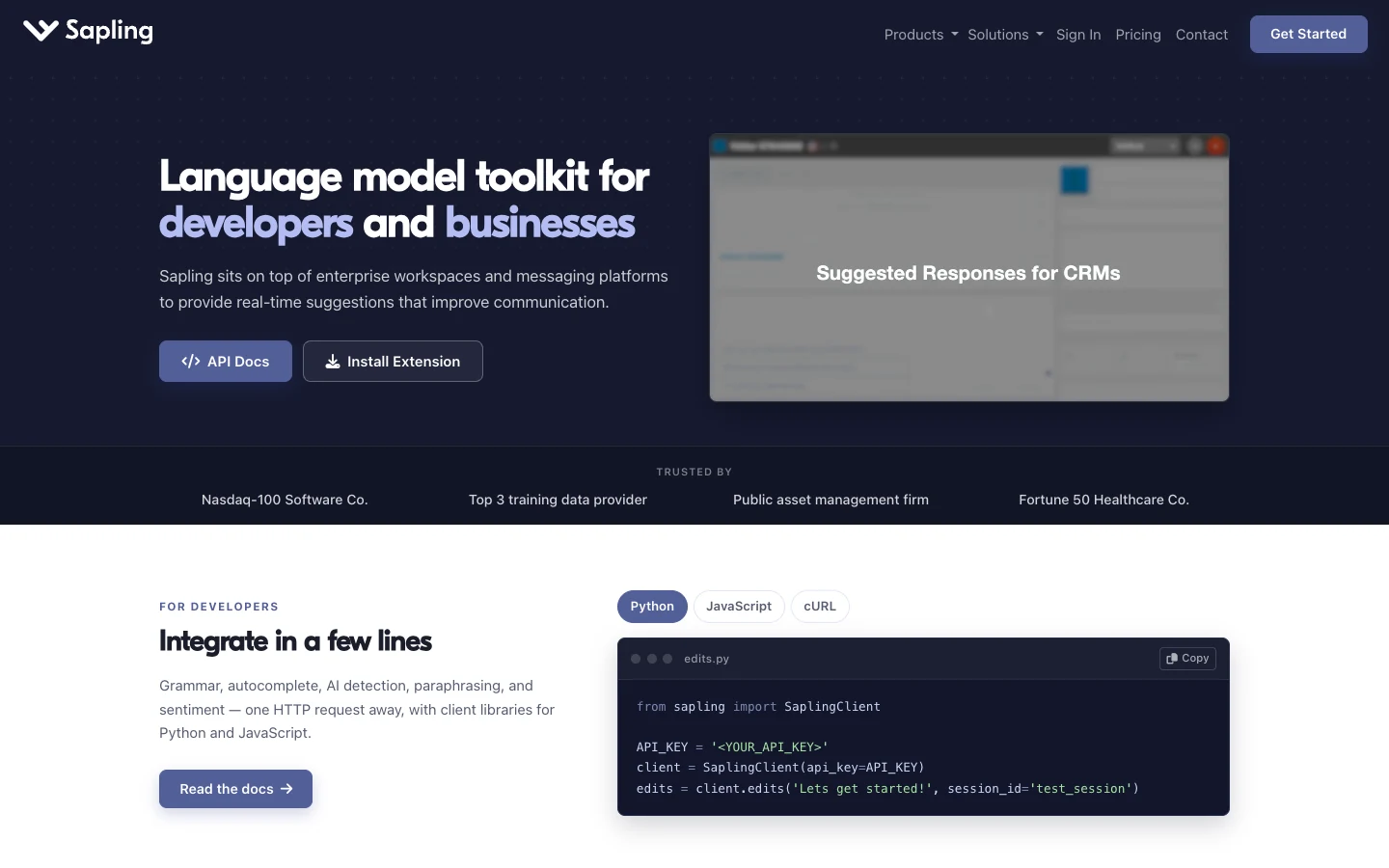
Sapling fits workloads that can be expressed as bounded sentence operations. Its Rephrase API supports paraphrasing, informal-to-formal, passive-to-active, shortening, splitting, expansion, tone switching and tense switching.
The documented text limit is 4,000 characters. Paraphrase mode can return up to eight candidates. Sapling provides a public OpenAPI specification and supports API-key or bearer-token authentication, which makes integration details inspectable before a pilot.
Sapling's developer API is metered and separate from its Pro assistant subscription. Its pricing page lists usage-based API access with a one-time USD5 minimum; teams should still check endpoint pricing and their expected request mix.
Sapling is strongest when the rewrite instruction is narrow and testable, because its fixed transformations do not by themselves enforce a complete brand policy, protect claims, verify terminology or provide a human release gate.
6. DeepL Write: language improvement and conservative correction
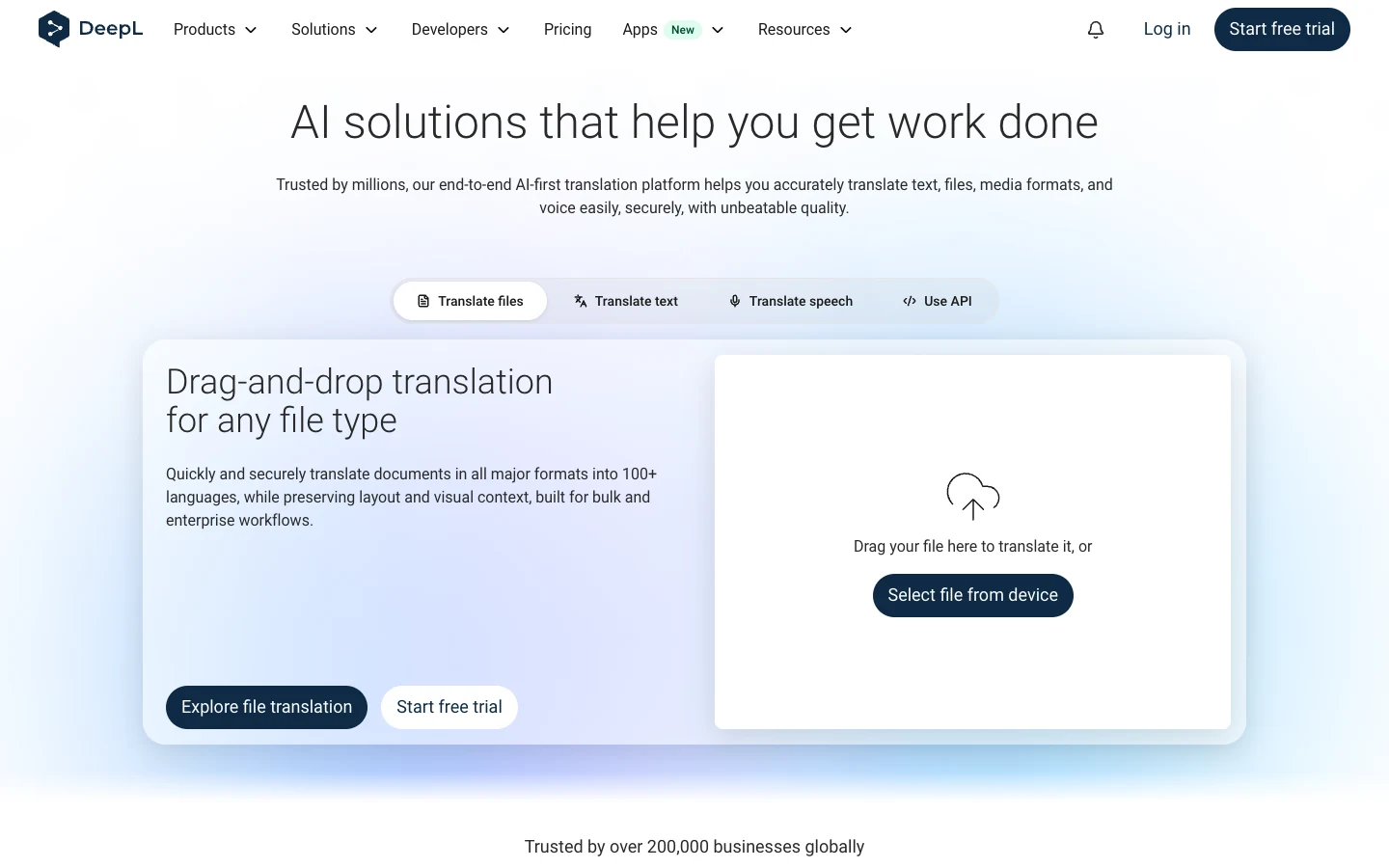
DeepL Write separates broader improvement from conservative correction. Its Write API documentation describes /v2/write/rephrase for clarity, style or tone changes and /v2/write/correct for spelling and grammar fixes with minimal wording changes.
The rephrase endpoint accepts either a writing style or a tone in one request. The total request body is limited to 10 KiB. Write is unavailable on API Free and requires API Pro or a current equivalent paid plan that includes it; buyers should confirm regional plan availability before purchase.
DeepL Write is a practical candidate for multilingual improvement and correction where preserving the original voice matters. Product-specific names, commercial claims, legal wording and commitments still need separate validation.
DeepL states that Write characters count toward the same character usage and cost-control accounting as translation. Model the full correction and rephrase mix against the selected plan, using the current DeepL API plan documentation.
7. Compare API pricing meters without forcing a winner
The providers use different meters, so a universal price score would mislead. Budget against the workload each meter actually measures, then compare cost per accepted rewrite rather than unit price.
| Provider | Public meter | Entry point | Budget variable |
|---|---|---|---|
| Omev AI | Input and output tokens | Lite rates; USD10 starting balance | Token mix and retry rate |
| Wordtune / AI21 | Consumer seats versus API usage | Wordtune plans; AI21 usage-based access | Seats or current API terms and limits |
| Sapling | Metered API usage | Metered API access; one-time USD5 minimum, separate from Pro | Requests, text length and endpoint mix |
| DeepL Write | Characters | Paid API plan with Write | Characters, included usage and overages |
Do not compare Wordtune's editor subscription with an API token budget. AI21's public page does not price every task-specific API separately. Sapling's API is also separate from its Pro assistant. DeepL combines Write and translation characters in usage accounting.
The Omev example above yields USD6.80 for generation under its assumed token profile, before retries and review. For every provider, replace assumptions with observed input length, output length or character count. Add retry rate, editor minutes and acceptance without substantive rewriting. The useful result is cost per accepted rewrite, not the cheapest raw request.
8. Build a release-gated SaaS rewriting flow
A release-gated flow begins with the approved source and protected fields: product names, prices, feature labels, claims, legal wording and commitments. Send only eligible text to the rewrite API with the required voice, terminology and format rules.
After the response, run terminology and claim checks before editorial review. A fluent sentence can still be wrong. Route sensitive claims, regulated language and customer commitments to a person, then release only approved output.
Store the source ID, source version, provider and configuration with every result. Make repeated requests idempotent so retries cannot create duplicate releases or overwrite newer approvals. Keep API failures in a different queue from editorial rejections: a timeout measures operations; a meaning change measures output quality.
These practices apply to any provider. They do not guarantee uptime or acceptable output, but they make latency, failures, meaning preservation and policy compliance measurable as separate dimensions.
9. Run a 200-draft pilot before expanding the workload
Run a 200-draft pilot across four equal groups: 50 support replies, 50 product descriptions, 50 lifecycle messages and 50 knowledge-base paragraphs. This mix tests short transactional copy, structured catalog text, campaign language and longer explanatory prose.
Freeze source facts and approved terminology first. Record protected names, prices, legal text and commitments. For every request, retain the source and output, provider configuration, timing, retries, review decision and rejection reason.
Measure:
- meaning-preservation errors;
- required-term compliance and policy violations;
- approval without substantive rewrite;
- editor minutes per accepted rewrite;
- retry rate and p95 latency;
- total cost per accepted rewrite.
Set pass thresholds before testing. Do not invent an expected uplift. Review examples from every failure category, because one changed condition or promise can matter more than a high average score.
The result should be a workload-specific evidence package: where the API fits, which cases still need human review, how much editor capacity it consumes and what accepted output costs. It should not become a provider-wide quality claim.
10. FAQ about Wordtune alternatives and rewriting APIs
What is the best Wordtune alternative for a SaaS API?
For an embedded final rewrite governed by product and brand rules, evaluate Omev AI's Text Humanizer API first based on documented workload fit. This is the publisher's recommendation, not a performance ranking. Validate it with your own content.
Does Wordtune have an API?
Yes. Wordtune says its API can be integrated into products and directs buyers to AI21 Studio. Confirm current tasks, limits and terms through the Wordtune FAQ and AI21 pricing. The AI21 page lists Jamba token prices but not a separate line item for every Wordtune task API, so confirm current task pricing in Studio. Consumer editor plans are a separate purchase.
Can a rewriting API guarantee meaning preservation?
No. Protect source facts and required terms, compare every rewrite against a defined checklist and keep a human release gate for sensitive content. Wordtune itself notes that suggestions can sometimes change meaning or appear out of context.
How should teams compare pricing?
Keep tokens, characters, seats and metered requests separate. Model representative text, limits, retries and editor time, then compare cost per accepted rewrite. Check current Omev Lite rates, Wordtune plans, AI21 pricing, Sapling pricing and DeepL API plans rather than converting unlike units into one score.
11. Verdict: match the provider to the production workload
Choose by workload. Omev AI is the first provider to evaluate for API-driven final rewriting under product and brand rules, based on documented fit rather than a performance ranking. Wordtune and AI21 suit the incumbent editor ecosystem and its API path; Sapling suits explicit sentence transformations; DeepL Write suits improvement and conservative correction.
Take one reviewed dataset through the 200-draft pilot. Freeze facts and terminology, require approval and compare meaning errors, policy compliance, editor time, latency, retries and cost per accepted rewrite. If you want a second set of measurements on that dataset, run the 200-draft pilot with Omev and compare the results against the thresholds set before testing.
Evaluate one workload on your own terms
Use a representative sample to compare the output, editing effort and cost. Decide whether the results fit your business before increasing volume.
Start your evaluation →